
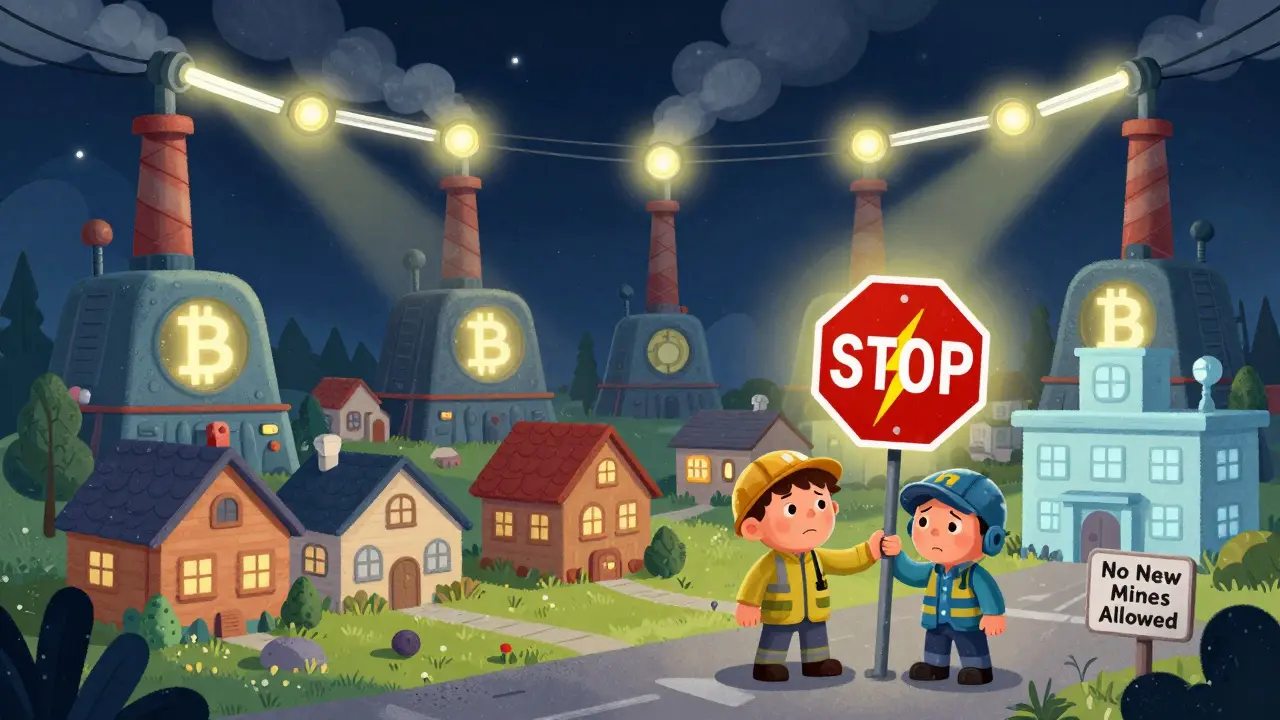
When New Brunswick put a stop to new cryptocurrency mining operations in 2023, it didn’t just make headlines-it sent shockwaves through the entire North American crypto mining industry. This wasn’t a temporary pause. It wasn’t a fine or a tax. It was a full, indefinite block on electricity connections for any new or expanding crypto mine. And it’s still in effect as of January 2026.
Why New Brunswick Said No to Crypto Mining
The province’s decision wasn’t made overnight. It started in March 2022, when the provincial cabinet ordered NB Power, the Crown-owned utility, to stop approving new electricity requests from crypto mining companies. By November 2023, that pause became a permanent ban. The reason? Simple: the grid couldn’t handle it. Crypto mining, especially Bitcoin mining, eats electricity. A single large mining facility can pull as much power as a small town. In 2022, Manitoba Hydro estimated that just the mining projects that had already applied for service would add 4,600 megawatts of demand-nearly 75% of the province’s entire generating capacity. New Brunswick, with its aging infrastructure and growing population, didn’t want to risk the same fate. The province’s priority wasn’t to punish crypto. It was to protect residents. If mining companies kept connecting to the grid, electricity rates would rise for everyone. Schools, hospitals, and homes would pay more just to keep the lights on. And with climate goals pushing for more electric cars and heating systems, the last thing New Brunswick needed was to lock up its clean hydro power for digital mining rigs.What the Moratorium Actually Blocks
The ban isn’t vague. It’s specific and absolute. NB Power is legally required to refuse any new connection request from a crypto mining operation. That includes:- Any brand-new Bitcoin, Ethereum, or other Proof-of-Work mine trying to set up shop
- Existing mines trying to expand their power usage
- Companies trying to repurpose old industrial buildings into mining farms
How This Compares to Other Canadian Provinces
New Brunswick isn’t alone, but it’s the strictest. Here’s how it stacks up:| Province | Policy | Duration | Key Details |
|---|---|---|---|
| New Brunswick | Complete moratorium | Indefinite | No new or expanded connections allowed. NB Power enforces outright refusal. |
| Manitoba | Moratorium | Until April 30, 2026 | Extension granted after initial 18-month pause. Review expected after 2026. |
| British Columbia | Power caps and legal limits | Ongoing | BC Hydro legally capped mining access after court battle. Max 1.5 million MWh/year. |
| Hydro-Québec | Rate hikes and allocation caps | Ongoing | Miners now pay 20-30% more. No new contracts since 2022. |
| Alberta | Open for business | Active | Low-cost natural gas, deregulated market. Mining operations growing rapidly. |
Who Got Hit the Hardest?
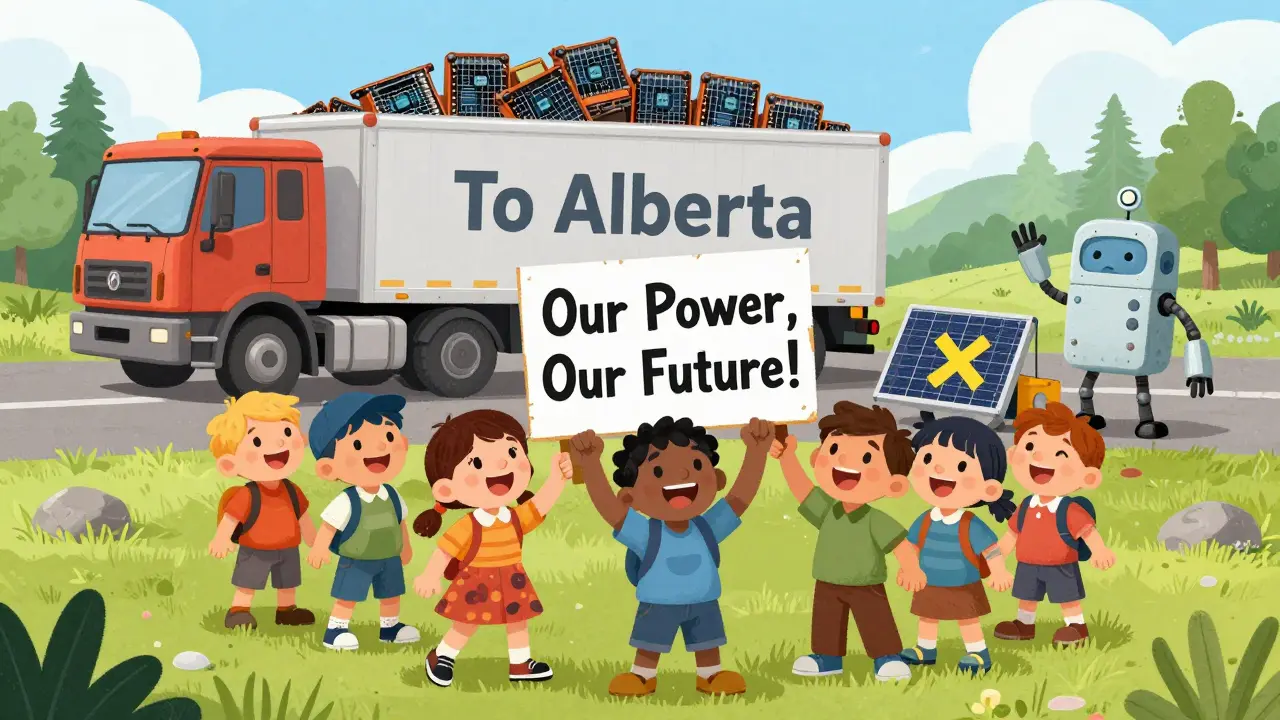
Before the ban, New Brunswick was quietly becoming a hotspot for crypto mining. Its cheap hydro power, low population density, and proximity to U.S. markets made it attractive. Several mining firms had signed leases for warehouse space near Miramichi and Edmundston, planning to install thousands of ASIC miners. One company, based in Toronto, had already shipped in 12,000 mining rigs and was waiting for the power hook-up. When the moratorium hit, they lost over $18 million in equipment and logistics costs. They moved everything to Alberta-where natural gas is cheap and the government doesn’t care how much power you use. The ban didn’t just hurt big operators. It also killed smaller, local projects. A group of tech students in Fredericton had raised $200,000 to build a community-powered mining co-op using solar and hydro. They got shut down before they even turned on the first rig.What’s Happening Now? The Ripple Effects
The moratorium didn’t just stop mining in New Brunswick-it reshaped the entire North American mining map. - Alberta’s mining sector exploded. In 2023, Alberta added over 800 megawatts of crypto mining capacity. By 2025, it surpassed Quebec as Canada’s top mining province. - U.S. states like Texas and Georgia saw an influx. Miners who couldn’t get power in Canada moved south, drawn by deregulated grids and cheap natural gas. - Hardware resellers in Canada started seeing a surge in used ASIC miners. Equipment once destined for New Brunswick flooded the resale market at 40% off. - Energy analysts now use New Brunswick as a case study. Universities and think tanks cite it when arguing for similar bans in other regions. The message is clear: if your province controls the grid, it controls the future of crypto mining.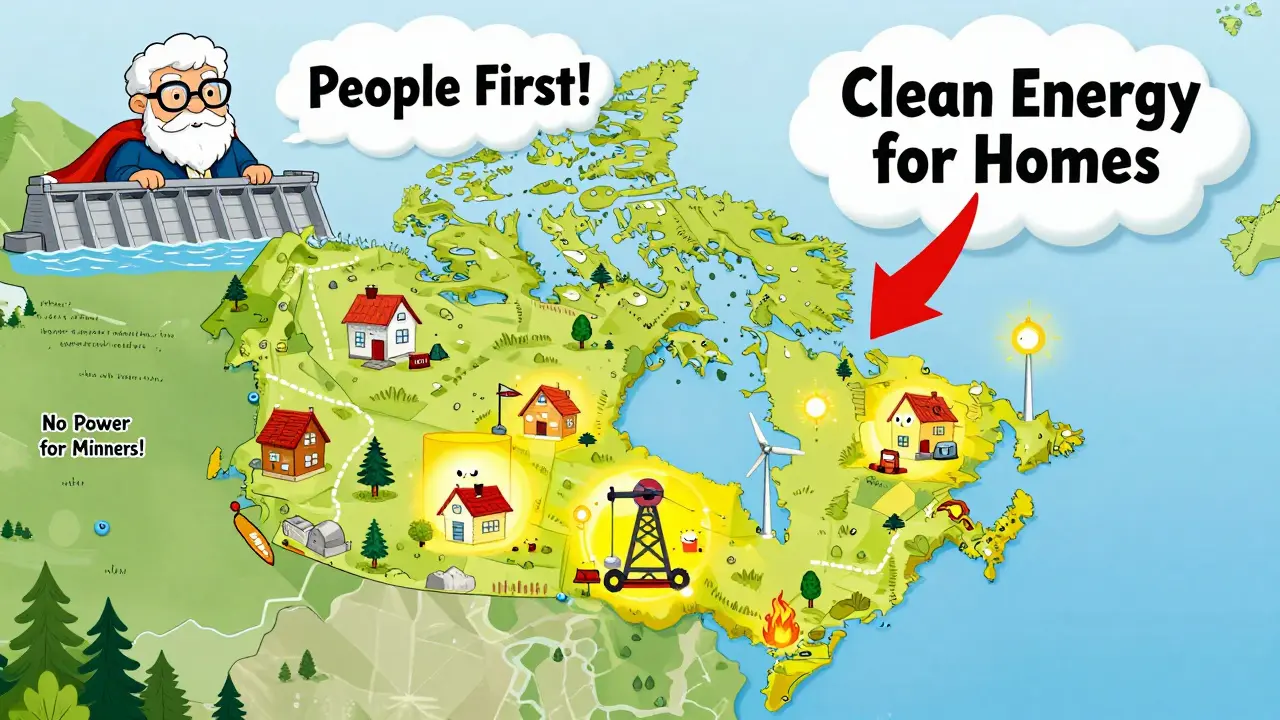
Will This Ever Change?
There’s no official review date. No public statement from the government saying when-or if-they’ll reopen the door. NB Power has not signaled any change. The province’s energy plan for 2025-2030 doesn’t mention crypto mining at all. That’s telling. If they planned to lift the ban, they’d have built in a review clause. They didn’t. That suggests this isn’t a temporary measure-it’s a policy shift. The real question isn’t whether New Brunswick will change its mind. It’s whether crypto mining will change enough to deserve a second chance. New mining tech is coming. Some companies claim they’ve built rigs that use 30% less power. Others are experimenting with waste heat recovery or using stranded gas that would otherwise flare. But none of that matters if the grid is still closed. Until mining becomes less of a power hog, New Brunswick isn’t interested.What This Means for Miners Outside New Brunswick
If you’re thinking about starting a mining operation anywhere in Canada, New Brunswick’s ban is a warning sign. Don’t assume cheap power means you can plug in. Provinces are watching. They’re talking to each other. They’re seeing what happens when a few mining companies suck up the grid’s capacity-and they’re choosing residents over miners. Your best bet? Look at places with:- Deregulated energy markets (like Alberta or Texas)
- Access to surplus renewable energy (solar farms in Arizona, wind in Iowa)
- Government support for tech innovation
Is This the Future for Crypto Mining?
New Brunswick didn’t invent this strategy. China did, back in 2021, when it shut down 75% of the world’s Bitcoin mining. But New Brunswick proved you don’t need a dictatorship to stop mining. You just need a utility company and a government that puts people first. More than eight countries have banned crypto mining outright. Dozens more are tightening rules. The global trend is clear: energy-intensive mining is becoming socially and politically unacceptable. The future of mining isn’t in places with the cheapest power. It’s in places with the most flexible, sustainable, and publicly supported energy systems. And right now, New Brunswick’s model is the blueprint for what comes next.Is crypto mining completely banned in New Brunswick?
Yes. New Brunswick has an indefinite moratorium on all new electricity connections for cryptocurrency mining operations. This includes both brand-new mines and existing ones trying to expand. NB Power is legally required to refuse any such request, and there is no current plan to reverse the ban.
Why did New Brunswick ban crypto mining but not other industries?
Crypto mining uses massive amounts of electricity 24/7 with little economic return to the province. Unlike manufacturing or data centers, mining doesn’t create many local jobs, doesn’t pay significant taxes, and doesn’t contribute to the economy beyond power consumption. The province prioritized protecting residents from rising electricity bills and preserving clean energy for essential services.
Can I still mine crypto in New Brunswick if I use solar panels?
No. The moratorium applies to any crypto mining operation connected to the provincial grid, regardless of power source. Even if you generate your own power, you still need approval from NB Power to connect your equipment to the grid for backup or net metering. That approval is currently denied for all mining purposes.
What happened to mining companies that were already operating in New Brunswick?
Existing operations were allowed to keep running-but they were locked in. They couldn’t add more miners, upgrade equipment, or increase power usage. Many chose to shut down voluntarily because they couldn’t scale. Others moved their entire operations to Alberta or the U.S.
Is there any chance New Brunswick will lift the ban after 2026?
There’s no indication of that. Unlike Manitoba, which set a clear end date, New Brunswick’s ban has no review timeline. Officials have not signaled any interest in reopening the grid to crypto mining. The policy appears permanent unless mining technology changes dramatically or provincial energy capacity expands significantly.
Rod Petrik
they say it's about the grid but we all know the real reason
the elite don't want decentralized money
they control the banks and the power
this is just the first step before they ban all crypto
mark my words
Sarah Baker
this is actually one of the most responsible moves i've seen from a government in years
imagine if every province let mining drain the grid
imagine kids freezing in winter because miners are running rigs
thank you new brunswick for putting people first
Pramod Sharma
energy is a finite resource. mining is a finite game. choose wisely.
Liza Tait-Bailey
i just dont get why people think its fair to use public power for private profit
like yeah the rigs are cool but who really benefits? not the locals
not the schools
not the hospitals
just some tech bros in austin
nathan yeung
fair enough. if your grid can't handle it dont let em in. simple logic.
Bharat Kunduri
this is why i hate canadians they always think theyre so moral
you guys banned mining but you still use your phones and laptops
hypocrites
Chris O'Carroll
i dont care if they banned mining
im just mad i cant buy a used asic for 300 bucks anymore
they flooded the market and now every miner in america is paying double
thanks nb
Christina Shrader
this is a quiet win for sustainability. no fanfare, no press release. just a government doing what’s right for its people.
Kelly Post
what about the students in fredericton who raised $200k for a solar co-op? they got crushed too
is this really fair to small innovators? or just big mining firms?
Bill Sloan
alberta is now the new el dorado for miners
they're building rigs next to oil fields like its a festival
and guess what? the gas they're burning is flared anyway
so technically they're recycling waste energy
new brunswick is just being stubborn
ASHISH SINGH
the grid is a sacred cow
but who really owns it? the people? the state? the banks?
if you let mining in you let chaos in
if you ban it you become a martyr for the future
either way you're not the hero
you're just the gatekeeper
Vinod Dalavai
cool story. i just hope they dont start banning solar panels next because someone might use them for mining lol
Tony Loneman
oh so now its okay to ban crypto because it uses power
what about data centers? what about ai farms? what about the power-hungry servers running your netflix?
youre not banning those because theyre owned by big tech
this is discrimination
Callan Burdett
this is the kind of leadership we need more of
not every trend deserves a place on the grid
thank you new brunswick for having the guts to say no
Anthony Ventresque
i get the grid concerns but why not require miners to use only renewable surplus? like excess wind at night? that way you're not wasting energy and you're not overloading the system
Nishakar Rath
you think this is about energy
no its about control
they dont want you owning anything
they want you dependent
this is the beginning of the digital serfdom
watch how fast they ban p2p next
Jason Zhang
the real tragedy is that new brunswick could have been a leader in green mining
instead they just shut the door
and now all the mining is going to texas where they burn coal at night
so you just moved the pollution
Katherine Melgarejo
so they banned mining... but still let the oil rigs run? 🤔
Josh V
this is the future
if your tech uses more power than a small town
you dont get to plug in
simple as that
Ashlea Zirk
The policy reflects a principled prioritization of public utility over speculative economic activity. The absence of a review clause suggests institutional consensus that the externalities of proof-of-work mining are incompatible with long-term energy equity objectives.
Shaun Beckford
this is the most rational thing any canadian province has done since the 1980s
congrats nb
you just won the future
Chris Evans
the blockchain is a distributed ledger
but the grid is a centralized chokepoint
you can't decentralize power
so you can't decentralize mining without breaking the system
new brunswick didn't ban crypto
they just recognized the architecture doesn't scale
Pat G
canadians think they're so superior
we let miners in texas and they create jobs
you just ban it and pretend you're righteous
you're not saving the planet
you're just being weak