
LiteBit.eu was once one of the most popular ways for Europeans to buy Bitcoin and other cryptocurrencies. If you were new to crypto in the late 2010s, you probably saw its simple interface, trusted brand, and easy euro payments. But today, LiteBit.eu doesn’t exist anymore. No website. No app. No customer support. Just a quiet shutdown that left thousands wondering what went wrong.
How LiteBit.eu Actually Worked (It Wasn’t a Real Exchange)
Most people thought LiteBit.eu was a crypto exchange like Binance or Coinbase. It wasn’t. It was a broker. That means it didn’t connect buyers and sellers. Instead, LiteBit bought crypto from wholesale markets and sold it to you at a fixed markup - like a currency exchange at the airport.
You’d log in, pick Bitcoin or Ethereum, pay with your bank card or iDeal, and LiteBit would use its own funds to buy the coin for you. Then it delivered it to your wallet on the platform. No order books. No limit orders. No trading charts. Just a simple "buy now" button.
This model worked fine when crypto was still new. Most users didn’t care about fees or trading tools. They just wanted to buy Bitcoin without learning how to use a complex platform. LiteBit made that easy. And for a while, that was enough.
Why People Loved LiteBit.eu (At First)
LiteBit had a few things going for it:
- Over 50 cryptocurrencies - more than most beginner platforms at the time.
- 10+ payment methods - iDeal (Netherlands), Bancontact (Belgium), Sofort, SEPA, Giropay, EPS, and even MyBank. No other broker offered this many EU-friendly options.
- LiteBit Credits (LBC) - a clever system where you bought credits first, then used them to buy crypto later. This protected you from price swings while your bank transfer cleared - something that could take 2-5 days.
- Integrated wallet - no need to download a separate app. Your coins were stored safely on their platform with 2FA and biometric login.
- 24/7 Dutch and English support - real humans, not bots, available anytime.
At its peak, LiteBit had around 800,000 users. Most were casual buyers - students, parents, small business owners - people who just wanted to own a little Bitcoin without the headache.
The Hidden Costs and Growing Frustrations
But LiteBit’s model had a big flaw: it was expensive.
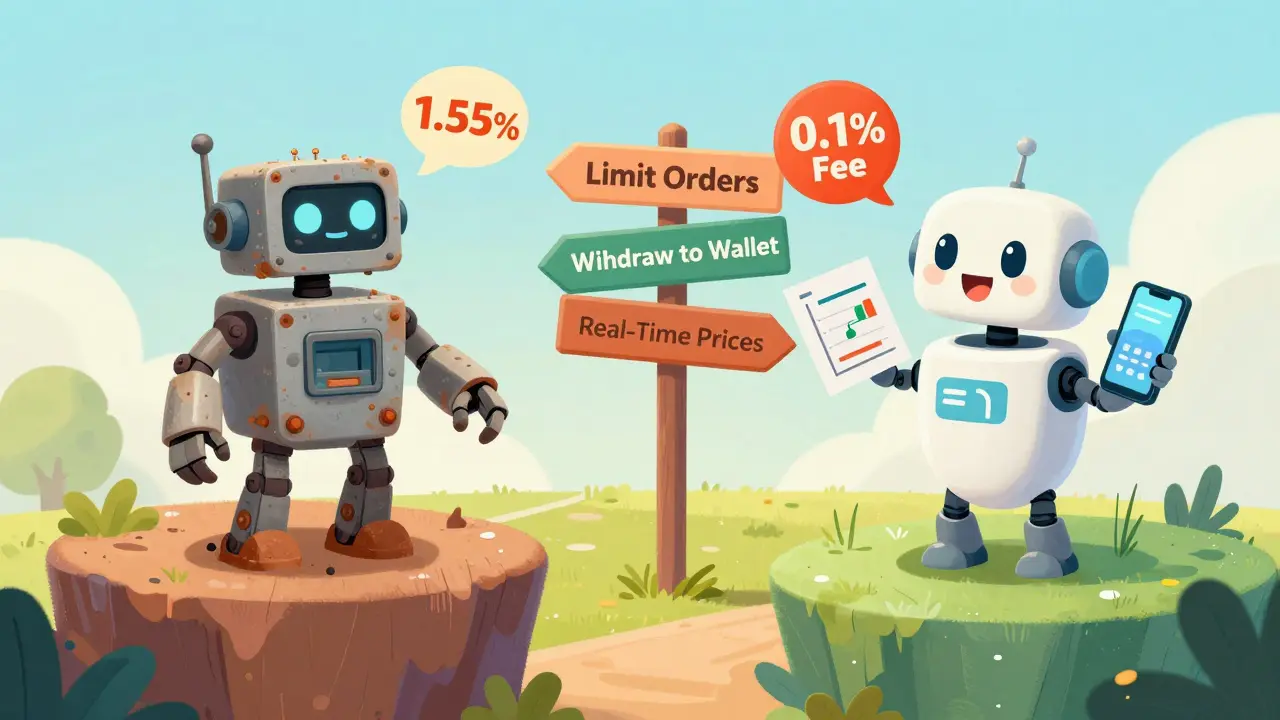
While traditional exchanges charge 0.1%-0.5% per trade, LiteBit slapped on a 1.55% markup. That’s over three times higher. For a €1,000 Bitcoin purchase, you paid €15.50 extra - just for using their service.
And it got worse. As competitors like Bitvavo and Binance entered the EU market, they offered:
- Lower fees (often under 0.5%)
- Real trading with limit orders and stop-losses
- Faster deposits and withdrawals
- Mobile apps with charts and news
LiteBit didn’t keep up. Its app stayed the same. Its website looked dated. Its customer service, while responsive, often failed to fix problems quickly. Users reported:
- Account verification taking over a week
- Delayed crypto deliveries
- Confusing follow-up calls from support after simple purchases
On Trustpilot, ratings hovered around 3.3/5. On BitCourier, it was worse - 2.5/5 based on over 2,700 reviews. People didn’t hate the service. They just got tired of paying more and waiting longer.
Why LiteBit.eu Shut Down
The truth? LiteBit didn’t die because of fraud or hacking. It died because it stopped evolving.
When crypto went from "new thing" to "mainstream asset," users demanded more. They wanted to trade, not just buy. They wanted lower fees, not convenience premiums. They wanted real-time prices, not fixed markups.
LiteBit’s broker model was never meant for scale. It couldn’t compete with exchanges that processed millions of trades daily. It couldn’t match Binance’s liquidity or Bitvavo’s low fees. And as more EU users switched to platforms with real trading tools, LiteBit’s user base slowly shrank.
By 2024, traffic dropped. Revenue fell. The company stopped updating its platform. Then, quietly, in early 2025, it posted a one-line announcement: "LiteBit.eu is no longer operational."
No press conference. No detailed email. No roadmap for refunds. Just silence.
What Happened to Users’ Money?
This is the biggest unanswered question.
LiteBit held users’ crypto in its own wallets. It didn’t use cold storage like top exchanges. It didn’t disclose insurance policies. And now, with no website, no contact info, and no official statement about asset recovery, users are left in the dark.
Some reported getting their coins back before the shutdown. Others still see balances on their old accounts - but can’t access them. There’s no legal process listed. No regulator to contact. No bankruptcy filing publicly recorded.
It’s a cautionary tale: even trusted platforms can vanish without warning. And if you keep crypto on a platform you don’t fully trust - especially one that doesn’t let you withdraw to your own wallet - you’re at risk.
Who Was LiteBit.eu Really For?
LiteBit was perfect for one type of person: the crypto beginner who wanted to buy Bitcoin once, didn’t care about fees, and didn’t plan to trade.
If you were:
- Buying your first 0.01 BTC as a gift
- Using iDeal to pay with your Dutch bank account
- Not interested in charts, trading, or holding long-term
- then LiteBit made sense.
But if you wanted to:
- Trade altcoins
- Set price alerts
- Use limit orders
- Withdraw coins to your own hardware wallet
- then you were already better off elsewhere.
The Bigger Lesson
LiteBit’s story isn’t just about one failed company. It’s about what happens when a business stops listening.
Crypto moved fast. Exchanges got smarter. Fees dropped. Features exploded. LiteBit clung to its simple broker model while the world passed it by.
Today, there are dozens of better alternatives for EU users:
- Bitvavo - low fees, 200+ coins, Dutch/EU focused
- Binance - global leader, lowest fees, advanced tools
- Kraken - strong security, regulated in the EU
- Coinbase - beginner-friendly, insured assets
All of them let you withdraw your coins. All of them have real trading tools. All of them charge less than 1%.
LiteBit.eu is gone. But its legacy lives on - as a warning.
What to Do If You Still Have an Old LiteBit Account
If you still have an old LiteBit account:
- Try logging in - you might get an error or a blank page.
- Check your email for any messages from LiteBit from late 2024 or early 2025.
- Don’t expect a refund. There’s no official recovery process.
- Never use a platform again that doesn’t let you withdraw your coins to your own wallet.
Your crypto belongs to you - not to a company’s server.
Is LiteBit.eu still operating?
No, LiteBit.eu shut down in early 2025. The website no longer loads, and customer support has been discontinued. The company issued a brief statement confirming its closure but provided no details about asset recovery or user refunds.
Why did LiteBit.eu fail?
LiteBit failed because it didn’t adapt. It relied on a high-fee broker model while competitors like Binance and Bitvavo offered lower fees, real trading tools, faster transactions, and better mobile apps. As users demanded more, LiteBit stayed static. Its user base shrank, revenue dropped, and it eventually closed.
Can I get my crypto back from LiteBit?
There is no official way to recover funds from LiteBit. The company did not disclose how it handled user assets before shutdown. Some users report getting their coins back before the closure, but others still see balances they can’t access. Without a bankruptcy process or regulatory oversight, recovery is unlikely.
Was LiteBit.eu safe to use?
LiteBit had security features like 2FA and biometric login, and it was registered in the Netherlands, which provided some regulatory oversight. But safety isn’t just about login protection - it’s about whether you can withdraw your assets. LiteBit didn’t let users move coins to personal wallets, which is a major red flag. If a platform controls your crypto, you’re not really owning it.
What should I use instead of LiteBit.eu?
For EU users, the best alternatives are Bitvavo (low fees, EU-focused), Binance (lowest fees, full trading tools), Kraken (strong security), and Coinbase (beginner-friendly, insured). All let you withdraw coins to your own wallet - which is the most important safety feature.
Colin Lethem
Honestly? LiteBit was the gateway drug for crypto. I bought my first 0.01 BTC there in 2019. Simple, no stress. Now I trade on Binance daily, but I’ll always be grateful for how easy they made it to start. RIP LiteBit.
lori sims
I remember when LiteBit had that little green credit badge. Felt like I was playing a game where I saved up points to unlock Bitcoin. So charming. So naive. Now I just laugh at how much we trusted these platforms without asking where the coins really lived.
Deborah Robinson
I still have a balance on my old LiteBit account. I tried logging in last week. Just a blank page. No error. No message. Just... silence. I didn’t lose much, but it still stings. Never again will I leave crypto on a platform that doesn’t let me withdraw. 🙏
Michelle Mitchell
i think litebit was fine until people got greedy and wanted to trade. why cant we just buy crypto like we buy groceries? why does everythng have to be a stock market now?
christopher luke
I still use LiteBit Credits in my head sometimes. Like, "I got 50 LBC saved up" - and then I remember it’s all gone. 😔 That was a smart system. Too bad they didn’t build on it. They just let it rot.
Mary Scott
This was all a setup. They were never going to let you withdraw. That’s why they made the wallet so convenient. So you’d feel safe. Then they vanished. I bet the founders cashed out and moved to a country with no extradition. I’ve seen this movie before.
Shannon Holliday
I miss their support chat. I once had a problem with a delayed deposit and they called me personally. No bots. Just a nice guy in Amsterdam who said "Sorry, we’re backed up." I didn’t get my coins faster, but I felt seen. That doesn’t happen anymore. 💔
Jeremy buttoncollector
The broker model was inherently unsustainable. Liquidity asymmetry, counterparty risk, and non-custodial opacity created structural fragility. LiteBit was a centralized node in a decentralized ecosystem - a contradiction in terms. They were always doomed.
Arya Dev
I can’t believe people are still defending this! They had 800k users and didn’t even have a withdrawal button?! That’s not a mistake - that’s a crime! And now they just disappear? What kind of world are we living in?!
Leslie Cox
Honestly? If you didn’t withdraw your coins to a wallet you controlled, you were asking for trouble. It’s not LiteBit’s fault - it’s yours. You trusted a company with your assets. That’s not ignorance. That’s negligence. And now you’re crying? Grow up.
Derek Sasser
I actually think LiteBit did a lot right. The payment methods? Unmatched. The LBC system? Genius. The problem wasn’t their model - it was that they didn’t scale it. They could’ve become the PayPal of crypto. Instead, they became the Blockbuster. Just... slow. And then gone.
Nadia Shalaby
I logged in once last year just to see if it was still up. It was. But everything was frozen. My balance was there. My history was there. But I couldn’t send a single satoshi. Felt like visiting an abandoned house with your name on the mailbox.
Fiona Monroe
The regulatory oversight in the Netherlands was minimal. LiteBit was registered as a payment service provider under MiFID II, but crypto assets were not classified as financial instruments. Therefore, they were under no obligation to segregate or insure user holdings. This was a systemic failure of classification, not merely corporate negligence.
Lucy Simmonds
I knew it was a trap. They had no cold storage. No transparency. No whitepaper. Just a pretty website and a Dutch flag. And now? Gone. Just like the 2017 ICOs. They were never meant to last. You were never meant to win.
Elizabeth Smith
People say you should own your keys but they still use Coinbase. They say they want decentralization but they pick the easiest option. LiteBit was just the next step in that lazy path. And now they’re surprised when it collapses? It was inevitable.
Robert Kromberg
I still have my old LiteBit login saved. I think I’ll keep it. Not to use it. Just to remember. It was the first place I ever touched crypto. I didn’t know what I was doing. But I felt like I belonged. That’s worth something.
Curtis Dunnett-Jones
LiteBit didn’t fail because they were bad. They failed because they were too good at what they did. They made crypto too easy for too many people who didn’t need to be there. And when the real traders came in, the beginners didn’t care enough to fight for the platform. So it withered. Not from greed. From irrelevance.
Paul Reinhart
I remember the day I first used LiteBit. I was in my dorm, tired, confused, and just wanted to buy Bitcoin before my class started. I clicked "Buy Now," paid with my debit card, and 20 minutes later - there it was. No wallet. No keys. Just a number. And I thought: this is magic. Now? I run a node. I hold my own keys. But I still miss that simplicity. Not because I was dumb. Because I was human.
Samantha Stultz
The real issue? They didn’t let you withdraw. That’s not a feature omission - that’s a design choice to lock you in. And they knew it. That’s why they pushed LBC so hard. You weren’t buying crypto. You were buying a subscription to their ecosystem. And they were never going to let you leave.
Robert Conmy
If you didn’t withdraw your coins, you were already a target. You were the kind of person who would cry when the platform vanished. The smart ones got out early. The rest? Well. Now you know why we say "not your keys, not your crypto." It’s not a slogan. It’s a survival guide.
Lilly Markou
I still dream about it sometimes. The way the support rep said, "We’ll fix it tomorrow." And they never did. I didn’t lose much money. But I lost trust. And trust… it doesn’t come back. Not like this.
McKenna Becker
LiteBit didn’t die because of competition. It died because it asked too little of its users. It didn’t teach them. It didn’t challenge them. It just handed them crypto like candy. And when the candy stopped, they didn’t know how to eat anything else.
Cory Derby
As someone who worked in fintech compliance, I can say this: LiteBit operated within the letter of the law, but not the spirit. They registered as a payment provider, not a custodian. That allowed them to avoid fiduciary obligations. It was legal. It was unethical. And now, it’s a lesson for regulators everywhere.