
You’ve probably seen the dog memes. You’ve likely heard the ticker symbol SHIB. But if you’re asking what Shiba Inu actually *is* in 2026, you need to look past the jokes. What started as a parody of Dogecoin has morphed into something far more complex: a decentralized ecosystem with its own blockchain, exchange, and governance tokens. It’s no longer just a coin; it’s a platform.
If you are holding SHIB or thinking about buying some, understanding this shift is critical. The rules of the game have changed since August 2020. Let’s break down exactly how Shiba Inu works today, where the money goes, and whether it still has legs.
From Meme Coin to Ecosystem
To understand where SHIB is now, you have to remember where it started. In August 2020, an anonymous developer known as 'Ryoshi' launched Shiba Inu on the Ethereum blockchain. The goal? To create the "Dogecoin Killer." It was an experiment in fully decentralized governance. Ryoshi didn’t pre-mine tokens for himself. Instead, he created a quadrillion (1,000,000,000,000,000) supply, locked half in Uniswap liquidity pools, and sent 40% to Ethereum co-founder Vitalik Buterin.
Vitalik’s reaction defined the project’s early narrative. He burned 90% of that stash-about 410 trillion SHIB-and donated the rest to charity. This single act slashed the circulating supply by roughly 40% overnight and put SHIB on the map. But unlike Dogecoin, which runs on its own simple blockchain with an unlimited supply, SHIB is built on Ethereum. This means it inherits Ethereum’s security but also its high gas fees-a problem the team has spent the last few years trying to solve.
Who owns Shiba Inu?
No one person owns Shiba Inu. It is community-driven. The creator, Ryoshi, stepped back after launch. While there is a development team behind the infrastructure, the token itself is decentralized, similar to Bitcoin or Ethereum.
The Three-Token System
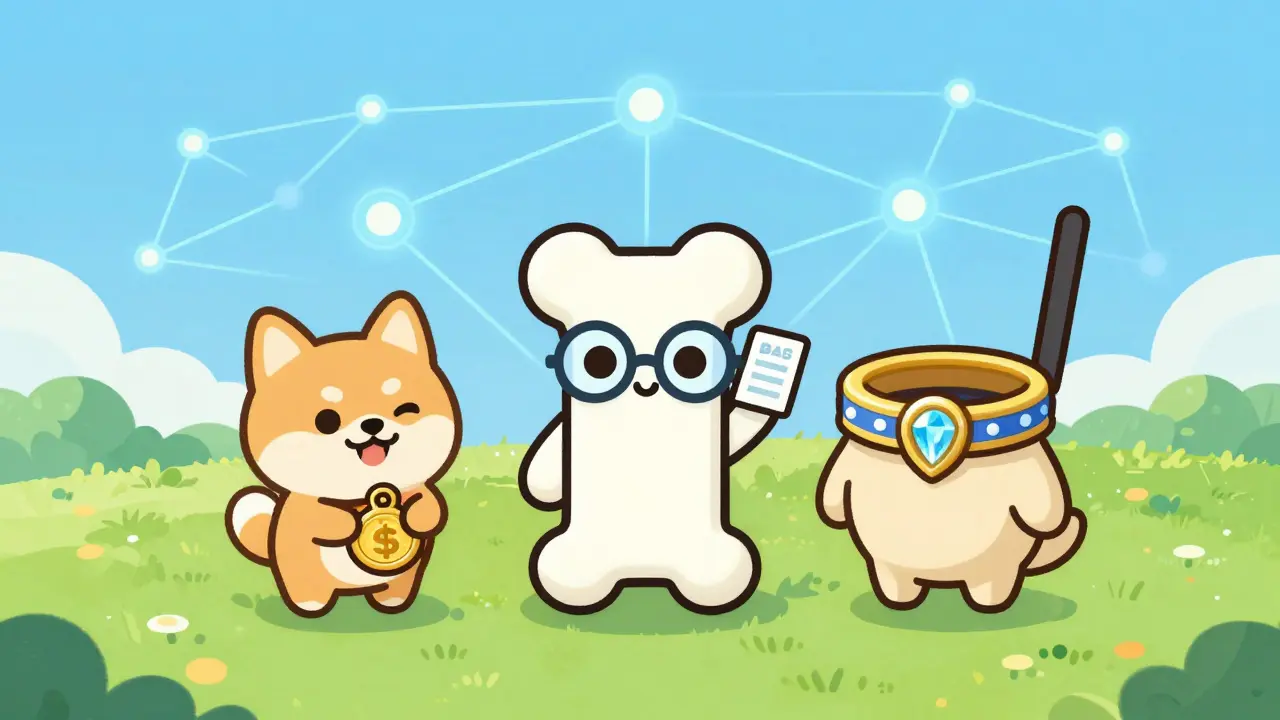
Here is where most new investors get confused. Shiba Inu isn’t just one coin anymore. It operates a three-token system designed to separate utility from speculation.
- SHIB: This is the main currency. It’s used for payments, tipping, and general transactions within the ecosystem. It’s the most liquid and widely traded asset.
- BONE: Think of BONE as the fuel for governance. Holders use BONE to vote on proposals for the ShibaSwap exchange and the broader ecosystem. It also serves as the gas token for Shibarium transactions, meaning you pay fees in BONE rather than ETH.
- LEASH: Originally intended to be a rebase token, LEASH is now primarily a governance token with a fixed supply of 107,812 tokens. It’s rare and expensive, often used for high-level protocol decisions.
This structure allows the project to grow without diluting the value of the main SHIB token through endless emissions. When you see news about "governance," it’s usually about BONE, not SHIB.
Shibarium: The Layer-2 Solution
The biggest hurdle for any ERC-20 token has always been cost. Sending SHIB directly on Ethereum could cost $5 to $50 during peak times. That kills usability for small transactions. Enter Shibarium.
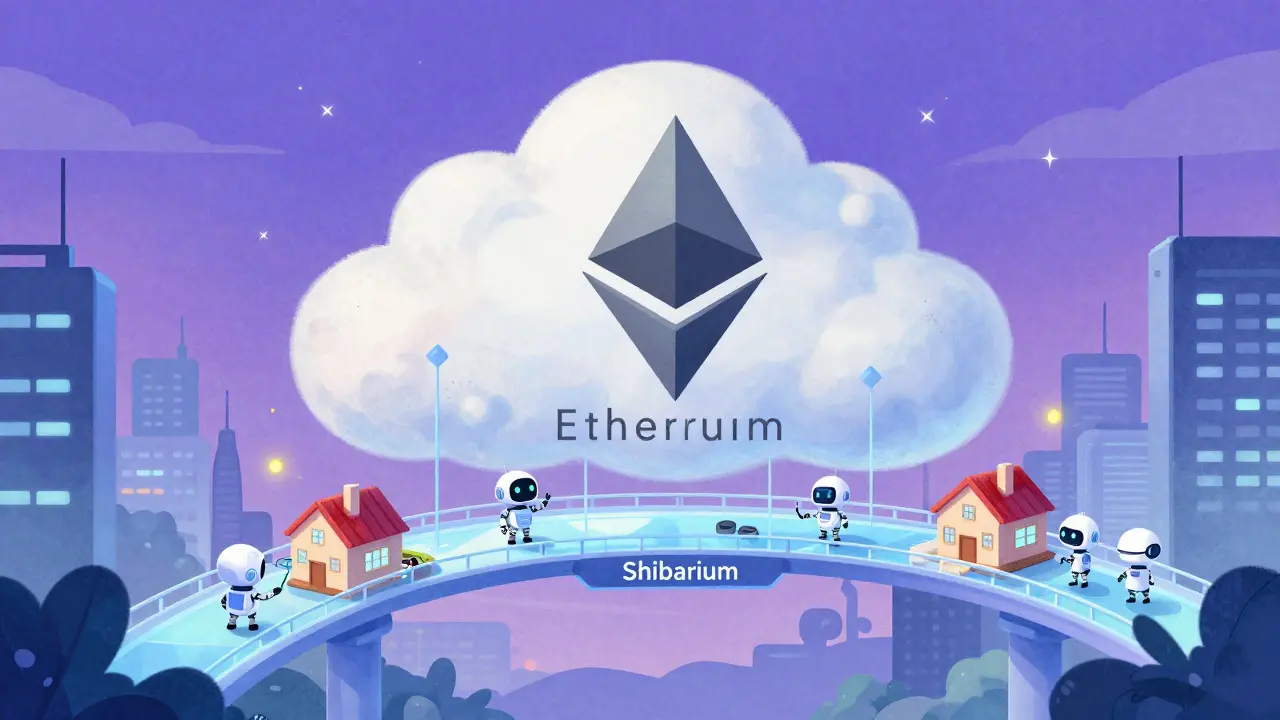
Launched on mainnet in August 2023, Shibarium is a Layer-2 blockchain built on top of Ethereum using zk-Rollup technology. Its job is simple: make transactions cheaper and faster. As of early 2026, Shibarium reduces transaction costs by approximately 85% compared to Ethereum mainnet. Where a transaction might cost $1.27 on Ethereum, it costs pennies on Shibarium.
Why does this matter? Because it enables real usage. Developers can build decentralized applications (dApps) on Shibarium without worrying about prohibitive gas fees. By January 2026, over 2,147 dApps were deployed on the network, and unique active wallets hit nearly 128,000 in a single month. The upcoming Shibarium V2 upgrade, scheduled for Q2 2026, promises another 40% fee reduction and cross-chain messaging with networks like Polygon and BNB Chain.
Deflationary Mechanics: The Burn Rate
Supply and demand. It’s the oldest rule in economics. With a starting supply of one quadrillion tokens, SHIB needed a way to become scarce. That mechanism is the "burn." Burning means sending tokens to a wallet address that no one controls, effectively removing them from circulation forever.
In January 2026, the burn rate surged by 910%. This wasn’t random. It was driven by automated mechanisms tied to Shibarium transactions and community-led initiatives. Every time you swap tokens on ShibaSwap or interact with certain dApps, a small percentage of fees is burned. Additionally, the community organizes massive burn events. The largest single burn occurred in May 2021 when Vitalik Buterin burned 410 trillion tokens.
However, keep your expectations realistic. At the current burn rate, it would take over 1,800 years to burn the entire supply. The goal isn’t to eliminate all tokens; it’s to slow down inflation and create slight deflationary pressure over time, which helps stabilize price volatility.
How SHIB Compares to Dogecoin
People often group SHIB and DOGE together because they both feature dogs and started as memes. But technically, they are very different beasts.
| Feature | Shiba Inu (SHIB) | Dogecoin (DOGE) |
|---|---|---|
| Blockchain | Ethereum (ERC-20) + Shibarium L2 | Own Blockchain (Proof-of-Work) |
| Supply Model | Fixed initial supply, deflationary via burns | Inflationary, unlimited annual issuance |
| Smart Contracts | Yes (via Ethereum/Shibarium) | Limited/No native smart contract support |
| Ecosystem | DEX (ShibaSwap), NFTs, L2 Chain | Primarily payment/meme currency |
| Transaction Speed | Fast on Shibarium (~15 sec finality) | Moderate (~1 min block time) |
Dogecoin is simpler. It’s a peer-to-peer currency. Shiba Inu is trying to be a platform. If you want a simple digital cash alternative, DOGE is cleaner. If you want exposure to DeFi, NFTs, and Layer-2 tech wrapped in a meme package, SHIB offers more utility-but also more complexity.
Risks and Market Reality
Let’s talk about the downsides. Despite the ecosystem growth, SHIB remains heavily dependent on social media sentiment. A Fundstrat report from January 2026 noted that 78% of SHIB’s price movements correlate directly with spikes in Twitter volume. That makes it volatile. Monthly swings of 35% are common.
Furthermore, institutional adoption is still low. Only about 3.2% of crypto hedge funds held SHIB positions in late 2025. While that number is growing, it lags far behind Bitcoin or Ethereum. Regulatory uncertainty also looms. Governments are scrutinizing meme coins that claim utility, and SHIB sits right in that gray area.
There is also the issue of competition. Solana-based meme coins offer even lower fees ($0.03 average vs SHIB’s higher base costs if not using Shibarium). SHIB’s advantage is Ethereum’s security and its established brand, but it must constantly innovate to stay relevant against newer, faster chains.
How to Buy and Store SHIB
If you decide to enter the market, the process is straightforward but requires attention to detail.
- Choose a Wallet: Since SHIB is an ERC-20 token, you need a wallet that supports Ethereum. MetaMask, Trust Wallet, and Coinbase Wallet are the standard choices. For long-term storage, a hardware wallet like Ledger or Trezor is safer.
- Buy on an Exchange: Major exchanges like Binance, Coinbase, and Kraken list SHIB. You can buy it with USD, EUR, or other fiat currencies.
- Transfer to Wallet: Withdraw your SHIB to your personal wallet address. Double-check the network! Ensure you are sending via the Ethereum network unless the exchange specifically supports Shibarium transfers (which is rare for retail users currently).
- Interact with Shibarium: To use the low-fee Layer-2, you’ll need to bridge your ETH or SHIB to Shibarium using official bridges provided on the Shib.io website.
The learning curve is moderate. According to usability studies, beginners spend about 3-5 hours getting comfortable with wallet connections and gas fees. Don’t rush. Start with a small amount to test the waters.
Future Outlook: Is SHIB Dead or Alive?
Predictions vary wildly. Galaxy Digital projects a 65% chance of SHIB maintaining a top-30 ranking through 2030, citing its strong ecosystem development. JPMorgan is more skeptical, assigning only a 32% probability due to regulatory risks. The truth likely lies in between.
SHIB has survived the bear markets of 2022 and 2023. It has built a functional Layer-2 chain and a decentralized exchange. It has a community of over 1.2 million members who actively participate in governance and burn events. These are not traits of a dead project. However, it will never replace Bitcoin or Ethereum. Its role is niche: a community-driven hub for meme culture intersecting with DeFi utility.
Watch the Shibarium V2 launch in mid-2026. If it successfully integrates cross-chain messaging and further lowers fees, SHIB could see a new wave of developer interest. If it stalls, the price may remain tethered purely to hype cycles. Either way, do your own research. Never invest more than you can afford to lose.
Will Shiba Inu reach $0.01?
Reaching $0.01 would require a market capitalization of over $400 billion, surpassing Ethereum's historical highs. While possible in a hyper-bullish scenario with massive supply burns, it is statistically unlikely in the near term. Most analysts view $0.00001 to $0.0001 as more realistic resistance levels for 2026.
Is Shiba Inu a scam?
No. Shiba Inu is a legitimate cryptocurrency with transparent code, active development, and a verifiable history. However, like all crypto, it carries high financial risk due to volatility. Beware of fake websites or impersonators claiming to be the "official SHIB team" offering giveaways.
What is the difference between SHIB and Shibarium?
SHIB is the token. Shibarium is the blockchain network (Layer-2) that processes SHIB transactions faster and cheaper. You use SHIB on Shibarium, just like you use ETH on Ethereum.
Can I mine Shiba Inu?
No. SHIB cannot be mined. It is an ERC-20 token issued on Ethereum. New tokens are only created through specific smart contract functions, mostly related to liquidity mining rewards on ShibaSwap, which are being phased out in favor of sustainable models.
How safe is Shiba Inu?
The SHIB token contract has been audited and is generally considered secure. The primary risks are user error (sending tokens to wrong addresses) or phishing attacks. Always verify URLs and use hardware wallets for significant holdings.
Mauricio Contreras Loredo
Oh look, another guide telling us how to gamble our rent money on dog coins. Brilliant.
Kumaran sowkarpet
hey friends! i read this whole thing and it is actually quite informative about the tech side of things :) many people just see the meme but shibarium is real tech now. the gas fees are much lower which is good for small transactions. i hope everyone stays safe and does not invest more than they can loose ok? remember to check your wallet addresses carefully too! :)
Kenneth Riley
you guys are all missing the point completely its a pump and dump scheme wrapped in nice pretty words the burn rate is negligible and the utility is fake news nobody uses shibaswap for real trading its just wash trading by bots to make volume look high dont be a sheep
sreeja boora
The article provides a structured overview of the ecosystem developments. However, one must remain cautious regarding the speculative nature of such assets. The regulatory landscape remains ambiguous, and investors should prioritize capital preservation over potential gains derived from social media sentiment.
Grace Newman
I have been monitoring the blockchain transactions associated with the Shibarium launch and I believe there is a coordinated effort to manipulate public perception through these so-called educational guides. The sudden surge in dApp deployments appears artificial and likely orchestrated by insiders to create an illusion of organic growth before a major sell-off event that will devastate retail holders who trust these narratives without verifying the underlying code integrity themselves.
Annemarie Fitzgerald
the essence of shiba inu is not really about the coin itself but rather the collective delusion we have created together as a society seeking meaning in digital voids. it is a mirror reflecting our own desires for wealth and validation. when we burn tokens we are burning away our past mistakes but also our future possibilities. it is tragic yet beautiful in its own way isn't it?
Abby Sivertsen
look i get the hype but honestly the user experience is still kinda rough for newbies. bridging to shibarium is confusing af. why cant it just work like normal crypto?
Benjamin Eisen
i totally agree with you abby the ui needs work. but hey at least the fees are low right? i tried using it last week and it wasnt too bad once i figured out the bridge. maybe they will fix it soon hopefully!
Abby Sivertsen
yeah sure hope so. until then im sticking to eth mainnet even if it hurts my wallet lol.
ravi mahla
haha wow what a detailed breakdown! seriously though if you think shib is dead you havent been paying attention to the community vibes. we are building something real here folks! keep holding tight and watch the magic happen :) let's go team shib!
Mark Brunschwiler
why do people care about this so much it feels like everyone is obsessed with these dog coins. it drains the life out of me watching you all chase green candles that never come. i feel empty inside when i see charts going up and down. please tell me someone else feels this existential dread about cryptocurrency culture.
Sonya O'Brien
I found the section comparing Shiba Inu to Dogecoin particularly insightful because it highlights the fundamental differences in their technological underpinnings and long-term viability as platforms rather than mere speculative instruments, which suggests that while both originated from similar cultural phenomena, their trajectories have diverged significantly due to strategic decisions made by their respective development teams regarding scalability solutions and governance structures that ultimately determine their capacity to sustain user engagement and developer interest over extended periods of market volatility and changing regulatory environments.
Filbert Reeves
actually the whole concept of decentralization is a lie told by elites to control the masses through complex financial instruments that nobody understands. shibarium is just another layer of surveillance and control disguised as innovation. the burns are staged to give false hope. wake up sheeple the matrix is feeding you garbage data to keep you distracted from the real issues facing humanity while you argue about dog pictures online.
Nick Rice
Let me be clear about this situation. The technology behind Shibarium is legitimate and represents a significant step forward for Layer-2 scaling solutions on Ethereum. Ignoring the technical achievements because of the meme origins is foolish. We need to focus on the actual utility provided by the network and the reduction in transaction costs which enables broader adoption of decentralized applications. This is progress and we should acknowledge it formally.
Amit Thakur
bro listen up the alpha is in the bone token not shib. smart money is accumulating bone for governance rights on shibarium v2. if you are still only looking at shib price action you are leaving millions on the table. the deflationary pressure on bone is insane compared to shib. wake up and start staking bone now or regret it later when the big moves happen. this is basic defi strategy 101.
Eric Scheinberg
The analysis presented herein is accurate regarding the current state of the Shiba Inu ecosystem. It is imperative for participants to understand the distinction between the ERC-20 token standard and the emerging Layer-2 infrastructure. Security remains paramount; users must employ hardware wallets for storage.