
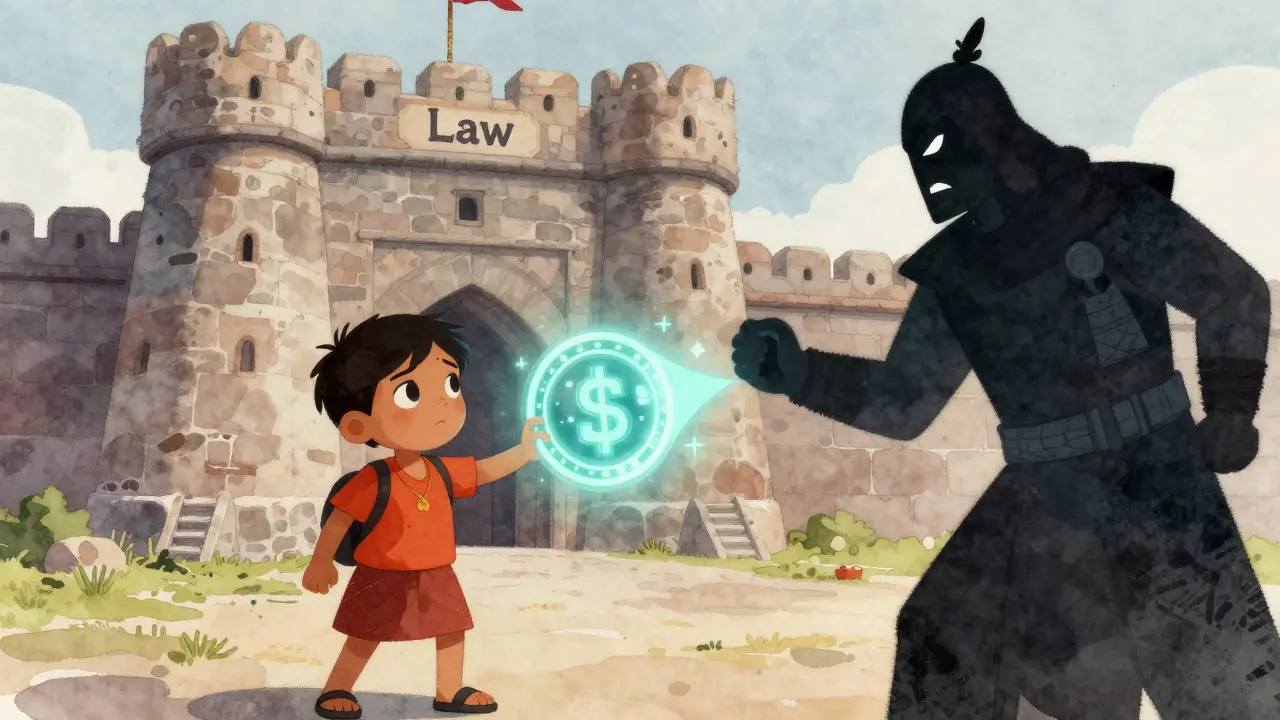
Buying Bitcoin in Nepal isn't just risky-it's a criminal offense. While most of the world is debating how to regulate digital assets, Nepal has taken a hardline stance, enforcing one of the strictest cryptocurrency bans globally under the Foreign Exchange (Regulation) Act, 1962. If you are living in Kathmandu or planning to invest from abroad while holding Nepali citizenship, this distinction matters more than ever. The consequences aren't just losing your money; they include prison time and massive fines.
This article breaks down exactly what the law says, why the Nepal Rastra Bank (NRB) maintains this prohibition, and what happens if you get caught trading on the dark web or using a VPN. We’ll look at the specific legal sections that empower authorities to freeze your assets and prosecute you.
The Legal Backbone: Why Cryptocurrency Is Illegal in Nepal
To understand the severity of the ban, you have to look at the legislation. It’s not a vague guideline; it’s a structured legal framework designed to stop capital flight. The core instrument here is the Foreign Exchange (Regulation) Act, 1962 (also known as the 2019 BS Act).
Section 12 of this act requires all foreign exchange transactions to be conducted through authorized dealers-essentially, licensed banks. Since cryptocurrencies like Bitcoin or Ethereum are not issued by any central bank and cannot be routed through these traditional banking channels, they fall outside the legal definition of permissible currency.
In August 2017, the Nepal Rastra Bank issued Notice No. 37/074/075. This notice explicitly stated that no bank or financial institution could facilitate transactions involving virtual currencies. By September 2021, the government tightened the screws further, banning not just trading but also mining, promoting, and advertising crypto activities. Today, three primary laws work together to enforce this:
- Foreign Exchange (Regulation) Act, 1962: Prohibits unauthorized cross-border movement of value.
- Nepal Rastra Bank Act, 2002: Sections 52(1) and 61 give the central bank authority to monitor and penalize violations.
- Act Restricting Investment Abroad, 1964: Prevents citizens from investing in unapproved foreign entities, which includes offshore crypto exchanges.
The logic is straightforward: if you can’t trace the money through the official banking system, it’s considered an illegal transfer of national wealth.
Penalties: Fines, Prison, and Asset Seizure
What happens if you decide to ignore the ban? The penalties are severe and calculated to deter even small-scale traders. Under the Foreign Exchange (Regulation) Act, violating currency controls is treated as a serious economic crime.
If convicted, you face imprisonment for up to three years. But the financial hit is often worse. Authorities can impose fines amounting to three times the value of the transaction. Imagine buying $1,000 worth of Bitcoin illegally; you could be fined $3,000 on top of losing your initial investment.
Real-world enforcement is already happening. In early 2022, the Department of Revenue Investigation filed cases against four individuals for misappropriating over Rs376 million (roughly $2.8 million USD at the time) through illegal crypto investments. These weren't anonymous hackers; they were regular citizens who tried to move money out of the country via digital assets. The Kathmandu District Court handled these cases publicly, sending a clear message that the state is watching.
Furthermore, banks are required to report suspicious transactions. If your account shows patterns consistent with crypto funding-like frequent transfers to unknown entities or amounts just below reporting thresholds-the NRB can freeze your accounts pending investigation. There is no "gray area" for ownership either. Even if you bought Bitcoin legally in another country, bringing those funds into Nepal or converting them to Nepali Rupees is technically illegal because it bypasses the authorized exchange mechanism.

The Underground Market: Mining and P2P Trading
Despite the heavy hammer of the law, demand persists. How do people trade? They go underground. The most common method is Peer-to-Peer (P2P) trading, where users connect directly via encrypted messaging apps like Telegram or WhatsApp. One person sends USDT (a stablecoin), and the other transfers Nepali Rupees via eSewa or Khalti. This avoids banks entirely, making it harder for regulators to track, but it doesn't make it legal.
Mining presents a different challenge. Nepal has abundant hydropower, leading to cheap electricity costs averaging Rs5.50 per kWh in districts like Kavrepalanchok and Nuwakot. Reports suggest that 15-20% of the country’s mining operations continue secretly. Miners use residential power connections to run ASIC machines, hoping to stay under the radar. However, the Nepal Electricity Authority has started cracking down on unusual power spikes, linking them to potential illegal mining farms.
Using Virtual Private Networks (VPNs) to access global exchanges like Binance or Coinbase is another widespread tactic. A 2023 survey by Young Innovations Nepal found that 63.2% of tech-savvy Nepalis aged 18-35 used VPNs to bypass geo-blocks. Yet, accessing these platforms leaves a digital footprint. Internet Service Providers (ISPs) in Nepal operate under government oversight, and while they don't actively police every user, they can provide logs to investigators if a case arises.
Economic Impact: Remittances and Capital Flight
Why is the Nepal Rastra Bank so aggressive? The answer lies in macroeconomics. Nepal relies heavily on remittances, which account for about 22.6% of its GDP. When workers abroad send money home, it strengthens the nation's foreign exchange reserves. Crypto offers a faster, cheaper alternative to traditional remittance services like Western Union or MoneyGram, which charge high fees (averaging 6.5%).
The central bank fears that if citizens start sending and receiving money via crypto, capital will flow out of the formal economy. In late 2021, Nepal's foreign exchange reserves dropped by 14.7%, falling from $11.75 billion to $10.03 billion. The NRB directly linked part of this decline to crypto-related capital flight. Prakash Kumar Shrestha, Chief of Economic Research at NRB, noted that the trend was contributing to a fall in recorded remittance income.
This creates a paradox. While critics argue the ban pushes activity underground and hurts financial inclusion, the government views it as essential for monetary stability. Without control over the currency supply and flow, the NRB loses its ability to manage inflation and interest rates effectively. For a developing economy like Nepal, maintaining reserve stability is seen as a matter of national security.

Comparison with Neighboring Countries
| Country | Legal Status | Key Regulation/Tax | CBDC Progress |
|---|---|---|---|
| Nepal | Banned | Foreign Exchange Act 1962 | Exploratory Stage |
| India | Legal but Taxed | 30% Tax on Gains + 1% TDS | Digital Rupee Pilot |
| Bangladesh | Banned | Money Laundering Prevention Act | Open to CBDCs |
| Pakistan | Restricted | AML Registration Required | Research Phase |
| Sri Lanka | Restricted | Central Bank Guidelines | Under Review |
As the table shows, Nepal stands out for its total prohibition. India, despite initial hesitation, has moved toward regulation rather than banning, imposing a steep 30% tax on profits but allowing trading. Bangladesh shares a similar ban but is showing more openness to Central Bank Digital Currencies (CBDCs). Nepal’s isolation in this region limits its participation in broader regional fintech innovations.
Future Outlook: Will the Ban Lift?
Is there hope for legalization anytime soon? Probably not immediately. In July 2023, Governor Maha Prasad Adhikari announced that the NRB was exploring a CBDC. This suggests the government wants the benefits of digital currency without the decentralization risk of Bitcoin. A CBDC would remain fully controlled by the state, solving the capital flight concern.
A 12-member committee established by the Ministry of Finance in 2022 is studying global regulations, but no recommendations have been made public. International bodies like the IMF have criticized the ban as counterproductive, arguing it drives activity underground. However, the NRB’s 2023 Financial Stability Report states the ban will likely remain essential for at least five more years.
The most probable path forward is not immediate legalization of Bitcoin, but a phased approach. First, regulation of blockchain technology for non-financial uses. Second, potential pilot programs for cross-border remittances using regulated digital tokens. Until then, the status quo remains: zero tolerance for private crypto trading.
Is owning Bitcoin illegal in Nepal?
Yes, effectively. While there is a technical gray area regarding ownership of coins purchased abroad, the Nepal Rastra Bank considers any holding or transaction involving cryptocurrency to violate foreign exchange laws. You cannot legally convert crypto to Nepali Rupees or use it for payments within the country.
What is the penalty for trading crypto in Nepal?
Under the Foreign Exchange (Regulation) Act, 1962, penalties include imprisonment for up to three years and fines equal to three times the value of the illegal transaction. Banks may also freeze your accounts during investigations.
Can I mine Bitcoin in Nepal?
No, mining is explicitly banned. Although some individuals engage in secret mining operations due to cheap hydroelectric power, doing so violates the law. Authorities are increasingly monitoring power usage to detect illegal mining farms.
Why does Nepal ban cryptocurrency?
The primary reason is to prevent capital flight and protect foreign exchange reserves. Nepal relies heavily on remittances, and the central bank fears that unregulated crypto transactions will drain money from the formal economy, destabilizing the national currency.
Will Nepal legalize crypto in the future?
It is unlikely in the short term. The NRB has stated the ban will remain for at least five more years. However, the government is exploring a Central Bank Digital Currency (CBDC), which might lead to a regulated form of digital payment in the distant future.
Brad Semp
It is rather amusing to observe how developing nations attempt to legislate against technological inevitability. The Foreign Exchange Act of 1962 is a relic, quite frankly, and applying it to digital assets demonstrates a profound lack of understanding regarding modern monetary theory. They are not protecting their economy; they are merely stifling innovation while the rest of the world moves forward. 🧐
John Harman
Dude, you guys really think a law from 1962 stops people? Please. Everyone with a smartphone knows how to use Tornado Cash or just stick to P2P on Telegram. The government in Kathmandu is trying to fight the internet with a paperclip. It’s cute but futile.
Korn Arrieta
The article fails to address the root cause which is incompetence. Banning crypto doesn't stop capital flight because capital always finds a way out through real estate or gold. This is just lazy governance masked as security. Stop pretending this ban protects anyone. It only protects the elite who already moved their money offshore years ago.
Kat Barr
Oh my gosh!! 😱 I had no idea it was THIS strict!! Like prison time?! That sounds so scary!! 💔 I hope everyone stays safe and follows the rules!! Better safe than sorry right?? 🙏✨ #StaySafe #CryptoNews
Sophie Nakasako
This raises such an interesting philosophical question about sovereignty versus individual financial freedom. If a nation cannot trust its own citizens with digital assets, what does that say about the social contract? It seems like a control mechanism disguised as economic policy. We must consider whether true stability comes from restriction or from education and regulation. What do you all think?
Kristy Morrow
nah its just fear mongering. the rich dont care about laws. they have lawyers. the poor get crushed. typical. 🙄
Erika Pozzetto
I must respectfully disagree with the notion that regulation is inherently oppressive. In many emerging markets, the central bank's primary mandate is to maintain price stability and ensure adequate foreign exchange reserves for essential imports. When remittances-which constitute a significant portion of GDP-are diverted into unregulated channels, it creates systemic risks that can lead to currency devaluation and inflation. Therefore, the prohibition might be seen as a necessary, albeit harsh, measure to preserve macroeconomic equilibrium until a more robust regulatory framework can be established.
Logan Edmison
the mining part is wild tho. using hydro power for bitcoin when the grid is unstable? thats just greedy. but yeah, banning it wont work. people will just use vpn. simple as that.
DJ Maleko
So if I'm reading this correctly, you're saying the Nepali government is basically telling its own people they aren't smart enough to manage their own money? 🤔 That's hilarious. And tragic. The VPN usage stats are insane though. 63%? That's not a ban, that's a suggestion. 😂💸
Michelle Walker
Wrong. The ban works because enforcement is selective. They don't go after the little guy unless he slips up. They go after the big movers. It's a tax on stupidity. If you get caught, you deserve it. Don't blame the system.
Antony Lopez
Look, every country has the right to protect its currency. If Nepal wants to keep its rupee stable, fine. But let's be honest, this is about control. The US doesn't ban crypto, we regulate it. Nepal bans it because they can't regulate it. Weak government makes weak laws. Simple as that.
Nick G
One must appreciate the cultural context here, where community trust often supersedes institutional trust, yet the state insists on centralized control. It is a delicate balance between preserving national identity and embracing global financial integration. Perhaps there is a middle ground where traditional values and modern technology can coexist without such draconian measures.
Ruth Williams
How utterly pedestrian. The masses fail to comprehend that financial sovereignty requires discipline. Allowing unchecked speculation in volatile assets would be catastrophic for a nation with such fragile infrastructure. The elitist perspective is that order precedes liberty. Without the former, the latter is meaningless chaos.
Kim Kay
i think its really sad that people are going to jail for trying to save money. its hard enough to make ends meet. maybe instead of banning it they could teach people how to invest safely? just a thought. sorry if i sound naive.
Linda Hilliard
Let us analyze the arbitrage opportunities here. The disparity between local purchasing power and global crypto valuations creates a black market premium. This is inefficient allocative behavior. The NRB is essentially creating a rent-seeking environment for those who can navigate the legal loopholes. Typical emergent market failure. 📉
Shay Thomson
My heart breaks for the families affected by these arrests. Imagine losing your life savings and facing prison time just because you wanted to send money home faster. It is a human tragedy wrapped in bureaucratic language. We need compassion, not criminalization.
Nick Wengel
Interesting read. I guess it makes sense why they want to track the money. But seems harsh to put people in jail for it.
Russ Fincham
The comparison table is misleading. India isn't 'legalizing' it, they are taxing it into oblivion. 30% tax plus 1% TDS is effectively a deterrent similar to a ban. Nepal is just more honest about their hostility towards decentralized finance. Both approaches are hostile to the average user.