

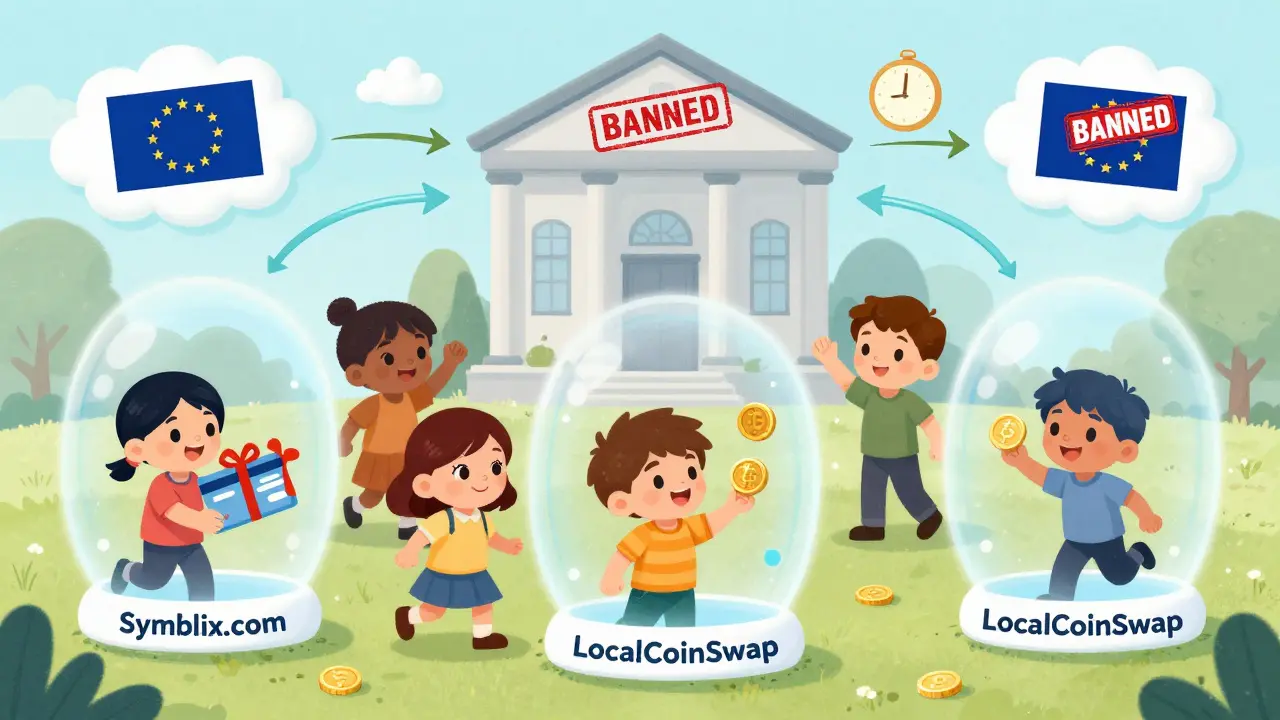
North Macedonia has one of the strangest crypto stories in Europe. Officially, trading cryptocurrency is illegal. The National Bank of the Republic of Macedonia banned it back in 2017, calling it a form of foreign securities trading - something already restricted under its EU association agreement. But if you walk around Skopje, Bitola, or Tetovo, you’ll find people buying and selling Bitcoin, Ethereum, and Dogecoin every day. Not in banks. Not on apps like Binance. But in person, over WhatsApp, and through peer-to-peer platforms that don’t ask questions.
How is this possible? The answer lies in the gap between law and reality. The government never shut down the platforms. The police don’t raid crypto meetups. And most importantly, the National Bank quietly changed its tone in 2023, saying: "Crypto isn’t illegal if it’s not regulated." That’s not a legal ruling. It’s a pause. A breathing room. And people took it.
How People Trade Crypto in North Macedonia Today
You won’t find a single local crypto exchange. No Macedonian Coinbase. No BitMEX clone. Instead, traders rely on three main ways to get in and out of crypto:
- Peer-to-peer (P2P) platforms like Symlix.com and LocalCoinSwap - these are the backbone of underground trading. You create an account, pick a payment method (cash, bank transfer, PayPal, even gift cards), and find someone nearby to trade with. Symlix uses escrow: your money is held until the other person sends the crypto. No one can cheat. No bank gets involved.
- International brokers like Swissquote, Interactive Brokers, and MultiBank. These aren’t licensed in North Macedonia, but they don’t block Macedonian users. You sign up with a passport, deposit euros via SEPA, and trade crypto like you would in Germany. The catch? Fees are high. Swissquote charges up to 3% per trade. For a €500 Bitcoin purchase, that’s €15 just in fees.
- Cash meets - this is the most raw form. People meet in coffee shops, libraries, or parking lots. One person hands over cash. The other sends crypto from their phone. No paperwork. No ID. Just trust - or a shared Telegram group that keeps track of who’s reliable.
These methods work because they avoid the banking system. If you try to transfer crypto directly to a Macedonian bank account, it gets flagged. Banks are still following the 2017 ban. But P2P platforms? They don’t report to the bank. They don’t ask for your tax ID. They just connect buyers and sellers.
The Legal Gray Zone
Here’s where it gets messy. In February 2022, North Macedonia passed new anti-money laundering rules that defined crypto as "virtual assets" and "property." That sounds like legalization. But the 2017 ban was never repealed. So now you have two laws: one saying crypto is illegal, another saying it’s property. No court has ruled on which one wins.
As a result, traders live in uncertainty. One day, a friend might get a call from the National Bank asking why they transferred €2,000 in crypto. Another day, someone might walk into a Swissquote branch in Skopje and deposit euros without a problem. The lack of enforcement isn’t luck - it’s strategy. The government knows crypto won’t disappear. So instead of cracking down, they’re waiting.
Experts say this pause is temporary. The EU’s MiCA regulation - the first unified crypto rulebook in Europe - kicks in fully in 2026. North Macedonia, as a candidate country, will likely adopt it by 2027. Until then, they’re letting the market grow. It’s a gamble. If they move too fast, they risk angering traders. Too slow, and they risk being left behind.
Who’s Trading and Why?
It’s not just tech-savvy youth. According to BrokerChooser’s 2025 data, around 42,000 people in North Macedonia - 2.3% of the population - trade crypto regularly. That’s low compared to the EU average of 5.1%, but growing fast. LocalCoinSwap says Macedonian user activity jumped 300% between 2022 and 2024.
Most traders are young - between 18 and 35. They’re tired of inflation. The average Macedonian salary is €550/month. The cost of living? Around €700. Crypto isn’t just speculation. For many, it’s survival. One Reddit user from Skopje wrote: "I bought Bitcoin with my monthly salary. It went up 15% in three weeks. I sold half, paid my rent, and kept the rest. That’s how I live now."
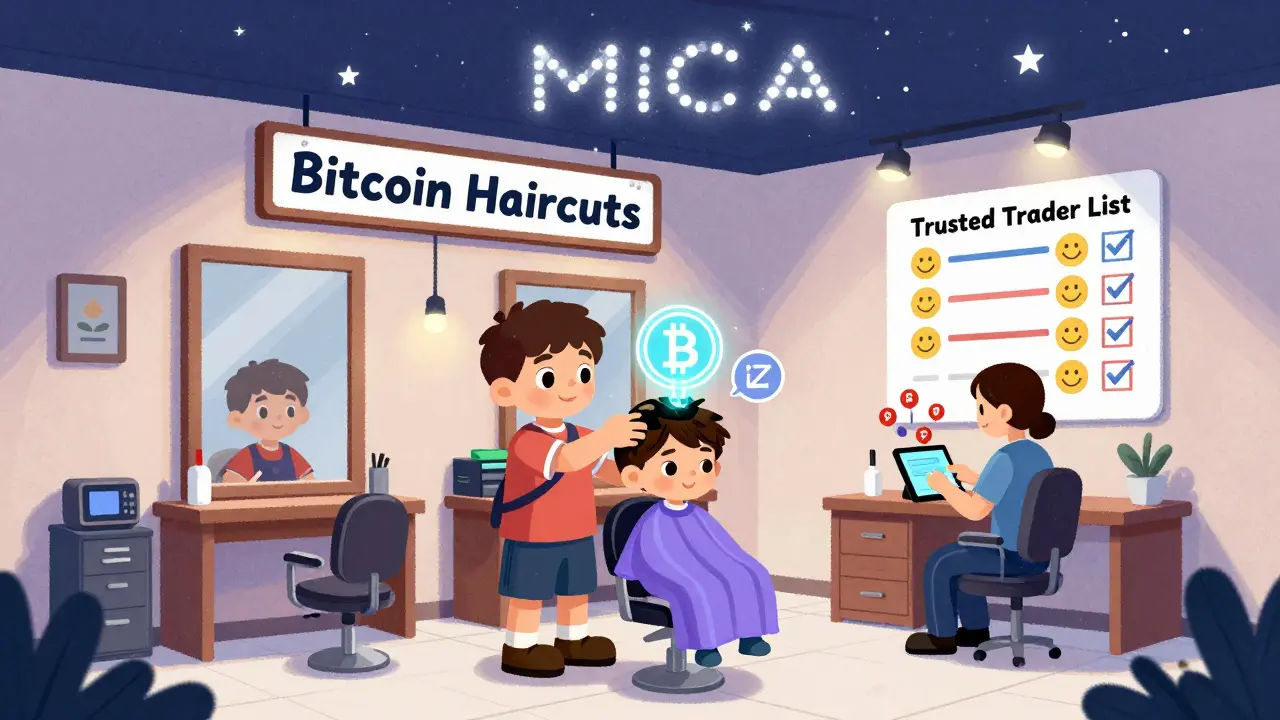
Others are small business owners. A barber in Bitola started accepting Bitcoin for haircuts. A freelance graphic designer in Gostivar invoices clients in USDT. These are tiny, but they’re real. Only three registered businesses in the whole country accept crypto - but dozens more do it informally.
The Risks Are Real
Just because it works doesn’t mean it’s safe.
- Bank freezes - If you deposit crypto profits into your account, your bank might freeze it. One user reported €1,200 locked for two weeks after a bank flagged a transfer from a P2P trade.
- Scams - No regulation means no protection. Fake sellers, fake escrow services, and fake Telegram groups are common. Trust is everything. That’s why users on Reddit and Telegram share "trusted trader lists" - people who’ve traded 10+ times without disappearing.
- Legal exposure - The 2017 ban is still on the books. If the National Bank decides to enforce it tomorrow, traders could face fines or even criminal charges. No one knows how harsh the penalties would be. But the risk is there.
- Price swings - P2P trades take 15-20 minutes. In that time, Bitcoin can swing 3%. You could end up losing money just because you waited too long to confirm the trade.
Most experienced traders follow three rules: never send crypto before payment is confirmed, always use escrow, and never trade more than you can afford to lose. One user told a local forum: "I treat every trade like a gamble at a casino. I only bring cash I’m okay with losing."
What’s Next?
Change is coming. The government is drafting new laws expected by late 2025. They’ll likely require crypto platforms to register, verify users, and report large transactions - just like MiCA. Once that happens, the underground market won’t vanish. It’ll just go legit.
For now, North Macedonia’s crypto scene is a living experiment. It’s not a revolution. It’s not a rebellion. It’s adaptation. People found a way to trade when the system said they couldn’t. They didn’t wait for permission. They built their own rules.
And if history is any guide, regulation rarely kills markets. It just brings them inside - with licenses, fees, and paperwork. The underground traders of North Macedonia won’t disappear. They’ll just get ID cards.
Is crypto really illegal in North Macedonia?
Officially, yes - the National Bank banned crypto trading in 2017. But in practice, no. The government hasn’t enforced the ban since 2022, when it passed new anti-money laundering laws that defined crypto as "property." The bank now says crypto isn’t illegal if it’s not regulated. So while the ban still exists on paper, it’s effectively ignored.
Can I use my local bank to buy crypto in North Macedonia?
No. Most banks in North Macedonia still follow the 2017 ban. If you try to deposit money from a crypto sale into your account, it may get frozen or flagged. People avoid this by using P2P platforms like Symlix or LocalCoinSwap, which let you trade with cash or international transfers without touching your bank account directly.
Which crypto platforms work in North Macedonia?
The most popular are Symlix.com and LocalCoinSwap - both P2P platforms that accept cash, bank transfers, and PayPal. International brokers like Swissquote, Interactive Brokers, and MultiBank also allow Macedonian users to trade crypto, but they charge high fees and don’t offer local support. No domestic exchange exists because of regulatory uncertainty.
Are P2P crypto trades safe in North Macedonia?
They’re safer than they look - if you follow basic rules. Always use escrow (like Symlix does), never send crypto before payment is confirmed, and only trade with people recommended by trusted communities (like Telegram groups or Reddit). Scams happen, but experienced traders rarely lose money because they verify identities and start with small test trades.
Will North Macedonia legalize crypto soon?
Yes - likely by 2026 or 2027. The country is preparing to adopt the EU’s MiCA regulation, which will create clear rules for crypto exchanges, wallets, and trading. The February 2022 AML/CTF law was the first step. The next draft, expected in late 2025, will likely require platforms to register, verify users, and report transactions. The underground market won’t disappear - it’ll just become legal.
How many people in North Macedonia trade crypto?
About 42,000 people - roughly 2.3% of the population - trade crypto regularly, according to BrokerChooser’s 2025 data. That’s low compared to the EU average of 5.1%, but growth has been strong since 2021. LocalCoinSwap reports a 300% increase in Macedonian users between 2022 and 2024.
Justin Credible
bro this is wild. i thought only venezuela had this kind of crypto underground scene. but macedonia? seriously? i just used symlix last week to buy some btc with cash at a coffee shop. no id, no questions. just a guy with a hoodie and a phone. it's like 2014 all over again.
the bank freeze thing is real though. my cousin got his account locked for 3 weeks after he sent 800eur from a p2p trade. no explanation. just 'suspicious activity'. lol.
Nicolette Lutzi
this is why the deep state hates crypto. they can't control it. the nato puppets in skopje are pretending to ban it so they can look tough to brussels, but everyone knows the real game. the us and eu are letting this happen because they want to see how many people will go rogue before the system collapses. this isn't freedom. it's a test. and macedonia is the lab rat.
Jeannie LaCroix
i cried reading this. seriously. i have family in tetovo. my aunt sells handmade scarves and now takes usdt. she said it's the first time in her life she's not living paycheck to paycheck. she bought a secondhand sewing machine with btc.
this isn't just about money. it's about dignity. these people didn't ask for permission. they just built a life where the system said they couldn't. that's beautiful.
Domenic Dawson
this is actually one of the most coherent crypto stories i've read. the key is understanding that the government didn't change the law - they just stopped enforcing it. that’s a tactical retreat, not a policy shift.
the p2p platforms are the real innovation here. no need for banks, no need for bureaucracy. just trust networks and escrow. it’s like the original bitcoin whitepaper came to life in a balkan coffee shop.
Abhishek Thakur
the regulatory ambiguity is classic. when laws conflict, enforcement becomes discretionary. this creates a de facto legal gray zone where market forces dominate. the macedonian authorities are engaging in regulatory arbitrage by not acting - allowing innovation to emerge while avoiding political backlash.
Jackie Crusenberry
so people are risking jail over bitcoin? what a waste. if you're that broke, just get a second job. crypto isn't a solution. it's a distraction. and all these 'trusted trader lists'? sounds like a cult to me.
Neil MacLeod
The phenomenon described herein constitutes a fascinating case study in regulatory non-enforcement as a form of passive governance. The state, by its inaction, effectively delegates sovereign authority to decentralized market mechanisms - a phenomenon rarely observed in post-socialist economies.
Misty Williams
This is exactly why we need to ban crypto entirely. People are gambling with their livelihoods. There's no oversight. No consumer protection. No accountability. And now they're calling it 'adaptation'? It's reckless. It's immoral. It's a Ponzi waiting to happen.
Anand Makawana
The adoption curve here is statistically significant. With 300% growth in two years, and 2.3% of population actively trading, this is not an anomaly - it is an early indicator of macroeconomic displacement. The fiat system is being bypassed via informal infrastructure. This is not rebellion. It is evolution.
Mohammed Tahseen Shaikh
you think this is crazy? wait till you see what's happening in belgrade. macedonia is just the warm-up. the real game is in the balkans - where the youth don't trust banks, don't trust politicians, and don't trust the eu. they trust code. and cash. and their friends.
the system is broken. and they're building something better with their bare hands.
Sarah Terry
Use escrow. Always. And start small. I did a 20eur test trade with someone from bitola. We met at a library. No drama. No drama. He sent the btc, I sent the cash. Done.
That's how you build trust. Not with apps. Not with banks. With quiet, consistent actions.
kavya barikar
It is interesting how informal systems can fill regulatory voids. The human tendency to cooperate, even without formal institutions, is a fundamental social trait. This case demonstrates resilience in the face of institutional failure.
namrata singh
i've been following this for a while. the real story isn't the trading. it's the quiet community networks. the telegram groups, the reddit threads, the word-of-mouth lists. people are creating safety nets out of nothing.
it's not about money. it's about belonging. you're not just trading btc - you're joining a tribe.
Andrea Zaszczynski
wait so you're telling me my cousin in skopje is basically a criminal? but he's just trying to pay rent? i'm confused. is he a criminal or just poor? why does the law care if he uses cash and a phone? this feels like punishment for being broke.
Cordany Harper
i lived in skopje for a year. the vibe is wild. people don't talk about crypto like it's finance. they talk about it like it's water. something you just... use. you don't ask if it's legal. you ask if the guy at the cafe is trustworthy.
that’s the real innovation. not the tech. the trust.
Zion Banks
this is all a psyop. the national bank didn't stop enforcing the ban - they're waiting to catch everyone in a big sting. the 'pause' is bait. they're building a database of every p2p trader. next year, they'll raid homes, seize phones, and charge everyone with money laundering. mark my words.
manoj kumar
another crypto bros delusion. 42k people? out of 2 million? that's less than 2%. this isn't a movement. it's a bunch of kids with too much time and too little sense. and you call this 'adaptation'? it's just desperation.
JOHN NGEH
this gives me hope. i'm from a country where the government says crypto is illegal and banks freeze every transaction. but seeing this - people finding a way - makes me think maybe change is possible. not through protest. through practice.
Jenni Moss
you guys are so brave. i can't even imagine doing a cash trade. but if i had to choose between starving and trading btc? i'd do it.
thank you for showing us that even when the system says no - you can still say yes.
vu phung
the real win here isn't the btc. it's the bypass. you're not just trading crypto - you're bypassing the entire financial gatekeeping system. no kyc, no bank approval, no waiting 3 days for a wire. just you, your phone, and a handshake. that's the future right there.