
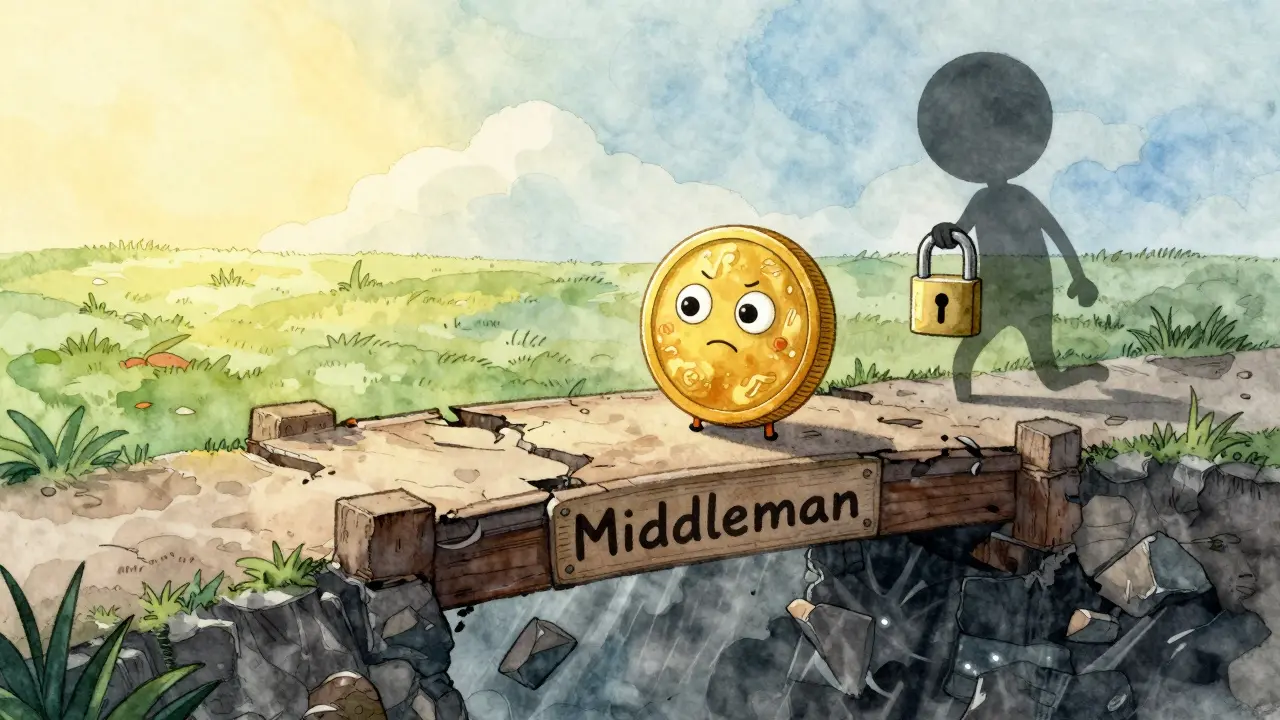
You trust your customers to pay you. You trust the blockchain to move that money. But do you really trust a middleman with your life savings? For years, merchants have used custodial processors like CoinPayments because they were easy to set up. The trade-off was simple: convenience in exchange for control. When you use a custodial service, your funds sit in their wallets. If they get hacked, go bankrupt, or freeze your account due to a regulatory misunderstanding, you lose access to your capital.
In 2026, the landscape has shifted. Merchants no longer accept "trust us" as a valid security model. The rise of non-custodial crypto payment gateways means you can accept digital assets without ever handing over custody. These platforms act as mere coordinators, connecting invoices to blockchain transactions while keeping your private keys-and your funds-strictly under your control. Here is how to choose the right alternative that keeps your money yours.
The Core Problem: Custodial Risk vs. Merchant Control
To understand why non-custodial solutions are gaining traction, you need to look at the mechanics of a traditional transaction. With a custodial gateway, the customer sends funds to an address controlled by the payment processor. The processor confirms the transaction on-chain and then credits your internal dashboard balance. Only when you request a withdrawal do they send the funds to your personal wallet.
This creates a counterparty risk known as "custodian risk." You are exposed to the security practices, solvency, and regulatory compliance of the platform holding your money. History shows this is dangerous. Exchanges and processors have failed repeatedly, leaving merchants with zero recourse. A non-custodial gateway eliminates this layer entirely. The customer pays directly into an address derived from your public key. The gateway simply monitors the blockchain for that specific transaction and notifies your website via webhook that the payment is complete. The funds never leave the blockchain network to sit in a third-party pool.
Top Non-Custodial Alternatives to CoinPayments
Not all non-custodial gateways are built the same. Some are lightweight plugins, others are complex self-hosted servers, and some are modern API-first platforms designed for developers. Here are the leading options available in 2026.
Blockonomics: The Quick Setup Option
Blockonomics is one of the most established names in the space. It functions as a non-custodial bridge that integrates easily with popular e-commerce platforms like WooCommerce and WHMCS. Blockonomics supports Bitcoin, Bitcoin Cash, and USDT. Their setup process is incredibly fast, often taking less than five minutes for standard integrations.
The fee structure is straightforward: they offer 20 free transactions per month, after which a 1% fee applies. There are no KYC requirements, meaning you don’t need to submit identity documents to start accepting payments. However, Blockonomics is limited in its asset support. If you want to accept Ethereum, Solana, or other major chains, this isn’t the right tool. It is best suited for Bitcoin-only merchants who want a plug-and-play solution without coding.
BTCPay Server: Total Independence
If you value sovereignty above all else, BTCPay Server is the gold standard. It is open-source software that you host on your own server. Because you run the infrastructure, there are zero platform fees. You keep 100% of what you earn, minus only the minimal network gas fees paid to miners.
BTCPay Server requires technical expertise. You need to manage a Linux server, handle updates, and secure your own database. It is not a turnkey solution for beginners. However, for technically qualified teams, it offers total privacy and independence. Since you host it, no third party can shut down your payment processing or freeze your funds. It supports Lightning Network integration for instant microtransactions, making it powerful for high-volume or low-value recurring billing.
TxNod: Modern Developer Experience
TxNod represents a newer generation of non-custodial gateways designed specifically for solo founders, indie hackers, and modern development stacks. Unlike older platforms that rely on legacy APIs, TxNod is built around a TypeScript SDK and MCP (Model Context Protocol) native integration, allowing AI coding agents to build payment flows automatically.
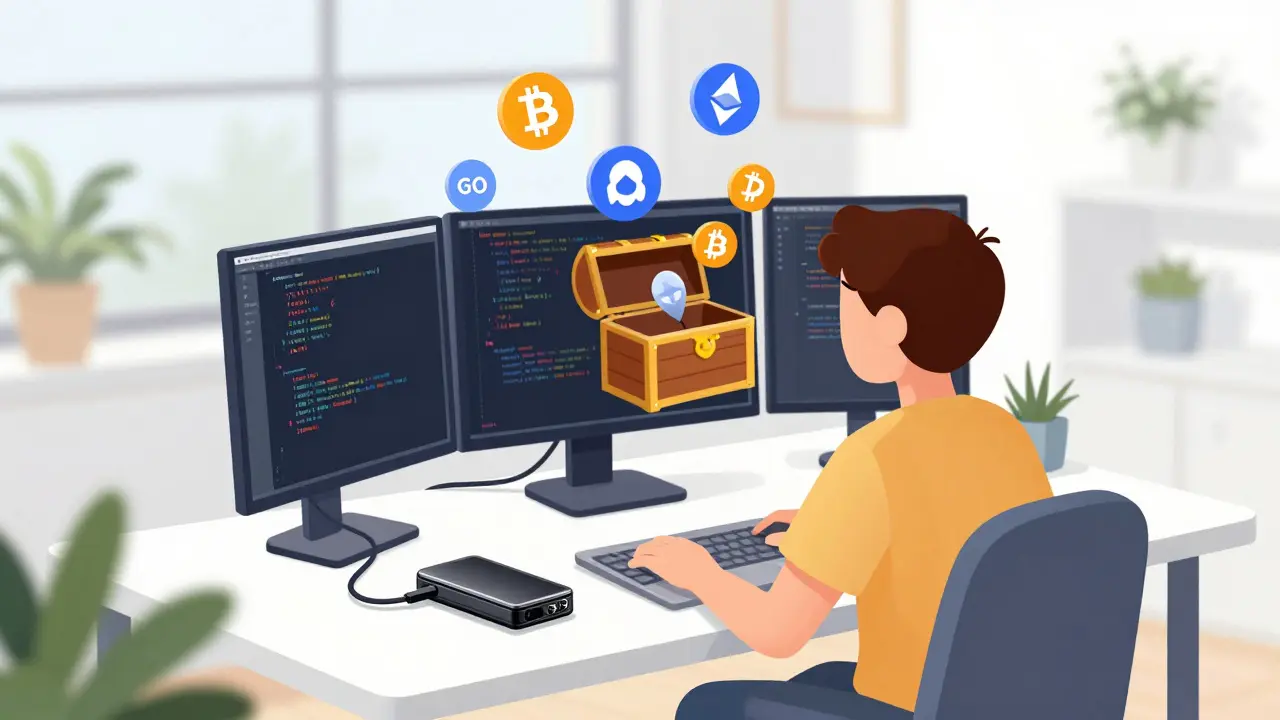
The architecture is strictly non-custodial. Merchants connect extended public keys (xpubs) from hardware wallets like Ledger or Trezor. TxNod derives unique addresses for each invoice but never sees private keys. The SDK even allows local verification of these addresses, ensuring the gateway cannot trick you into sending funds elsewhere. TxNod supports seven chains including Bitcoin, Ethereum, TRON, Cardano, Polygon, BNB Smart Chain, and TON. The pricing model is a flat $20/month subscription with 0% take-rate on transaction volume, which benefits high-volume merchants significantly compared to percentage-based competitors.
BoomFi and BucksBus: Niche Contenders
BoomFi offers broader blockchain support, including BNB Chain, Solana, and TRON, alongside Bitcoin. It includes AML monitoring features, which might be necessary for merchants operating in highly regulated jurisdictions, though this adds a layer of compliance data collection that pure self-custody advocates dislike. BucksBus operates on a fixed-fee model of $0.70 per transaction regardless of volume. This can be cost-effective for large-ticket items but expensive for micro-transactions. Both operate non-custodially, ensuring direct wallet-to-wallet transfers.
| Feature | Blockonomics | BTCPay Server | TxNod | BucksBus |
|---|---|---|---|---|
| Custody Model | Non-Custodial | Non-Custodial | Non-Custodial | Non-Custodial |
| Supported Chains | BTC, BCH, USDT | BTC, Lightning, Multi-chain* | 7 Chains (BTC, ETH, TRX, ADA, etc.) | Multi-chain |
| Fees | 1% after 20 free txs | 0% (Self-hosted) | $20/mo flat, 0% take | $0.70 per transaction |
| KYC Required? | No | No | No | No |
| Technical Skill | Low (Plug-in) | High (Server Admin) | Medium (Developer/API) | Low |
| Hardware Wallet Support | Limited | Yes (Direct) | Yes (Ledger/Trezor xpub) | No |
Why Fees Matter More Than You Think
When comparing payment processors, the headline fee is often misleading. Custodial processors like BitPay charge around 1% per transaction. For a merchant processing $10,000 a month, that’s $100 gone. For someone processing $100,000, it’s $1,000. These costs scale linearly with your success, punishing growth.
Non-custodial models break this pattern. BTCPay Server charges nothing, but you pay for your own server hosting. Blockonomics takes a percentage, similar to traditional models. TxNod uses a subscription model ($20/month). If you process more than $2,000 worth of transactions a month, the subscription model becomes cheaper than a 1% fee. If you process $50,000 a month, you save nearly $500 compared to percentage-based gateways. Always calculate your break-even point based on your expected volume.

Security Architecture: What Does "Non-Custodial" Actually Mean?
Marketing terms can be vague. True non-custodial operation means three things:
- No Private Keys: The platform never stores, processes, or transmits your private keys or seed phrases.
- Direct Settlement: Funds move from the customer’s wallet directly to your wallet on the blockchain. There is no intermediate escrow.
- Address Derivation Transparency: You should know exactly how payment addresses are generated. Platforms like TxNod allow you to verify that the invoice address matches the derivation path of your own xpub locally via SDK. This prevents man-in-the-middle attacks where a compromised server might substitute your address with theirs.
Platforms like SHKeeper emphasize privacy by requiring no personal information, but true security comes from cryptographic proof of ownership. Using a hardware wallet like Ledger or Trezor to generate your xpub ensures that even if the payment gateway’s database is breached, attackers cannot withdraw your funds. They only have public keys, which are useless for spending.
Integration and Developer Experience
How you integrate the gateway matters as much as the gateway itself. Legacy systems often require manual webhook configuration and fragile API calls. Modern solutions prioritize developer experience (DX).
For example, TxNod provides a TypeScript SDK with auto-generated types from Zod schemas. This means your code knows exactly what data structures to expect, reducing runtime errors. It also offers MCP server support, enabling AI coding assistants to write the integration code for you. If you are building a SaaS product or a membership site, this reduces integration time from days to hours. BTCPay Server relies on community plugins and raw API endpoints, which can be robust but lack the polished DX of commercial SDKs. Blockonomics offers simple plugins for WordPress/WooCommerce, which is great for non-technical store owners but limiting for custom applications.
Regulatory Considerations and KYC
One of the biggest advantages of non-custodial gateways is the absence of Know-Your-Customer (KYC) requirements. Since the platform does not hold your funds, they are not classified as a money transmitter in many jurisdictions. This simplifies onboarding for solo founders and small businesses who do not want to register a corporation just to accept crypto.
However, regulations are evolving. While the gateway may not require KYC, your local tax laws still apply. You are responsible for reporting income. Some platforms, like BoomFi, include AML monitoring tools to help merchants stay compliant in stricter regions. If you operate in a highly regulated environment, ensure your chosen gateway provides sufficient transaction logs and audit trails for your accounting needs.
Choosing the Right Solution for Your Business
Your choice depends on your technical capacity and business goals.
If you run a simple WooCommerce store and only care about Bitcoin, Blockonomics is the easiest path. It works out of the box with minimal effort. If you are a technical team running a large-scale operation and want to eliminate all third-party dependencies, BTCPay Server is the ultimate choice, provided you have the DevOps resources to maintain it.
If you are a developer, indie hacker, or solo founder building a modern web app, TxNod offers the best balance of multi-chain support, security, and developer experience. Its flat pricing scales well, and its hardware wallet integration ensures top-tier security without the complexity of self-hosting a full node. For merchants seeking fixed-cost predictability and broad chain support without coding, BucksBus or BoomFi serve as viable intermediaries.
The era of trusting third parties with your revenue is ending. By switching to a non-custodial alternative, you reclaim control over your financial infrastructure. You reduce risk, lower long-term costs, and align your business with the core ethos of cryptocurrency: user sovereignty.
What is the main difference between CoinPayments and non-custodial alternatives?
CoinPayments is a custodial service, meaning it holds your funds in its own wallets before transferring them to you. This creates counterparty risk. Non-custodial alternatives facilitate the transaction directly between the customer and your wallet, so the funds never touch the processor's accounts.
Do I need KYC to use non-custodial payment gateways?
Most non-custodial gateways like Blockonomics, BTCPay Server, and TxNod do not require KYC (Know-Your-Customer) verification because they do not hold your funds. However, always check current regulations in your jurisdiction, as some platforms may introduce compliance features like AML monitoring.
Which non-custodial gateway supports the most cryptocurrencies?
TxNod supports seven major chains including Bitcoin, Ethereum, TRON, Cardano, Polygon, BNB Smart Chain, and TON. BTCPay Server also supports multiple chains but requires more technical setup. Blockonomics is primarily focused on Bitcoin and Bitcoin Cash.
Is BTCPay Server free to use?
BTCPay Server is open-source and has no platform fees. However, you must host it yourself, which incurs server costs. Alternatively, services like TxNod offer managed non-custodial solutions for a flat monthly subscription, eliminating the need for server maintenance.
Can I use a hardware wallet with these non-custodial gateways?
Yes. TxNod and BTCPay Server explicitly support hardware wallets like Ledger and Trezor by using extended public keys (xpubs). This ensures your private keys never leave your device, providing maximum security against hacks.