
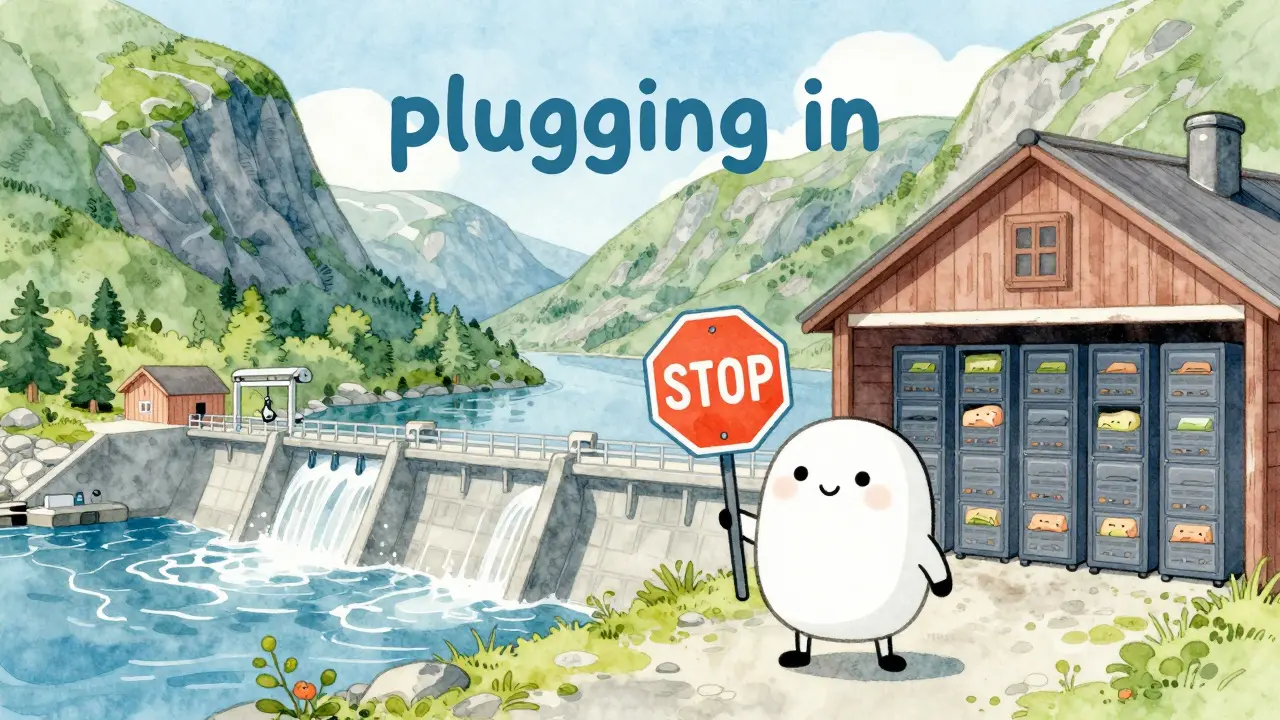
Imagine setting up a massive server farm in one of the world’s greenest countries, only to be told you can’t plug it in. That is exactly what happened to many cryptocurrency miners looking at Norway. In early 2025, this Nordic nation became the first country in Europe to implement a comprehensive regulatory framework specifically targeting crypto mining data centers. It wasn't just a suggestion; it was a hard stop for new operations.
If you are an investor, a miner, or just someone watching how governments handle digital assets, Norway’s move sends a clear signal. The government decided that electricity is too valuable to burn on speculative digital coins when it could power homes, factories, or hospitals. This article breaks down what these restrictions actually mean, who they affect, and why Norway took such a drastic step compared to its neighbors.
The Two-Pronged Regulatory Attack
To understand the landscape, you need to look at the two main pillars of Norway’s new strategy. First, there is the mandatory registration system. Second, there is the temporary ban on new mining facilities. These aren't vague guidelines; they are enforced laws with real teeth.
The foundation was laid by the Norwegian Electronic Communications Act, which came into force on January 1, 2025. This law created the first national data center registry in Europe. The Norwegian Communications Authority (known as Nkom) is the body responsible for enforcing this. They didn't give operators much time to adjust. Existing data centers had until July 1, 2025, to register their operations. For any new facility, registration must happen before construction even begins.
Why does registration matter? Because it forces transparency. Operators must disclose everything: company name, physical address, legal status, and a designated contact person. But the most critical part is the customer list. You have to say who uses your facility. If you host crypto miners, you have to declare it. This turns the lights on for regulators. Before this, mining farms could hide behind generic IT service labels. Now, Nkom knows exactly where the power-intensive machines are humming.
The Temporary Ban on New Mining Operations
Registration is just the tracking mechanism. The real hammer is the ban. Announced in April 2024 and implemented in autumn 2025, this rule prohibits the establishment of new cryptocurrency mining data centers. It is important to note that this is a temporary ban, but "temporary" in government terms often means "until we change our minds again."
This ban targets facilities using the most energy-intensive mining technologies. It does not shut down existing mines. If you were already mining before the cutoff, you can keep going. But you cannot expand, and no new entrants are allowed. This approach is different from China’s 2021 crackdown, which was a total prohibition. Norway is more nuanced: they want to freeze the sector in place while redirecting future energy investments elsewhere.
Karianne Tung, the Minister of Digitalization and Public Administration, was blunt about the intention. She stated that the Labour Party government intends to limit cryptocurrency mining "as much as possible." Energy Minister Terje Aasland added that electricity should go to industries that provide greater social and economic benefits. To them, crypto mining generates little employment and minimal local income, making it a poor use of national resources.
Why Norway Changed Its Tune
You might wonder why Norway, a country famous for its abundant hydroelectric power, would restrict usage so strictly. The answer lies in resource allocation. While Norway has plenty of renewable energy, it isn't infinite. During winter months, when water levels in reservoirs drop, electricity becomes scarce and expensive.
The government argues that burning gigawatts of power to secure a decentralized ledger offers less tangible value than powering traditional manufacturing or public services. This represents a fundamental shift in Nordic energy policy. Historically, countries like Iceland, Sweden, and Finland welcomed miners because they had excess cheap renewable energy. Norway is now saying, "Not here, not anymore."
This decision also reflects a broader European trend toward regulating the environmental impact of digital assets. As the EU implements the Markets in Crypto Assets (MiCA) regulation throughout 2025, Norway is aligning its domestic energy policies with stricter oversight standards. The goal is to prevent Norway from becoming a haven for energy-guzzling tech that doesn't contribute to the local economy.

Comparison: Norway vs. Other Jurisdictions
To see how strict Norway really is, let’s compare it to other regions. This table highlights the key differences in regulatory approaches.
| Country | New Mining Bans | Data Center Registry | Energy Source Focus | Enforcement Penalty |
|---|---|---|---|---|
| Norway | Yes (Temporary) | Mandatory (Nkom) | Hydroelectric Conservation | Up to 5% of turnover |
| China | Yes (Permanent) | No specific registry | Grid Stability | Full shutdown |
| Iceland | No | No mandatory registry | Geothermal/Hydro Surplus | Standard commercial law |
| USA (Texas) | No | No mandatory registry | Market-driven demand | Grid curtailment incentives |
As you can see, Norway sits in a unique middle ground. It is more restrictive than the US or Iceland but less absolute than China. The mandatory registry is a standout feature. Most EU member states do not require such detailed disclosure of end-users for data centers. This makes Norway’s enforcement mechanism one of the strictest in Europe.
Impact on Miners and Investors
So, what does this mean for you if you wanted to mine in Norway? The short answer is: don’t bother starting a new operation. The compliance costs alone are daunting. Registration requires significant administrative effort, including legal documentation and ongoing reporting. For small-scale miners, these costs outweigh the potential profits.
International mining companies have already reacted. Many have relocated planned investments to other Nordic countries like Sweden or Finland, or to North America where renewable energy is cheaper and regulations are friendlier. This "regulatory arbitrage" means hash rate-the computing power securing networks like Bitcoin-is moving away from Norway.
Existing operators are in a precarious position. While they can continue operating, the uncertainty remains. Will the temporary ban become permanent? Will restrictions expand to cover expansion of existing sites? The lack of precise energy consumption thresholds for the ban creates legal ambiguity. Borderline operations worry about sudden enforcement actions.
Enforcement and Penalties
Norway isn't just talking; they are penalizing non-compliance. If you fail to register your data center, or if you start a new mining operation during the ban period, the consequences are severe. Fines can reach up to 5% of your annual turnover. For a large mining firm, this is millions of dollars.
The Norwegian Financial Supervisory Authority (FSA) is also involved, particularly regarding MiCA implementation. This adds another layer of complexity. Miners must navigate both energy restrictions and financial services regulations. It requires specialized legal expertise. You can’t just buy ASIC miners and plug them into a warehouse anymore. You need lawyers, compliance officers, and a serious relationship with Nkom.
Future Outlook: Is This Just the Beginning?
The autumn 2025 implementation is just the start. Government officials have hinted that they will continuously evaluate crypto mining against Norway’s climate goals. If mining technology doesn’t become significantly more efficient, or if energy demand spikes, further restrictions are likely.
Environmental groups support Norway’s model, seeing it as a blueprint for sustainable energy policy. They argue that other nations should follow suit to prevent the depletion of renewable resources for speculative gains. On the other hand, crypto advocates criticize the ban as technologically discriminatory. They argue that innovation shouldn't be stifled by political preferences for traditional industries.
For now, Norway stands as a warning sign. The era of unrestricted, cheap-power crypto mining in Europe is over. If you are planning a mining venture, look elsewhere. If you are already in Norway, prepare for heavy scrutiny. The message from Oslo is clear: electricity is a public good, not a commodity for digital speculation.
Can I still mine cryptocurrency in Norway?
Yes, but only if you started before the ban took effect. The temporary ban applies exclusively to new cryptocurrency mining data centers. Existing facilities are allowed to continue operations, but they cannot expand significantly without risking violation of the spirit of the law. All operations must be registered with Nkom.
What happens if I don't register my data center?
Non-compliance carries heavy financial penalties. Fines can go up to 5% of your annual turnover. Additionally, authorities can shut down unregistered facilities. The registration requirement is mandatory for all data centers, regardless of size, under the Norwegian Electronic Communications Act.
Why did Norway ban crypto mining?
The government believes that cryptocurrency mining consumes excessive electricity while generating minimal local jobs or economic benefit. They want to redirect this valuable hydroelectric power to traditional industries, manufacturing, and public services that provide more tangible social value.
Is the ban permanent?
No, it is currently described as a temporary ban. However, there is no set end date. The government plans to evaluate the situation regularly. Given the strong political stance from ministers like Karianne Tung, it could remain in place for years or potentially become permanent if energy constraints persist.
How does Norway's regulation compare to the EU?
Norway’s regulations are stricter than most EU member states, particularly regarding the mandatory data center registry and the explicit ban on new mining facilities. While the EU is implementing MiCA for financial oversight, Norway has added a separate, aggressive layer of energy-specific restrictions that goes beyond standard EU directives.