Alium Finance: What It Is, Why It Matters, and What You Need to Know
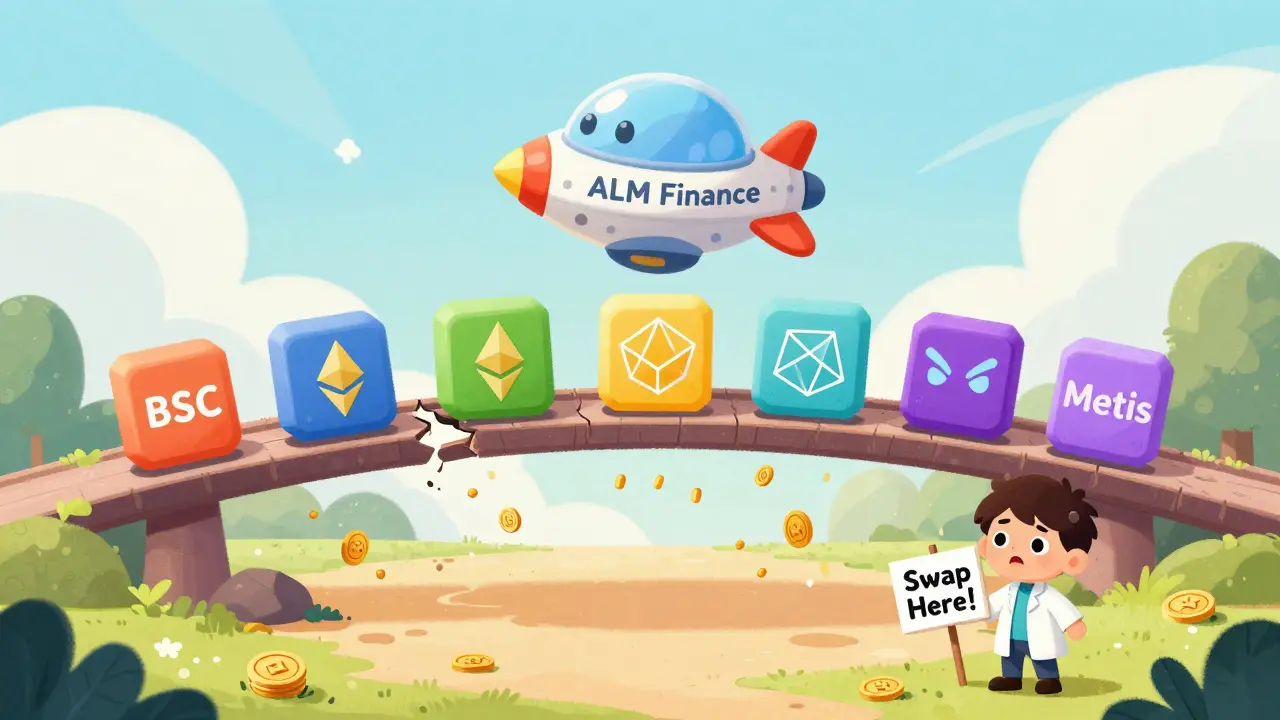
When you hear Alium Finance, a decentralized finance protocol built to connect liquidity across multiple blockchains. It's not just another DeFi app—it's a bridge between chains, designed to make yield farming and trading smoother without locking your assets in one network. Unlike platforms that trap your funds on Ethereum or Solana, Alium Finance lets you move value where it’s needed, when it’s needed. That’s the core idea: liquidity without borders.
What makes Alium Finance stand out? It’s the way it handles cross-chain liquidity, the ability to use assets from one blockchain in applications on another. Most DeFi protocols force you to wrap tokens or use bridges that are slow and risky. Alium Finance cuts through that by using its own smart contract layer to sync balances across chains in near real-time. This means you can stake on Avalanche, earn rewards in Polygon, and trade on Arbitrum—all without switching wallets or paying three sets of gas fees.
It’s also built for blockchain governance, a system where token holders vote on upgrades, fee structures, and new chain integrations. Unlike top-down DeFi projects where devs make all the calls, Alium Finance lets its community shape its future. That’s why its token, ALM, isn’t just a reward—it’s a vote. People who hold it aren’t just investors; they’re stakeholders in how the protocol evolves.
And then there’s the tokenomics, the economic design behind how tokens are created, distributed, and used within the system. Alium Finance doesn’t dump tokens on the market. It releases them slowly through liquidity mining, staking rewards, and protocol fees. That keeps supply tight and incentives aligned. You won’t find rug pulls here—just a slow, steady build.
But here’s the thing: Alium Finance isn’t for everyone. If you’re looking for a simple app to swap tokens with one click, this isn’t it. It’s for people who understand DeFi layers, care about where their money flows, and want to earn without being chained to one chain. It’s for those who’ve seen too many protocols die because they couldn’t adapt. Alium Finance was built to survive the next crypto cycle—not by chasing hype, but by fixing the real problems.
Below, you’ll find real-world breakdowns of how Alium Finance compares to other DeFi tools, what its token really does, and whether its cross-chain model holds up under pressure. Some posts expose its risks. Others show how users are making real returns. No fluff. No marketing. Just what’s happening on the ground.