
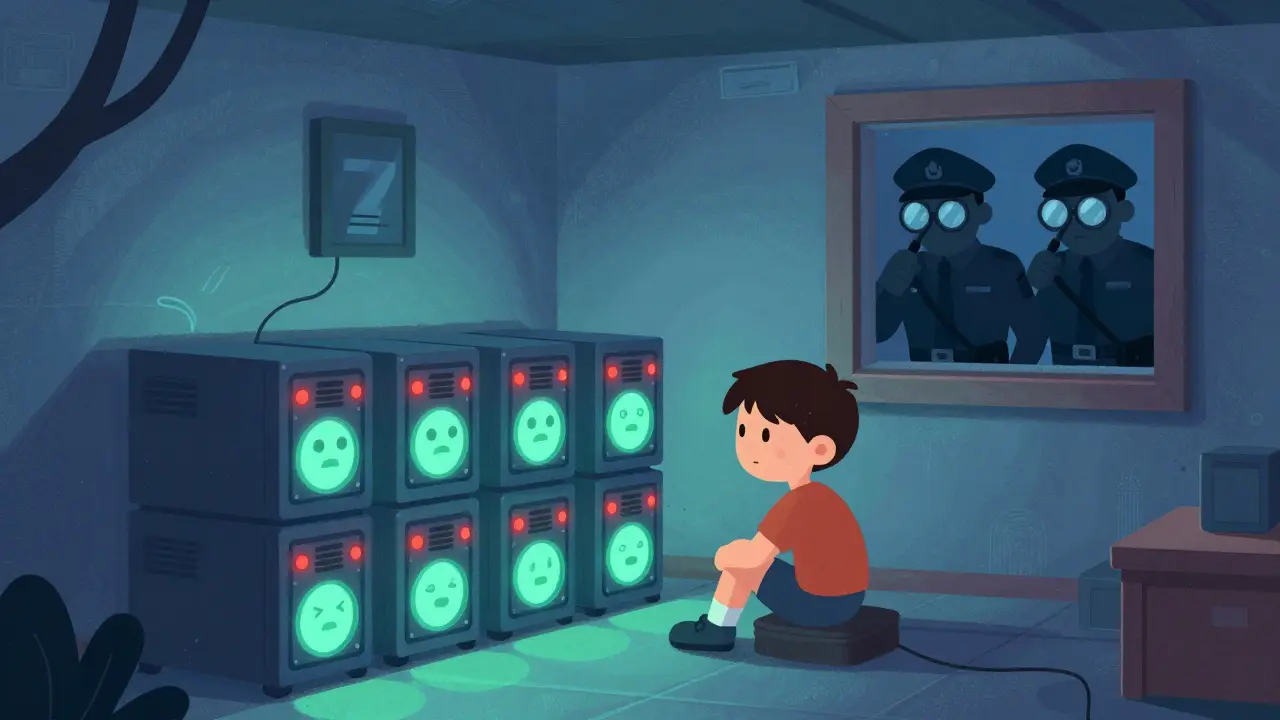
Imagine setting up a powerful Bitcoin mining rig in your basement. You plug it in, watch the hash rate climb, and start earning rewards. Now, imagine that same setup being classified as a criminal offense, punishable by arrest and asset seizure. That is the reality for anyone considering mining crypto in China. If you are looking to set up operations there, or even wondering if your overseas relatives can do it safely, the short answer is no. It is not just discouraged; it is illegal.
As of 2026, China has moved from strict regulation to total prohibition. The landscape isn't gray-it is black. The government views decentralized cryptocurrency mining as a direct threat to its financial sovereignty, energy goals, and social stability. This article breaks down exactly what is banned, why the crackdown happened, how authorities catch violators, and what this means for the global crypto ecosystem.
The Current Legal Status: A Total Prohibition
To understand where things stand today, we need to look at the timeline. China didn't wake up one day and ban everything. They tightened the screws over more than a decade. In 2013, banks were told to stop processing Bitcoin transactions. By 2017, Initial Coin Offerings (ICOs) were shut down as unauthorized fundraising. But the real turning point came in 2021.
In September 2021, the People's Bank of China (PBOC) declared all cryptocurrency transactions illegal. More importantly for miners, they labeled mining activities as "inefficient use of resources" and banned them nationwide. This wasn't a suggestion. Local governments were ordered to cut power to mining farms immediately. Thousands of ASIC miners were dismantled, shipped out, or destroyed.
Then came the escalation in May 2025. Authorities implemented a "comprehensive ban on all cryptocurrency activities." This update closed loopholes. Previously, some argued that personal ownership might be tolerated if trading was banned. The 2025 framework made any form of crypto trading, mining, or even holding significant amounts a criminal offense. The State Administration of Foreign Exchange and the Cyberspace Administration now actively monitor for these activities. If you are caught mining, you aren't just fined; you face potential imprisonment under charges related to illegal business operations or disrupting financial order.
| Year | Regulatory Action | Impact on Miners |
|---|---|---|
| 2013 | Banks prohibited from processing Bitcoin transactions | Cash-only mining begins; banking access lost |
| 2017 | ICO ban and shutdown of domestic exchanges | No easy way to sell mined coins; market isolation |
| 2021 | Nationwide mining ban declared by PBOC | Mass exodus of miners; power cuts to farms |
| 2024 | Systematic arrests and asset seizures | High risk of imprisonment for operators |
| 2025 | Comprehensive ban on all crypto activities | Ownership and mining criminalized; zero tolerance |
Why Did China Ban Crypto Mining?
You might wonder why a country with such advanced technology would reject an industry worth billions. It comes down to four specific concerns that drive Beijing's policy.
Energy Consumption is the biggest factor. Bitcoin mining is incredibly energy-intensive. During peak times, China's mining sector consumed enough electricity to power small nations. This directly conflicted with President Xi Jinping's "Dual Carbon" goals: peaking carbon emissions by 2030 and achieving carbon neutrality by 2060. Every kilowatt-hour used by a miner was seen as wasted energy that could have gone to manufacturing or residential use.
Financial Control is the second pillar. China prides itself on having one of the most controlled financial systems in the world. Cryptocurrencies operate outside the central bank's influence. They allow capital flight-money leaving the country without permission. For a government that strictly manages currency flows, decentralized assets are a security risk.
Illegal Activities play a role too. While crypto isn't inherently criminal, its anonymity features make it attractive for money laundering, fraud, and underground gambling. Chinese authorities want to eliminate these vectors entirely.
Finally, there is the Digital Yuan (e-CNY). China is aggressively developing its Central Bank Digital Currency (CBDC). The e-CNY is state-backed, traceable, and controllable. Allowing competing decentralized currencies like Bitcoin undermines the adoption of the digital yuan. The government wants everyone using *their* digital currency, not a decentralized alternative.

How Authorities Catch Underground Miners
Even with a total ban, crime doesn't disappear-it goes underground. Despite official statistics showing zero legal mining, studies suggest covert operations still exist in fragmented setups. So, how does the government find them? They don't need to guess. They have data.
Electricity Monitoring is the primary detection tool. Mining rigs consume massive amounts of power in predictable patterns. Utility companies report unusual spikes to local authorities. If a residential building or a small factory suddenly doubles its electricity usage without expanding production, red flags go up. Inspectors show up quickly.
Banking Compliance Checks are equally effective. You cannot legally sell crypto in China. But if you mine it, you eventually want to cash out. When large sums of unexplained cash appear in a bank account, or when individuals try to move funds offshore via peer-to-peer transfers, the State Administration of Foreign Exchange flags the transaction. Banks are required to freeze accounts suspected of crypto involvement.
The Cyberspace Administration monitors internet traffic. Mining software communicates with blockchain nodes globally. These connections leave digital footprints. ISPs can detect known mining protocols and block or log them. Combine this with thermal imaging drones used in some regions to spot heat signatures from server rooms, and you have a surveillance net that is very hard to escape.
The Global Impact: Where Did the Hashrate Go?
When China banned mining in 2021, it held about 65-70% of the global Bitcoin hashrate. Overnight, that power vanished from the network. The Bitcoin network experienced its largest difficulty adjustment drop in history. But the miners didn't stop; they moved.
This event triggered the greatest relocation of industrial hardware in crypto history. Miners packed their Antminer S19s and WhatsMiner M30s into shipping containers and headed north and west. The United States became the new leader, particularly states like Texas and North Dakota, which offered cheap renewable energy and favorable regulations. Canada also saw a surge, leveraging its hydroelectric power. Kazakhstan and other Central Asian countries became temporary hubs, though many later faced their own regulatory pressures due to grid instability caused by the influx of miners.
The impact on the market was immediate. In May 2025, when the comprehensive ban was announced, Bitcoin dropped from $111,000 to $104,500 within hours. Over $750 million in long positions were liquidated. The market realized that any remaining hidden capacity in China was effectively dead weight. Today, the global mining map is diversified. No single country dominates as China once did. This decentralization is actually good for the Bitcoin network's resilience, but it has increased operational costs for miners who now pay higher electricity rates in regulated jurisdictions.

Risks for Individuals and Businesses
If you are a foreign investor thinking about partnering with a Chinese company for mining, stop. The risks are existential. There is no legal contract that will protect you. Any agreement involving crypto mining is void under Chinese law. If your partner gets raided, you lose your equipment, your investment, and potentially your ability to enter the country.
For Chinese citizens living abroad, the rules are stricter than ever. The 2025 ban applies to Chinese nationals regardless of location. If you return to China with crypto assets or income derived from mining, you can be prosecuted. Authorities track cross-border movements closely. Many expats have been denied re-entry or had their assets frozen upon arrival because of past crypto involvement.
Underground miners inside China face severe penalties. Recent cases in 2024 and 2025 show sentences ranging from two to five years for operating medium-sized farms. Equipment is confiscated and auctioned off. Families of those arrested often face social stigma and financial ruin. It is not a risk worth taking for the marginal profit of mining in a high-risk environment.
The Future: Digital Yuan vs. Decentralized Crypto
Looking ahead to the rest of 2026 and beyond, expect no reversal of these policies. The Chinese government has doubled down on the e-CNY. Pilot programs are expanding across major cities, integrating with WeChat Pay and Alipay. The goal is a fully digital, state-controlled monetary system.
Blockchain technology itself is not banned. China supports "blockchain without crypto"-using the ledger technology for supply chain tracking, government records, and enterprise solutions, but stripping away the decentralized token incentive. This creates a unique dichotomy: China leads in blockchain infrastructure but lags in decentralized finance (DeFi) adoption.
For the global community, China's exit from mining has accelerated innovation in green energy integration. Miners in Europe and North America are now partnering with solar and wind farms to provide grid stabilization services. The industry has matured from a wild west of cheap coal power in Inner Mongolia to a sophisticated sector focused on sustainability and compliance.
Is Bitcoin mining legal in China in 2026?
No. As of 2026, Bitcoin mining is completely illegal in China. The 2025 comprehensive ban criminalized all cryptocurrency activities, including mining, trading, and ownership. Violators face fines, confiscation of equipment, and potential imprisonment.
Can I own cryptocurrency if I live in China?
Technically, individual ownership exists in a legal gray area but is heavily restricted. However, the 2025 regulations have escalated to treating significant holdings as criminal offenses. Buying, selling, or exchanging crypto is strictly prohibited, making safe ownership nearly impossible.
Where did Chinese crypto miners go after the ban?
Most miners relocated to countries with favorable regulations and cheap energy. The United States (especially Texas), Canada, Kazakhstan, and Russia became the new primary hubs for global Bitcoin mining operations.
Does China support blockchain technology?
Yes, but only non-cryptocurrency blockchain applications. China promotes blockchain for enterprise use, supply chain management, and government efficiency. They explicitly reject decentralized cryptocurrencies in favor of their state-backed digital yuan (e-CNY).
What are the penalties for illegal crypto mining in China?
Penalties include confiscation of all mining equipment and profits, heavy fines, and criminal charges. Sentences can range from several months to multiple years in prison, depending on the scale of the operation and the amount of electricity stolen or misused.
Ankush Pokarana
the sheer scale of this prohibition is almost poetic in its absolutism, one has to wonder if the state truly fears the technology or merely the loss of control over narrative and capital flow, it feels like a classic case of centralized power trying to crush decentralized freedom under the weight of bureaucracy and fear, and yet here we are watching the global map redraw itself as miners flee to places that still value individual liberty and energy abundance, it is fascinating how geography now dictates economic participation in the digital age
Bianca Vilas Boas Lourenço
Oh great, another country deciding they know better than everyone else about what we can do with our own money and electricity 😒 I mean who needs financial sovereignty anyway right? Just hand over your hard earned cash to the state and let them decide if you deserve to keep it 🙄 Honestly the drama of people trying to mine crypto while being hunted by drones is just too much for me to handle today 💀
Yash Lodha
You think this is just about energy consumption? Please. The real reason is the surveillance state cannot tolerate an untraceable ledger. They use thermal imaging not just to find heat but to map dissent. The e-CNY is not a currency it is a tracking collar for the entire population. When they ban mining they ban the ability to opt out of their digital panopticon. Do not be fooled by the greenwashing narrative.
Jesse Alston
It is really important to understand that the relocation of hash rate to Texas and Canada has actually improved the security of the network overall because those regions have more transparent regulatory frameworks ⚡️ If you are thinking about getting into mining yourself I would highly recommend looking into renewable energy partnerships since that is where the industry is heading 🌱 It is a complex landscape but there are legitimate ways to participate safely outside of restricted jurisdictions 🤝
Sarah C
I completely agree with the point about safety first. It is so scary to think about families losing everything just because someone wanted to experiment with technology. We should always support legal and safe avenues for innovation rather than risking imprisonment. It makes me feel uneasy reading about these raids and confiscations.
Kimberly Herbstritt
Actually I think you are all missing the bigger picture here. Maybe China is right to ban it? Think about the environmental impact! Who cares about decentralization if we are burning coal to validate transactions? I bet the air quality in Inner Mongolia was terrible before the ban. Let them have their digital yuan at least it is clean energy friendly probably.
Sharada Vakkund
Let us talk about the human element here for a moment. Many of these miners were small business owners who saw an opportunity to lift themselves out of poverty. Now they are criminalized. We need to create inclusive spaces where people can learn about blockchain technology without fear. Education is key to understanding both the risks and the rewards of this new digital economy.
Sudarshan Anbazhagan
it is quite evident that the lack of discipline among the populace necessitated such stringent measures, the government acts as the ultimate guardian of order and any deviation from the prescribed path leads to chaos and disorder, therefore one must accept the wisdom of the state and refrain from engaging in such frivolous activities that disrupt the social harmony and economic stability of the nation
John Gonzalez Bentham
Uhh yeah but like honestly who gives a shit about bitcoin anymore its just a bubble waiting to pop again lol china did us all a favor by shutting it down maybe now people will invest in real assets instead of imaginary coins 🤷♂️ also the spelling in this article is kinda sus
Ellie Riddell
Sarcastically speaking I am sure the government is just worried about our carbon footprint and nothing to do with controlling money supply right? Oh wait that makes sense. Anyway I just sit back and watch the world burn while drinking my tea. It is entertaining at least.
Destiny Kilby
i can only imagine the stress these families must be under having their assets seized and facing prison time, it is truly heartbreaking to see how quickly lives can be turned upside down by changing regulations, we should treat each other with more compassion and understand that many people are just trying to survive in a difficult economic climate
Jerry CUNNINGHAM SR
It is crucial that we respect the laws of every nation we operate in. While I personally believe in open markets I recognize that China has chosen a different path for its financial system. We should engage in respectful dialogue about these differences rather than judgment. The global community benefits when we understand diverse perspectives on technology and governance.
Shelby Cantu
Stay safe out there folks. Do not risk it.
Ruben Michel
The intellectual bankruptcy of those who cling to decentralized currencies is staggering. China recognizes that true progress requires centralized oversight and strategic planning. The common man lacks the cognitive capacity to manage his own financial destiny without the guiding hand of the state. This ban is a triumph of rational governance over chaotic libertarian fantasies.