

Imagine a world where artificial intelligence doesn’t just sit on a server waiting for your command but actively works, trades, and secures your digital assets autonomously. That is the promise of AgentLayer, a protocol that aims to be the first decentralized network specifically built for autonomous AI agents. If you have been hearing buzz about the intersection of AI and blockchain, you might have come across its native token, $AGENT. But what exactly does this coin do, and why should you care?
The short answer is that AgentLayer provides the infrastructure for AI agents to interact securely without human intervention, while the $AGENT token fuels this ecosystem. It’s not just another meme coin riding the AI hype wave; it has a specific technical architecture designed to solve real problems in agent coordination. Let’s break down how it works, who is behind it, and whether it holds up against the competition.
Key Takeaways
- AgentLayer is a decentralized network protocol enabling autonomous AI agents to collaborate and operate on-chain.
- The $AGENT token powers the ecosystem, used for transaction fees, staking, governance, and paying for AI services.
- Built on the Base blockchain, it leverages Ethereum’s security with lower costs and higher speed.
- Total supply is capped at 1 billion tokens, with strategic allocations for developers, nodes, and users.
- It competes with giants like Fetch.ai and SingularityNET but differentiates itself through specialized Byzantine fault-tolerant protocols for AI.
What Is AgentLayer Really Doing?
To understand AgentLayer, you first need to understand the problem it solves. Currently, most AI models are siloed. They live on centralized servers, controlled by big tech companies. If you want an AI to perform a task-like analyzing a wallet for security vulnerabilities or executing a trade-you usually rely on a single provider. This creates bottlenecks, privacy risks, and single points of failure.
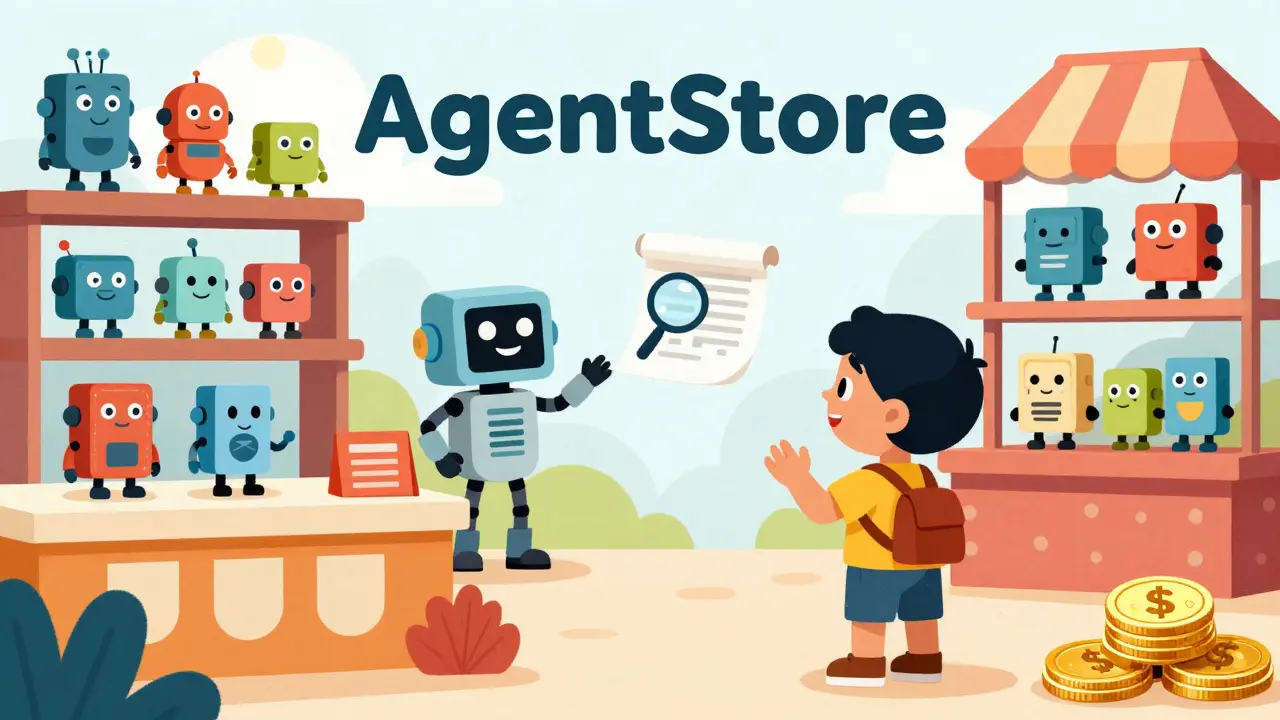
AgentLayer flips this model. It creates a permissionless environment where AI agents can register themselves, offer services, and collaborate with other agents. Think of it as an app store, but instead of apps, you have intelligent software entities that can act on their own. The protocol ensures these interactions are secure using a Byzantine Fault-Tolerant (BFT) consensus mechanism. In simple terms, this means the network can continue to function correctly even if some of the participating agents fail or behave maliciously.
The core components of this ecosystem include:
- AgentStore: A marketplace where developers list their AI agents for others to subscribe to or purchase.
- AgentKey: A system that manages secure access and control over these agents, ensuring only authorized parties can trigger actions.
- AgentChain: A specialized Layer-2 solution built on Ethereum using the OP Stack and EigenDA, optimized for low-latency AI interactions.
The Role of the $AGENT Token
Tokens in crypto projects often serve multiple purposes, and $AGENT is no exception. It acts as the economic backbone of the AgentLayer ecosystem. Without it, the network wouldn’t have incentives for participants to contribute computing power, develop agents, or maintain security.
Here is how you will actually use the token:
- Transaction Fees: Every time an agent performs a service-whether it’s scanning a contract or generating data-the fee is paid in $AGENT.
- Staking and Rewards: Node operators and liquidity providers stake $AGENT to secure the network and earn rewards.
- Governance: Holders can vote on protocol upgrades, parameter changes, and fund allocation within the ecosystem.
- Purchasing Services: Users spend $AGENT to access premium AI agents listed on the AgentStore.
This utility-driven approach helps stabilize the token’s value by creating consistent demand from actual usage rather than speculative trading alone.
Tokenomics: Supply and Distribution
When evaluating any crypto project, tokenomics are crucial. AgentLayer has a fixed total supply of 1,000,000,000 (1 billion) AGENT tokens. There is no inflationary minting, which is generally positive for long-term holders concerned about dilution.
The distribution is designed to incentivize all parts of the ecosystem:
| Allocation Category | Purpose |
|---|---|
| Community & Ecosystem | Incentives for users, developers, and early adopters |
| Team & Advisors | Core development team and strategic guidance |
| Private Sale & Investors | Funding raised during initial rounds ($1M secured) |
| Liquidity & Exchange Reserves | Ensuring market stability and trading depth |
| Foundation Reserve | Long-term sustainability and future initiatives |
This structure aims to balance immediate liquidity needs with long-term growth. However, always check the vesting schedules for team and investor allocations, as large unlocks can create selling pressure.
Technical Architecture: Built on Base
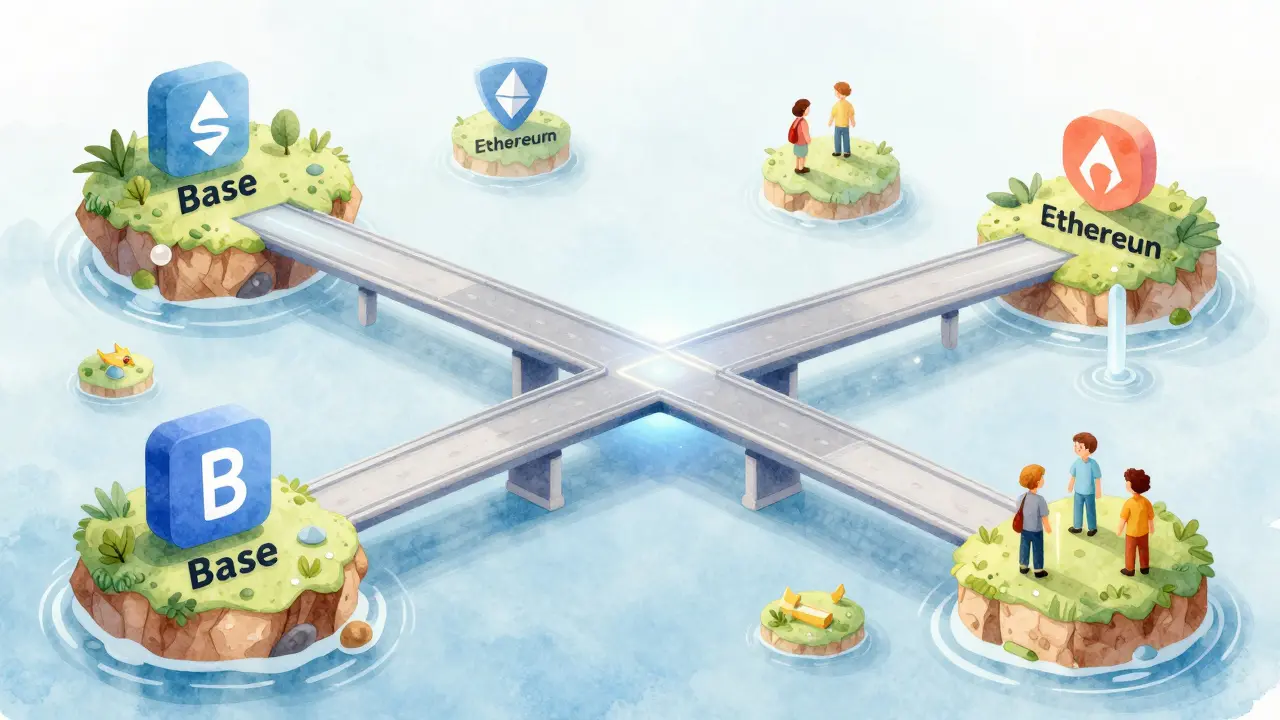
One of AgentLayer’s key advantages is its choice of infrastructure. It operates primarily on the Base blockchain, Coinbase’s Layer-2 Ethereum scaling solution. Why does this matter? Because Base offers high throughput and very low gas fees compared to Ethereum mainnet. For AI agents that might need to execute thousands of micro-transactions per day, cost efficiency is critical.
Furthermore, AgentLayer integrates with EigenLayer’s Active Validation System (AVS). This allows the AGENT token to be interoperable across multiple chains, including Optimism, Polygon, and Ethereum, without needing complex bridges. This cross-chain capability is a significant technical hurdle that many competitors struggle with.
The platform also utilizes TradingView technology for real-time charting and data visualization, making it easier for traders and analysts to monitor performance metrics directly within their preferred interfaces.
How Does It Compare to Competitors?
You won’t find AgentLayer operating in a vacuum. The AI-blockchain space is crowded. Two major players dominate the conversation: Fetch.ai and SingularityNET.
| Feature | AgentLayer | Fetch.ai | SingularityNET |
|---|---|---|---|
| Primary Focus | Decentralized AI Agent Network | Enterprise AI Solutions | AI Marketplace & Democratization |
| Blockchain Base | Base (Ethereum L2) | Own Chain / Ethereum | Holonym / Polkadot |
| Community Size | ~15,000 Discord Members | 100,000+ Members | Large Global Community |
| Funding Raised | $1 Million | $6 Million (Series A) | Significant Venture Funding |
| Unique Edge | BFT Protocol for Agents | Strong Enterprise Partnerships | Broad AI Model Access |
While Fetch.ai and SingularityNET have larger communities and more enterprise partnerships, AgentLayer positions itself as more specialized. Its focus on a Byzantine fault-tolerant protocol specifically for agent coordination is a niche that appeals to developers looking for robust, secure multi-agent systems. However, smaller community size and less funding mean it faces an uphill battle in terms of adoption and brand recognition.
Risks and Challenges to Consider
No investment is without risk, and AgentLayer is no exception. Here are the main hurdles the project must overcome:
1. Competition and Adoption: With established players like Fetch.ai holding over 30% market share in decentralized AI networks, AgentLayer needs to prove its unique value proposition attracts sustained user interest. As of Q3 2024, it held approximately 4.7% market share.
2. Technical Complexity: Deploying custom agents requires knowledge of Solidity and machine learning concepts. Early feedback from developers indicates a steep learning curve, with some reporting it took three weeks to get their first agent running properly. This could limit mass adoption unless better developer tools are released.
3. Regulatory Uncertainty: The intersection of AI and finance is heavily scrutinized. Compliance with frameworks like the EU AI Act and SEC guidelines is critical. AgentLayer has engaged legal counsel from Perkins Coie LLP, but regulatory landscapes shift quickly.
4. Market Volatility: Like all altcoins, $AGENT is subject to extreme price swings. Its all-time high was $0.09568 in November 2024, but it has seen significant corrections. Always invest only what you can afford to lose.
Future Roadmap and Developments
The team behind AgentLayer is active in pushing the technology forward. Key milestones include:
- AgentNetwork v2.3 'Orion': Launched in late 2024, reducing transaction finality time from 15 minutes to 4 minutes.
- AgentChain Mainnet Launch: Scheduled for mid-November 2024, enhancing scalability.
- Chainlink Oracle Integration: Planned for December 2024, allowing agents to access real-world data feeds securely.
- Governance Framework v1.0: Introducing formal voting mechanisms for token holders.
If these milestones are met, industry analysts suggest the project could see significant growth in market capitalization. However, execution is key. Delays or technical failures could impact investor confidence.
Conclusion
AgentLayer represents a bold attempt to decentralize the AI economy. By providing a secure, efficient platform for autonomous agents to interact, it addresses a genuine need in the growing AI sector. The $AGENT token plays a vital role in this ecosystem, offering utility beyond speculation.
However, it operates in a competitive landscape with well-funded rivals. Success will depend on its ability to attract developers, simplify the user experience, and navigate regulatory challenges. For those interested in the convergence of AI and blockchain, AgentLayer is worth watching-but proceed with caution and thorough research.
Is AgentLayer a scam?
There is no evidence to suggest AgentLayer is a scam. It is a legitimate project with a clear technical roadmap, verified funding, and listings on reputable exchanges like Gate.io and Uniswap. However, as with any cryptocurrency, there are risks related to market volatility and project execution.
Where can I buy AGENT tokens?
You can purchase $AGENT tokens on several major exchanges, including Gate.io, BitPanda, BingX, Bitrue, Phemex, CoinTR, and via Uniswap. Always ensure you are connecting to the official contract address to avoid fake tokens.
What blockchain is AgentLayer built on?
AgentLayer is primarily built on the Base blockchain, which is a Layer-2 scaling solution for Ethereum. This provides high speed and low transaction costs. It also integrates with EigenLayer for cross-chain interoperability.
How does AgentLayer differ from Fetch.ai?
While both projects focus on AI agents, Fetch.ai emphasizes enterprise solutions and has a larger community and funding base. AgentLayer specializes in a decentralized registry and Byzantine fault-tolerant protocol for autonomous agent coordination, positioning itself as a more specialized infrastructure layer.
What is the total supply of AGENT tokens?
The total supply of AGENT tokens is fixed at 1 billion. This deflationary model helps prevent inflation and supports long-term value retention if demand for the ecosystem grows.