
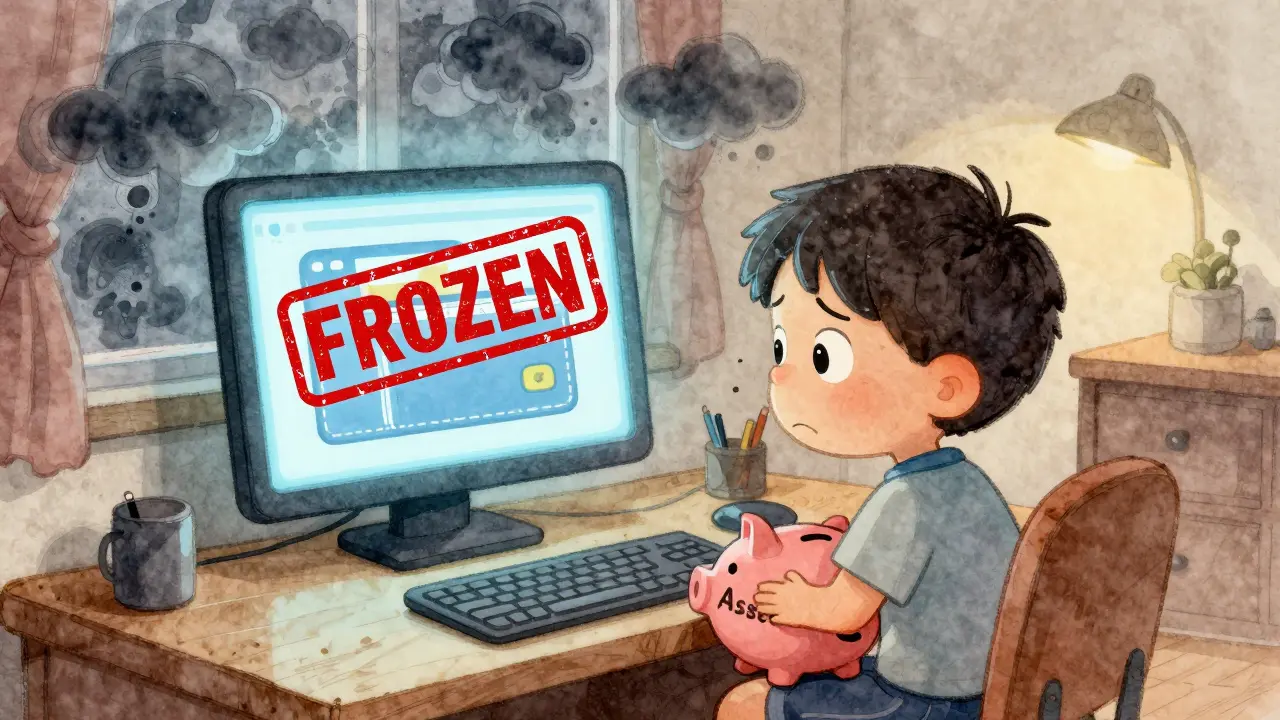
Living in a country under heavy international scrutiny changes how you handle money. For Iranians navigating the cryptocurrency world in 2026, the stakes are incredibly high. One wrong move with an exchange can lead to frozen assets, legal trouble, or total loss of funds. The landscape shifted dramatically in late 2025, turning what was once a relatively open digital frontier into a complex minefield of sanctions, domestic regulations, and security threats.
If you are holding crypto in Iran, knowing which platforms to avoid is just as important as knowing which ones to use. This isn't just about picking the lowest fees; it's about asset survival. Let’s break down exactly which types of exchanges pose the greatest danger to your capital right now.
The Stablecoin Trap: Why USDT-Heavy Platforms Are Dangerous
The biggest immediate threat to Iranian users comes from stablecoins, specifically Tether (USDT). While USDT has been the backbone of crypto trading for years, its compliance mechanisms have become a primary tool for sanction enforcement. On July 2, 2025, Tether executed one of its largest-ever freezes of Iranian-linked funds. They blocked 42 cryptocurrency addresses that showed substantial exposure to Iranian exchanges.
Why does this matter to you? Because more than half of those frozen wallets had direct transactional links to Nobitex, Iran’s largest local exchange serving over 11 million users. If your exchange relies heavily on USDT for liquidity or trading pairs, you are sitting on a ticking time bomb. The moment Tether flags an address associated with your exchange-or even a counterparty who used your exchange-your funds can be locked instantly.
Avoid any exchange that:
- Promotes USDT as its primary or only trading pair without alternative options.
- Lacks transparent proof of reserve audits regarding their stablecoin holdings.
- Has recently experienced sudden withdrawal delays for USDT pairs.
The market reaction to the July 2025 freezes was swift. Domestic influencers and government-aligned channels urged users to exit USDT holdings. Many migrated to alternatives like DAI via the Polygon network. If you are still using platforms that force you into USDT-heavy positions, you are exposing yourself to the same seizure risks that caught thousands of accounts off guard.
International Giants: The Compliance Wall
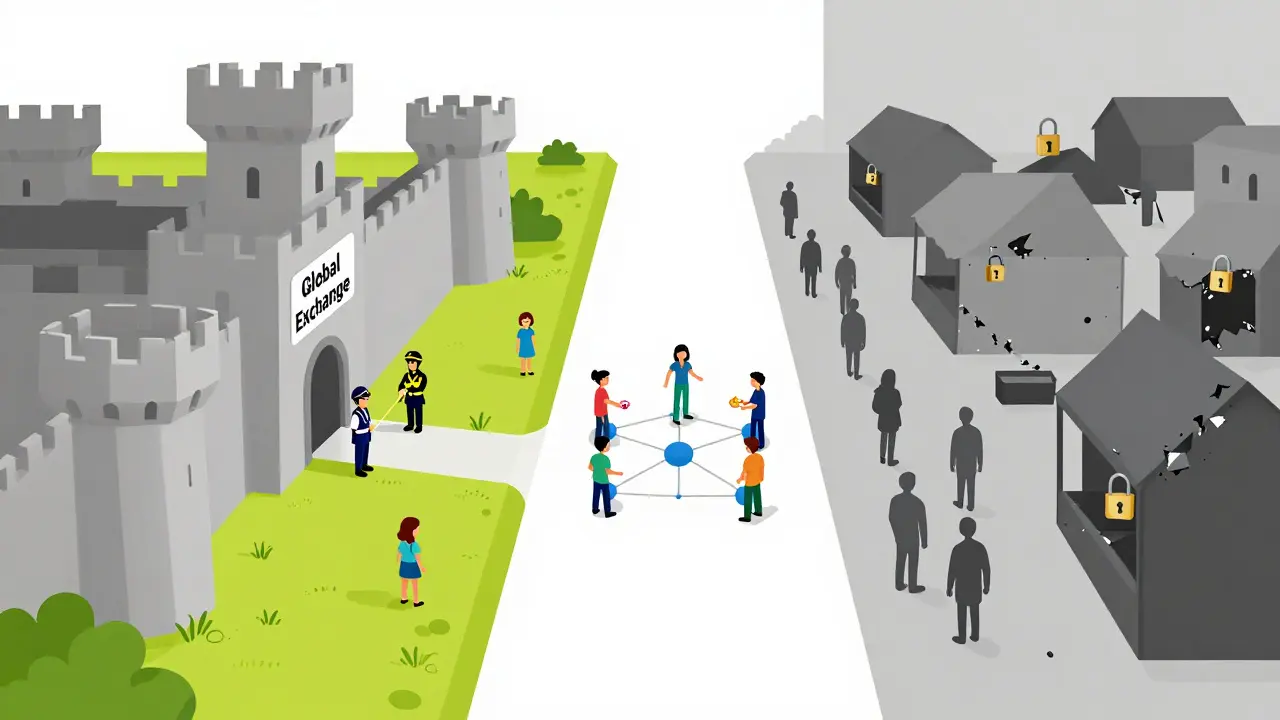
You might think that using a big, reputable global exchange offers safety. In reality, for an Iranian user, major international platforms are often the most dangerous option. Exchanges like Coinbase, Binance, and Kraken operate under strict U.S. and UN sanctions compliance frameworks.
These platforms employ sophisticated Know Your Customer (KYC) and Anti-Money Laundering (AML) screening tools. If they detect any connection to Iran-whether through IP addresses, bank transfers, or linked wallet histories-they will not hesitate to freeze your account. Unlike local exchanges where you might negotiate or find a workaround, these tier-1 platforms typically result in permanent bans and asset seizures when sanctions triggers are hit.
Red flags for international exchanges:
- Mandatory video KYC verification that checks against global sanction lists.
- Terms of Service that explicitly prohibit users from sanctioned jurisdictions.
- History of cooperating with regulatory bodies in asset recovery cases.
The lesson here is clear: do not assume size equals safety. In the context of sanctions, size often means stricter adherence to rules that directly target your location.
The Local Giant Paradox: Nobitex and IRGC Links
Nobitex presents a unique and confusing risk profile. As Iran’s dominant exchange, it seems like the logical choice for local users. However, recent events have painted a troubling picture. In June 2025, Nobitex suffered a devastating hack exceeding $90 million. Beyond the security failure, data analysis by firms like Elliptic has linked Nobitex to networks consistent with Islamic Revolutionary Guard Corps (IRGC) financial activity.
This connection is critical. Elliptic positioned Nobitex as part of a cross-border sanctions evasion apparatus. When an exchange becomes intertwined with state-sanctioned entities, it becomes a target for international enforcement. The dual role of being both a sanctions evasion tool and a target makes it volatile for ordinary users seeking legitimate services. If the platform is sanctioned again, or if partners cut ties due to IRGC associations, your ability to withdraw funds could vanish overnight.
Furthermore, the psychological pressure tactics employed by agencies like Tasnim News Agency (affiliated with the IRGC) suggest that exchanges promoted through such channels may carry additional hidden risks. Users should be wary of platforms that seem too closely aligned with political narratives rather than purely commercial interests.
Domestic Regulatory Tightening: Licensed vs. Unlicensed
The Iranian government is also tightening its grip on the crypto sector, creating risks from the other side. In early 2025, the Central Bank of Iran shut down rial-based payment gateways for unlicensed exchanges. By February 2025, a nationwide ban on cryptocurrency advertising was enforced. Now, licensed exchanges must submit comprehensive transaction data for government transparency.
This creates a privacy nightmare. If you use a fully compliant, licensed Iranian exchange, your every move is visible to multi-agency oversight teams. Under the new AML/CTF protocols, your wallet activities can be traced back to your identity. With the August 2025 enactment of the Law on Taxation of Speculation and Profiteering, crypto trading is now subject to capital gains taxes. Exchanges that cannot adequately report your activities to tax authorities may face shutdowns, taking your funds with them.
Beware of:
- Exchanges that require extensive personal documentation beyond basic ID.
- Platforms that promise anonymity but are legally required to report to the Central Bank.
- Services that facilitate large stablecoin transactions above the new $10,000 holding limit.
In September 2025, Deputy Central Bank Governor Asghar Abolhasani announced strict limits: individual annual stablecoin purchases capped at $5,000 and holding limits at $10,000. Exchanges facilitating amounts above these thresholds are operating in a gray zone that could result in government action against both the platform and the user.
The Danger of Informal and Unregulated Platforms
As regulated platforms become harder to use, many users turn to informal or unregulated exchanges. This is perhaps the most dangerous path. Iranian fintech associations, including the Iran FinTech Association and Iran Blockchain Association, have warned that restrictive regulations inadvertently favor these informal markets.
Unregulated platforms lack proper security infrastructure, customer support, and legal recourse. They are prime targets for exit scams, where operators simply disappear with user funds. Without licensing, there is no insurance, no audit, and no guarantee that the private keys controlling your assets aren’t held by a single administrator who can drain the pool at will.
Signs of an unsafe informal exchange:
- No verifiable company registration or physical address.
- Withdrawal processes that take days without explanation.
- Marketing focused solely on high returns or exclusive access.
- Lack of two-factor authentication (2FA) or cold storage policies.
Summary of High-Risk Exchange Types
| Exchange Type | Primary Risk Factor | Likelihood of Asset Freeze | Recommendation |
|---|---|---|---|
| USDT-Heavy International Platforms | Tether Compliance/Sanctions | Very High | Avoid completely |
| Tier-1 Global Exchanges (Coinbase, Binance) | KYC/Sanctions Screening | High | Do not use |
| Locally Licensed Exchanges (e.g., Nobitex) | Government Surveillance/Hack Risk | Medium-High | Use with extreme caution |
| Unregulated/Informal Platforms | Fraud/Exit Scams | Variable | Avoid |
| Stablecoin-Focused Exchanges | Domestic Holding Limits ($10k cap) | Medium | Limit holdings strictly |
Safer Alternatives and Strategies
So, if the big names and the local giants are risky, what are your options? The safest approach involves decentralization. Peer-to-peer (P2P) trading networks allow you to trade directly with other individuals, bypassing centralized custodians who can freeze funds. Platforms that facilitate P2P trades without holding your assets are significantly safer.
Additionally, consider diversifying away from USDT. Using decentralized stablecoins like DAI on networks such as Polygon or Ethereum reduces reliance on Tether’s compliance department. Non-custodial wallets, where you hold your own private keys, are essential. Never leave significant amounts of crypto on any exchange, regardless of its reputation. The goal is to minimize the time your assets sit on a platform that could be sanctioned, hacked, or shut down.
Remember, the regulatory environment in Iran is evolving rapidly. What is safe today might be targeted tomorrow. Stay informed, keep holdings small on any single platform, and prioritize self-custody whenever possible.
Why did Tether freeze Iranian wallets in 2025?
Tether froze wallets to comply with international sanctions, particularly those enforced by the U.S. Treasury. The July 2025 action targeted addresses linked to Iranian exchanges and entities associated with the IRGC, demonstrating Tether's aggressive stance on sanction enforcement.
Is Nobitex safe for Iranian users?
Nobitex carries significant risks. It suffered a $90 million hack in June 2025 and has been linked to IRGC financial networks by analytics firms like Elliptic. These connections make it a potential target for international sanctions and increase the risk of asset seizure or service disruption.
Can I use Binance or Coinbase as an Iranian resident?
It is highly discouraged. Major international exchanges like Binance and Coinbase enforce strict KYC and AML protocols. They actively screen for users in sanctioned countries and will likely freeze accounts and seize assets if they detect Iranian connections.
What are the stablecoin holding limits in Iran?
As of September 2025, the Central Bank of Iran imposed a maximum annual purchase limit of $5,000 and a holding limit of $10,000 for stablecoins. Exceeding these limits may result in penalties or forced compliance actions.
Are unregulated crypto exchanges safer for privacy?
No, they are generally more dangerous. While they may offer more privacy initially, they lack legal protections, security audits, and insurance. They are prone to exit scams, hacks, and fraud, leaving users with no recourse if funds are lost.