

Low-Liquidity Token Risk Calculator
PEAGUY has extremely low trading volume (<$5,000 daily) and high slippage (>30%). This calculator shows potential losses when trading low-liquidity tokens.
Based on data from PEAGUY: $40,000 market cap, 932M circulating supply, and under $10 daily volume.
Risk Assessment
With a $50 investment in low-liquidity tokens like PEAGUY, you could lose 20-30% due to price manipulation and slippage. Trading volume is too low to buy/sell without moving the price significantly.
PEAGUY isn’t a coin you buy to get rich. It’s not even a coin most people should touch. It’s a weird, low-volume meme token built around a cartoon pea-shaped AI agent that’s supposed to teach people how to farm volatility in DeFi. If that sounds confusing, you’re not alone. Thousands of crypto newcomers have asked the same question: What even is PEAGUY?
What PEAGUY Actually Is (Not What the Website Says)
PEAGUY is an ERC-20 token on Ethereum, created by the Virtuals Protocol team. It’s tied to another token called $PEAS from Peapods.Finance. The idea? PEAGUY is an autonomous AI agent - a digital character - that "lives" to burn $PEAS and PEAGUY tokens to demonstrate how wrapping assets can generate volatility-based returns. In theory, it’s an educational tool. In practice, it’s a novelty with no real product behind it.
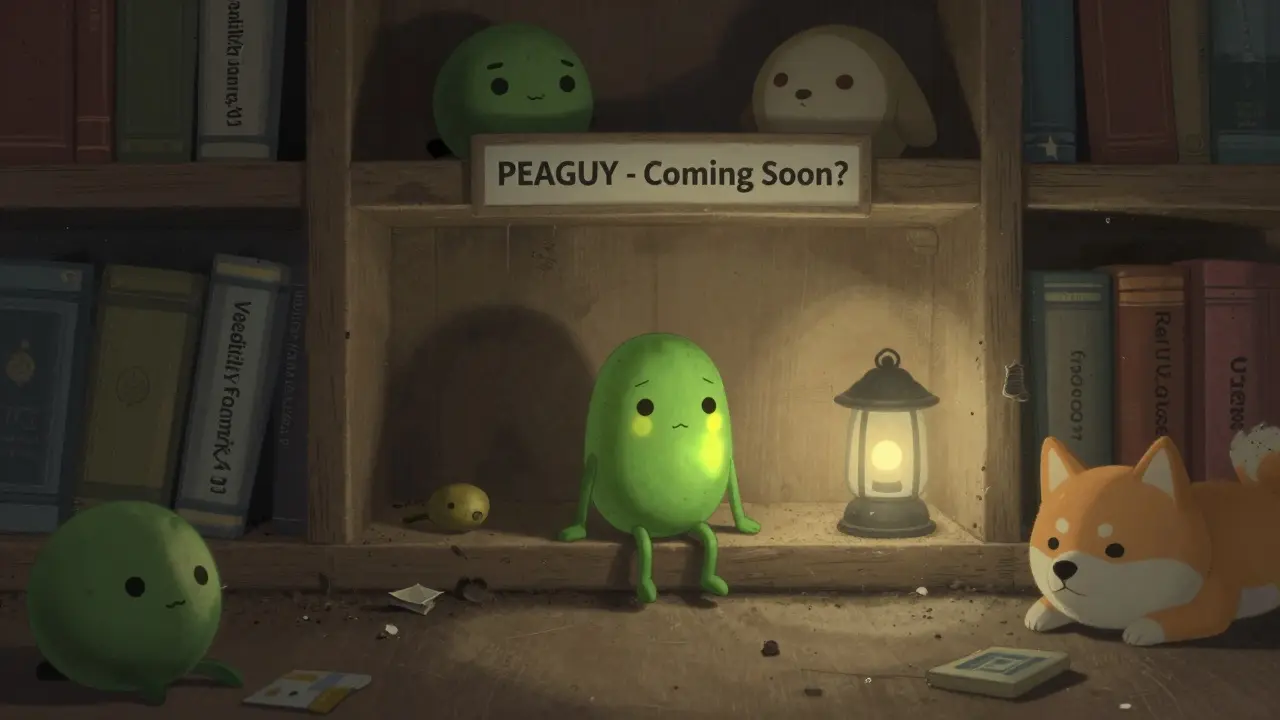
The token’s entire identity is built on branding: a cute, cartoonish pea with googly eyes, designed to be "kind, lovable, and fun." That’s it. There’s no app. No dashboard. No actual AI. No live educational content. Just a token with a story. And that story is the only thing keeping it alive.
The Numbers Don’t Lie - PEAGUY Is a Ghost Town
As of December 2025, PEAGUY has a market cap of around $40,000. That’s less than the cost of a used laptop. For comparison, Dogecoin’s market cap is over $11 billion. Even the smallest real crypto projects have a market cap ten thousand times larger.
Here’s what the numbers look like:
- Circulating supply: 932 million PEAGUY tokens
- Price: Around $0.000045 (varies wildly across exchanges)
- 24-hour trading volume: Under $5,000 - sometimes as low as $10
- Holders: Just over 1,000 wallets
- Exchange listings: Only on minor platforms like MEXC, LBank, and Binance Web3 Wallet
That trading volume? It’s not just low - it’s dead. You can’t buy $100 worth of PEAGUY without moving the price 30% or more. That’s not volatility farming - that’s price manipulation waiting to happen.
Why the Price Data Is Broken
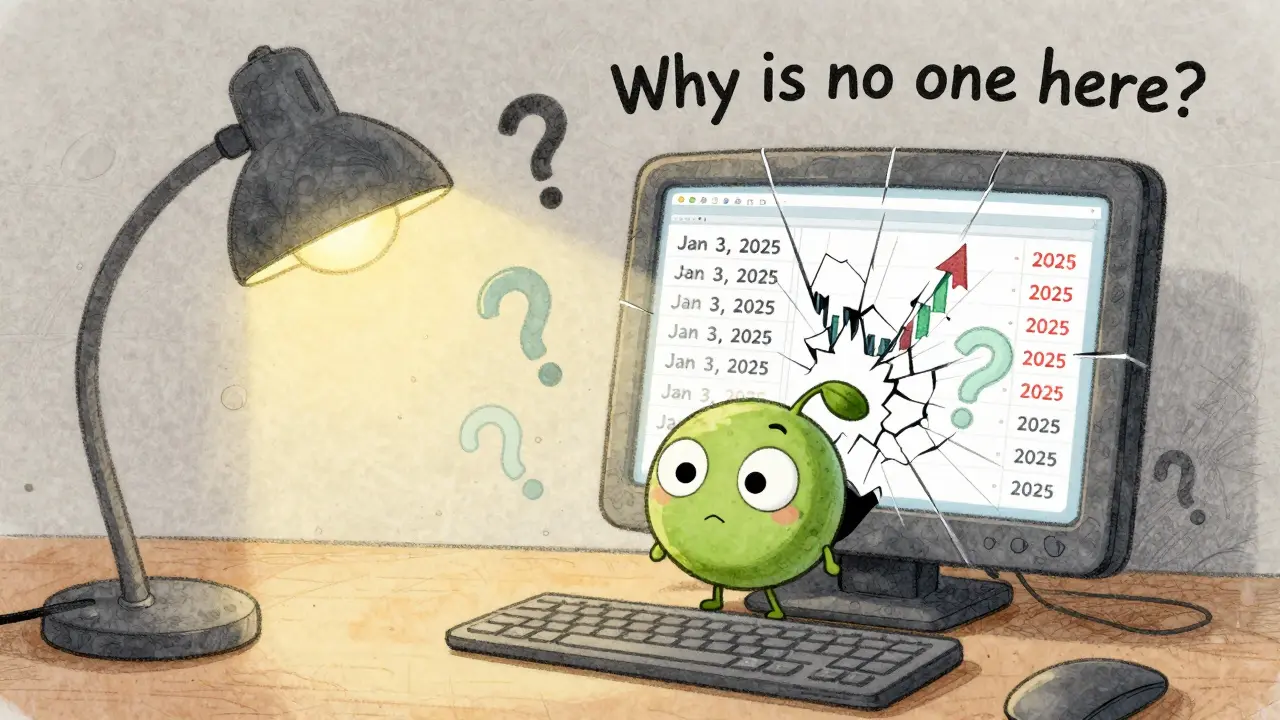
Look at CoinMarketCap’s historical data. It claims PEAGUY hit an all-time high of $0.003833 on January 3, 2025 - a date that hasn’t happened yet. It also says the all-time low was $0.00000054 on December 30, 2024. Those numbers don’t add up. They’re either glitches or fake data pumped into the system by bots.
This kind of inconsistency is a red flag. Real projects have clean, verifiable price history. PEAGUY’s data looks like someone fed random numbers into a spreadsheet. That’s not a bug - it’s a warning.
It’s Not a Meme Coin. It’s a Meme With No Audience
Most meme coins like Dogecoin or Shiba Inu have communities. They have memes, influencers, events, and real people trading them. PEAGUY has none of that. There are no Twitter threads. No TikTok videos. No Reddit hype. Just a handful of confused users asking, "Is this real?" on forums.
One Reddit user summed it up: "Saw this on Virtuals.io but can’t find any real use case beyond being a meme." That’s the entire story. No utility. No roadmap. No team updates. Just a mascot and a contract address: 0x44e1...5b2e3e.
How to Buy PEAGUY (And Why You Shouldn’t)
If you still want to try, here’s how:
- Get a Web3 wallet like MetaMask or Trust Wallet.
- Add Ethereum to pay for gas fees.
- Connect your wallet to Binance Web3 Wallet or MEXC.
- Search for PEAGUY by contract address.
- Set slippage tolerance to 10-15% - because anything lower will fail.
- Buy a tiny amount - say, $5.
Then what? You’ll likely sit on it for months. No one will buy it. You can’t sell it without losing 20-30% of your value. And if you try to withdraw it to another exchange? Good luck. Most major platforms won’t even list it.
This isn’t investing. It’s gambling with a 92% chance of losing everything, based on a 2023 analysis from The Block.
Who’s Behind It? And Why Should You Care?
The Virtuals Protocol team is real. They’ve built other tools for DeFi. But PEAGUY isn’t one of them. It’s a side project - a fun experiment. There’s no team roadmap. No whitepaper update. No development progress. Just a static webpage describing a concept that never moved beyond the idea stage.
That’s the problem. Most crypto projects fail because they’re scams. PEAGUY fails because it’s too lazy to even try. It doesn’t need to be a scam to be worthless. Sometimes, all you need is apathy.
Is PEAGUY a Scam? Maybe Not. But It’s Still Dangerous
The SEC has warned about tokens with daily volumes under $100,000. They call them "pump and dump" magnets. PEAGUY’s volume is under $10 on some days. That’s not just risky - it’s a trap.
Here’s how it works: A small group of people buys PEAGUY early. They hype it on obscure forums. Newcomers see the "all-time high" (which is fake) and jump in. The insiders sell. Price crashes. The new buyers are stuck. The cycle repeats. No one gets hurt? Maybe not legally. But emotionally? Financially? Yes.
Chainalysis found that 87% of tokens under $50,000 market cap die within a year. PEAGUY is already in that group. It’s not a question of if it dies - it’s when.
Who Should Even Look at PEAGUY?
Only two types of people should consider PEAGUY:
- DeFi researchers studying how meme tokens evolve - for academic purposes only.
- Extreme risk-takers who treat crypto like a casino and are okay losing $50 for a weird story.
If you’re trying to build wealth, learn DeFi, or invest long-term - walk away. PEAGUY has no role in any of that.
What’s the Real Lesson Here?
PEAGUY isn’t about crypto. It’s about human behavior. Why do people chase tokens with no value? Because they’re looking for the next big thing. Because they don’t know how to read the numbers. Because they see a cute pea and think, "This has to mean something."
Real crypto doesn’t need mascots. It needs utility, transparency, and volume. PEAGUY has none of that. It’s a ghost. A digital curiosity. A footnote in crypto history.
Don’t buy PEAGUY because it’s fun. Buy crypto because it solves a problem. PEAGUY doesn’t solve anything. It just sits there. Waiting. For someone to notice it’s already dead.
Is PEAGUY a legitimate crypto project?
PEAGUY is technically real - it has a contract address and is listed on exchanges. But "legitimate" doesn’t mean useful. It has no real product, no team updates, no roadmap, and almost no trading activity. It’s a novelty token built on a concept that never materialized.
Can I make money trading PEAGUY?
You might get lucky with a short-term pump, but it’s extremely risky. With daily trading volumes under $5,000 and slippage often over 30%, selling your tokens will cost you most of your investment. Most traders lose money on PEAGUY. It’s not a market - it’s a liquidity trap.
Why does PEAGUY have such strange price data?
The price history on CoinMarketCap includes impossible dates like January 3, 2025 - a future date as of 2025. This suggests data manipulation, bot activity, or exchange errors. Real projects don’t have broken historical charts. This is a sign of low integrity and poor market oversight.
Where can I buy PEAGUY?
You can only buy PEAGUY on decentralized exchanges connected to Web3 wallets, like Binance Web3 Wallet, MEXC, or LBank. It’s not listed on Coinbase, Kraken, or any major centralized exchange. You’ll need Ethereum to pay gas fees and must manually enter the contract address: 0x44e1...5b2e3e.
Is PEAGUY connected to any real DeFi platform?
Yes - it’s tied to Peapods.Finance ($PEAS), which focuses on volatility farming. But PEAGUY itself doesn’t interact with $PEAS in any practical way. There’s no wallet integration, no staking, no burning mechanism that users can access. The connection is purely conceptual.
Should I hold PEAGUY as a long-term investment?
No. Tokens with market caps under $50,000 and daily volumes under $100 have a 92% chance of becoming completely illiquid within six months, according to crypto analyst Wendy O. PEAGUY fits this profile perfectly. Holding it long-term means you’re likely holding an asset that will never be sellable.
What’s the future of PEAGUY?
There is no official future. No roadmap. No development team updates. The Virtuals Protocol team hasn’t mentioned PEAGUY since its launch. Without new features, marketing, or adoption, it will continue to fade into obscurity. It’s already one of the most inactive tokens on major tracking sites.
Final Thought: Don’t Fall for the Mascot
Crypto is full of weird ideas. But most of them fail because they’re built on hype, not hard work. PEAGUY isn’t a scam - it’s a ghost. A cute, pixelated ghost with a story no one’s telling anymore.
If you see it on your dashboard, delete it. If you’re thinking of buying it, don’t. There’s no future here. Just noise. And a pea that’s already gone.
Sharmishtha Sohoni
This is the most accurate breakdown of PEAGUY I've seen. No fluff. Just cold, hard facts. The data speaks for itself.
Ann Ellsworth
The fact that people are even considering this as an 'investment' is a tragic indictment of crypto literacy. The mascot is a psychological Trojan horse - cute visuals bypassing rational analysis. It's behavioral finance in its most grotesque form.
Joe B.
Bro. I checked the contract. 932M supply at $0.000045? That’s a math joke. And the 'all-time high' is in 2025?? 😂😂😂 Someone’s feeding fake data to CoinMarketCap like it’s a TikTok filter. This isn’t DeFi - it’s a crypto aquarium with one lonely pea swimming in circles.
Greer Dauphin
I saw this on my wallet and thought 'huh, cute.' Then I looked at the volume. $10? That’s less than my coffee budget. I bought $5 just to see if it was real. Now it’s just a digital pet rock. Still cute though 🐱
Bhoomika Agarwal
India has real crypto projects with actual teams. This? This is American digital clownery. A pea with googly eyes? Are we in 2012 again? Pathetic.
Katherine Alva
There’s something haunting about a token that’s not malicious - just forgotten. Like a toy left in a attic. No one’s trying to scam you. They just… stopped caring. And that’s worse.
Shari Heglin
The assertion that PEAGUY is 'not a scam' is misleading. Lack of intent to defraud does not equate to legitimacy. It is, by all objective measures, a non-functional asset with zero economic utility. Classification as a 'novelty' is a euphemism for irrelevance.
Mani Kumar
Market cap under $50k? Volume under $10? This isn't crypto. It's a graveyard with a website.
Philip Mirchin
I’ve seen this happen before - the cute mascot, the vague ‘educational’ angle, the fake charts. It’s like watching a kid build a cardboard rocket and calling it SpaceX. I love the creativity, but please don’t put money in it. Let it be art, not a portfolio.
Lawal Ayomide
I just bought PEAGUY with my last $20. I’m not dumb. I know it’s dead. But I want to be the one who holds it when it dies. That’s the story I’m writing. And I’m not sorry.
samuel goodge
The most chilling detail? The contract address is real. The blockchain records it. The gas fees were paid. Someone, somewhere, believed this mattered enough to commit resources to it. And now it’s just… there. A digital ghost. Not cursed. Not haunted. Just… abandoned.
alex bolduin
I read this whole thing and still don’t know if I should laugh or cry. Maybe both. I’m keeping my $5. It’s my art collection now
Jay Weldy
I used to think crypto was about innovation. Now I think it’s about stories. PEAGUY doesn’t need utility. It just needs someone to believe in the story. And honestly? That’s kind of beautiful. Even if it’s doomed.
Christy Whitaker
They’re not even trying to hide it. The fake dates? The dead volume? This is a coordinated distraction. They’re using this to launder money from real investors. I’ve seen this pattern before. It’s not a meme. It’s a front.
Nancy Sunshine
The academic implications are profound. This token functions as a behavioral case study in cognitive bias, narrative-driven valuation, and the collapse of information asymmetry in decentralized markets. A true anomaly in the crypto-ecosystem.
Alan Brandon Rivera León
I’m from Nigeria and I’ve seen a lot of weird crypto stuff. But this? This feels different. Not because it’s fake - but because it’s so… quiet. Like it’s waiting for someone to say ‘I see you’ - and no one will.
Ankit Varshney
I checked the contract. No mint function. No owner controls. No updates since launch. It’s literally frozen in time. This isn’t a project. It’s a monument to a thought that died before it was born.
Catherine Williams
I’m not saying buy it. I’m saying… maybe we should archive it. Like a museum piece. A warning. A digital relic of when people confused charm for value. Someone should write a paper on this.
Steve Savage
I used to think the weirdest crypto thing was Doge. Then came Shiba. Then NFT avatars. But PEAGUY? This is the first token I’ve seen that feels… lonely. Like it knows it’s already over, and it’s just waiting for the lights to go out.
Sarah Locke
The fact that someone spent time designing a mascot, writing a website, deploying a contract, and then just… walked away - that’s the real horror story here. Not the price. Not the volume. The indifference.
ashi chopra
I don’t know why I’m still reading this. I should close the tab. But I can’t. It’s like watching a slow-motion car crash. I know I shouldn’t look. But I can’t look away.
Darlene Johnson
This is all part of the Great Crypto Purge. They’re testing how long a token can survive on pure branding before the regulators step in. PEAGUY is the canary. And it’s already dead.
Ivanna Faith
I bought PEAGUY because I thought it was a joke. Now I think the joke is on me
Akash Kumar Yadav
This is why India bans crypto. Not because it’s dangerous. Because it’s stupid. A pea with eyes? What is this - kindergarten economics?