
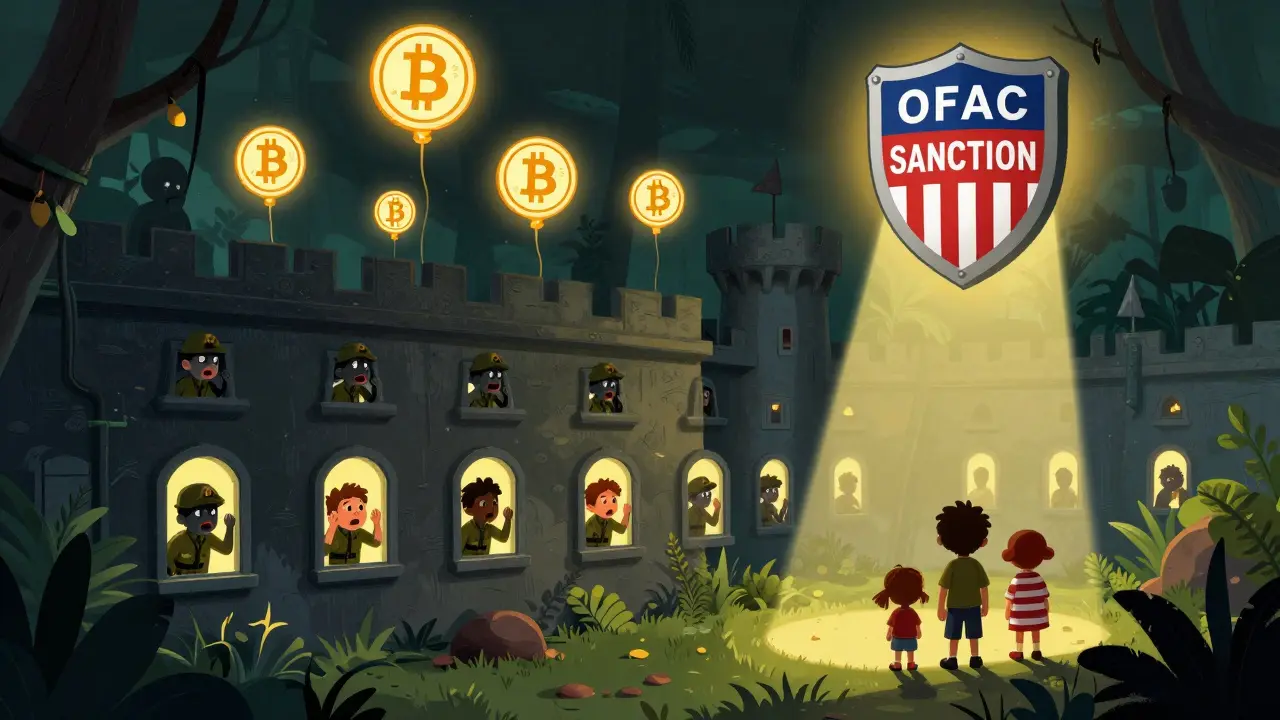
The U.S. government didn’t just issue a warning - it struck. On September 8, 2025, the Treasury Department’s Office of Foreign Assets Control (OFAC) slapped sanctions on nine crypto-related entities operating out of Shwe Kokko, Myanmar, along with ten more in Cambodia. This wasn’t a routine freeze on a few wallets. It was a full-scale dismantling of a criminal empire built on forced labor, digital fraud, and billions stolen from Americans. If you’ve ever heard about people being tricked into "tech jobs" in Southeast Asia, only to be locked in compounds and forced to run crypto scams, this is the crackdown that followed.
What Exactly Happened?
The U.S. targeted organizations tied to the Karen National Army (KNA) - a militia group controlling the Shwe Kokko zone on the Thai-Burmese border. This area isn’t some backwater town. It’s a fortified hub where hundreds of scam compounds operate under armed guard. Victims - often lured by fake job ads promising high-paying remote work - are trafficked, held against their will, and forced to scam Americans out of their savings. Some are even forced to scam their own family members. The KNA doesn’t just tolerate this. It profits from it, taking a cut of every dollar stolen.OFAC didn’t just name the KNA. It named its leadership: Saw Chit Thu, the head, and his two sons, Saw Htoo Eh Moo and Saw Chit Chit. They’re now blocked from any U.S. financial system. Their assets? Frozen. Their access to American banks? Gone. And anyone in the U.S. who tries to do business with them - even sending a single dollar - could face legal penalties.
Why Target Crypto?
Crypto isn’t the reason these scams exist. But it’s the perfect tool for them. Unlike bank transfers, cryptocurrency transactions can be routed through dozens of wallets, mixed with legitimate trades, and moved across borders without a paper trail. Scammers use fake investment platforms - think "Bitcoin Growth 2025" or "Crypto Millionaire Academy" - to convince people they’re making smart trades. They’ll show fake charts, send fake profit reports, even video call you with "support agents" who sound professional. By the time victims realize they’ve been scammed, the money’s already vanished into a maze of blockchain addresses.According to U.S. government estimates, Americans lost over $10 billion to these scams in 2024 alone. That’s more than the GDP of some small countries. And Myanmar, especially Shwe Kokko, is ground zero. The KNA’s control over the region gives these operations immunity from local law enforcement. With no real police, no independent courts, and no international oversight, the scams just keep growing.
How the Sanctions Work
OFAC’s move wasn’t symbolic. It was surgical. Here’s what it means in practice:- All U.S.-based assets of the nine Myanmar entities and ten Cambodia-based ones are frozen.
- U.S. citizens and companies are banned from any transaction with them - including buying crypto from wallets linked to them.
- Financial institutions must screen transactions and report any attempts to bypass the sanctions.
- Even third-party services (like crypto exchanges or wallet providers) that knowingly interact with these entities can be penalized.
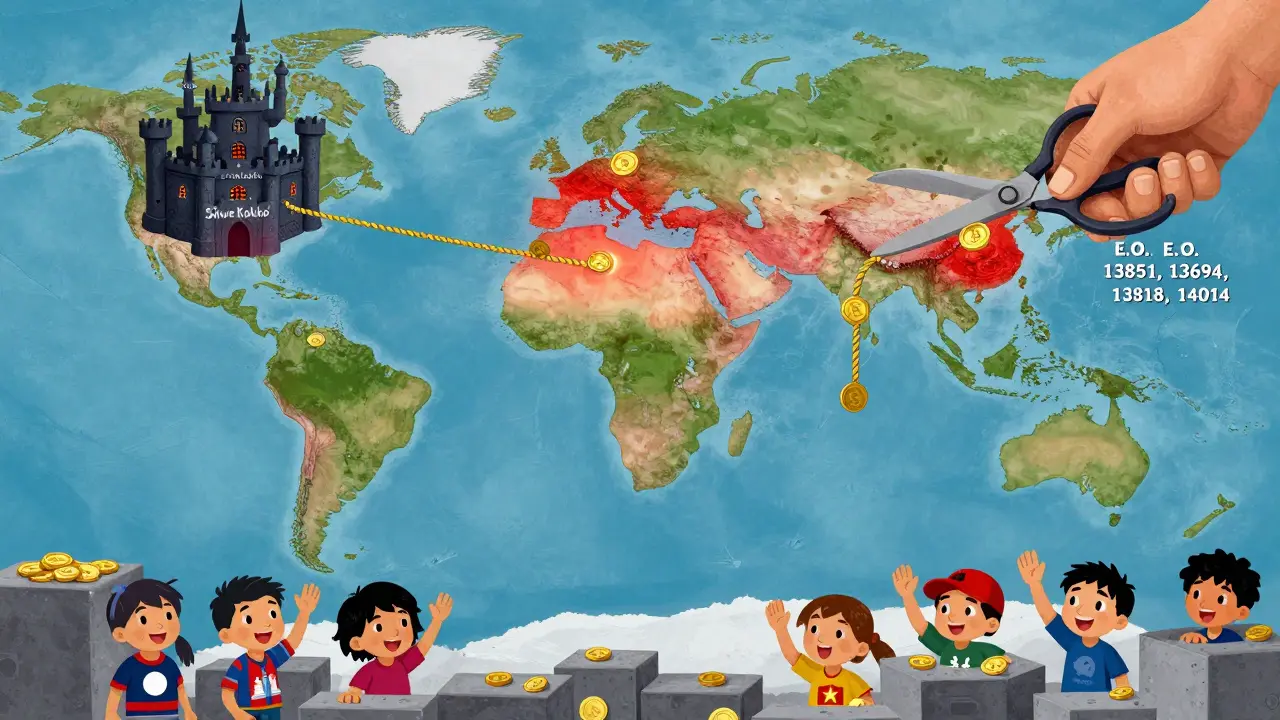
These sanctions use four different Executive Orders, each targeting a different part of the crime:
- E.O. 13851 - Targets transnational criminal organizations.
- E.O. 13694 - Addresses malicious cyber activity.
- E.O. 13818 - Focuses on serious human rights abuses.
- E.O. 14014 - Targets those undermining stability in Burma.
This multi-pronged approach means the U.S. isn’t just going after the money - it’s going after the slavery, the cybercrime, and the political protection that lets it all happen.
Who’s Really Behind This?
The KNA isn’t some rogue militia. It’s deeply entangled with Myanmar’s military regime. The military provides weapons, logistics, and protection. In return, the KNA funnels cash from the scams into military coffers. It’s a symbiotic relationship: one side commits atrocities, the other profits. And because Myanmar’s military government isn’t recognized by most Western nations, international pressure has been weak - until now.The Treasury Department made it clear: this isn’t just about fraud. It’s about slavery. "These operations subject thousands of people to modern slavery," said Under Secretary John K. Hurley. The victims aren’t just Americans losing money. They’re also the people trapped in those compounds - often from Laos, Cambodia, or Vietnam - forced to scam others under threat of violence. Some are tortured. Some die. Others are sold to rival gangs.
What This Means for Crypto Users
If you’re a regular crypto user, you might wonder: "Does this affect me?" The answer is yes - indirectly.- Exchanges are tightening KYC. Major platforms like Coinbase and Kraken are now cross-referencing wallet addresses against OFAC’s sanctions list. If you receive a transfer from a flagged address - even accidentally - your account could be frozen.
- Privacy coins face more scrutiny. Monero, Zcash, and other privacy-focused tokens are under heavier monitoring because they make tracing harder. Some exchanges may restrict or delist them.
- Scam reports are rising. The U.S. government is now actively encouraging victims to report scams. If you’ve been targeted, you’re not alone - and you’re not crazy.
Bottom line: If you’re trading crypto, always check the source. Don’t send funds to wallets linked to known scam zones like Shwe Kokko. Use blockchain analytics tools like Chainalysis or Elliptic to screen incoming transactions. It’s not paranoia - it’s protection.
The Bigger Picture
This isn’t the end. It’s the beginning. The $10 billion loss in 2024 is just the tip of the iceberg. Chainalysis estimates global crypto fraud hit $50 billion last year. And Southeast Asia - especially Myanmar, Cambodia, and Laos - accounts for nearly half of it.The U.S. is signaling it won’t wait for international consensus anymore. It’s acting alone, using its financial power to choke off these operations. Next? Sanctions on banks in Thailand that launder the money. Or freezing assets of Burmese military officials who benefit. Or pressuring China to shut down the cross-border payment channels these gangs use.
For the first time, the world is seeing crypto not just as an investment tool - but as a weapon in a global crime war. And the U.S. is now weaponizing regulation to fight back.
What’s Next?
The Treasury Department says this is part of a "series of actions" taken over the last several months. Expect more. More names. More entities. More countries. And more pressure on the financial systems that still enable these crimes.If you’re a crypto user, stay informed. If you’re a victim, report it. If you’re a business, screen your transactions. The line between innovation and exploitation is thin - and right now, the U.S. is drawing it in blood and blockchain.
What exactly did the U.S. sanction in Myanmar?
The U.S. sanctioned nine crypto-related entities operating in Shwe Kokko, Myanmar, all tied to the Karen National Army (KNA). These entities run large-scale cryptocurrency fraud operations, using forced labor to scam Americans. Ten additional entities in Cambodia were also sanctioned. The KNA leadership, including Saw Chit Thu and his two sons, were individually named and blocked from the U.S. financial system.
Why did the U.S. target crypto specifically?
Crypto is used because it allows criminals to move money quickly, anonymously, and across borders. Scammers use fake investment platforms to trick victims into sending funds, which are then layered through dozens of wallets to hide their origin. Unlike traditional banking, crypto lacks centralized oversight in places like Shwe Kokko, making it ideal for laundering stolen money.
How much money did these scams steal from Americans?
According to U.S. government estimates, Americans lost over $10 billion to these Southeast Asian crypto scams in 2024 alone. This figure is based on reports from victims, financial institutions, and blockchain analysis. It represents one of the largest single-year financial losses from cybercrime in U.S. history.
Are regular crypto users at risk because of these sanctions?
Regular users aren’t targeted - but they can be affected if they unknowingly interact with sanctioned wallets. Major exchanges now screen all transactions against OFAC’s list. If you receive crypto from a flagged address, your account may be frozen until you prove the funds are clean. Always verify the source of incoming transactions.
Is this sanction likely to stop the scams?
It won’t stop them overnight, but it weakens their financial lifeline. By cutting off access to the U.S. financial system, the sanctions make it harder for these groups to cash out profits or buy supplies. It also sends a message to banks and exchanges worldwide: don’t enable these criminals. Over time, this pressure forces operators to move - and many can’t afford to relocate their entire operation.
What’s the connection between the KNA and Myanmar’s military?
The KNA is not an independent group - it operates with the protection and support of Myanmar’s military regime. The military provides weapons, security, and legal cover. In return, the KNA funnels scam profits back into military coffers. This symbiotic relationship makes the KNA a de facto arm of the regime, which is why U.S. sanctions also target those threatening Burma’s stability.
Can I still trade crypto with people in Myanmar?
You can’t legally trade with any entity or individual on OFAC’s sanctions list - regardless of location. Even if someone in Myanmar isn’t sanctioned, you must avoid any wallet or address linked to the nine Shwe Kokko entities or their known blockchain footprints. Use blockchain explorers to trace transaction history before accepting funds.
What should I do if I think I’ve been scammed?
Report it immediately to the FBI’s Internet Crime Complaint Center (IC3) and the U.S. Treasury’s OFAC. Provide all transaction details, wallet addresses, and communication records. While recovery is rare, reporting helps build cases against these networks and improves future enforcement. Don’t pay more money trying to "get it back" - that’s a common next-step scam.
Are privacy coins like Monero now banned?
No, privacy coins aren’t banned. But they’re under heavier scrutiny. Exchanges may limit or restrict trading of Monero, Zcash, or similar coins because they make it harder to trace sanctioned transactions. If you hold them, be prepared for increased verification steps. Avoid using them to receive funds from unknown sources.
Is this part of a larger U.S. strategy?
Yes. This is one of the most comprehensive actions to date, but it’s part of a broader campaign. The U.S. has been steadily ramping up sanctions against Southeast Asian cyber-scam hubs since 2023. This move signals a shift: instead of waiting for global cooperation, the U.S. is using its financial power to isolate these criminal networks - one wallet, one entity, one regime at a time.
Tina Keller
It’s wild how crypto became the perfect tool for modern slavery. Not because it’s evil, but because it’s invisible. You can’t freeze a blockchain. You can’t subpoena a wallet. And for years, these compounds in Shwe Kokko operated like shadow governments - no cops, no judges, just armed guys and fake Telegram channels promising "remote tech jobs." The U.S. didn’t just hit them with sanctions - they hit the only thing these criminals care about: money. And now, for the first time, their cash flow is bleeding out.
It’s not just about fraud. It’s about dignity. These people aren’t "scam victims." They’re hostages. And the fact that we’ve been calling it "cybercrime" instead of "human trafficking" for years? That’s the real crime.
I’ve talked to survivors who were forced to scam their own mothers. One woman told me she had to text her mom: "Mom, I invested in Bitcoin and made $20k. Send more." Her mom sent $8,000. Then they beat her for not making more.
This isn’t policy. It’s justice. Long overdue.
But I wonder - how many more compounds are still out there? Cambodia? Laos? The Philippines? The U.S. can’t sanction every border town. We need global cooperation. Or at least, pressure on Thailand’s banks.
Still. This is the first time the world has said: "No more. We see you." And that matters.
Even if it’s just a crack in the wall. It’s a crack.
And cracks let in light.
And light kills shadows.
vasantharaj Rajagopal
The OFAC designation under E.O. 13851, 13694, 13818, and 14014 represents a multi-vector legal intervention targeting transnational criminal organizations, cyber-enabled fraud, human rights violations, and destabilizing actors in Burma. The asset freezes are enforceable under 31 CFR § 595.201 et seq., and any U.S. person engaging in transactions with the sanctioned entities - including indirect exposure via mixing services or decentralized exchanges - risks civil penalties under 31 U.S.C. § 5311. The blockchain forensic analysis performed by Chainalysis and Elliptic has been instrumental in attributing transaction flows to KNA-controlled addresses, particularly those exhibiting high-frequency micro-transactions typical of scam compound payout structures. This action aligns with the 2024 National Cyber Strategy’s emphasis on disrupting illicit crypto infrastructure through financial interdiction rather than kinetic means.
ann neumann
I knew this was coming. I’ve been watching this for years. The U.S. government doesn’t just sanction criminals - they sanction truth. You think they’re going after scam compounds? No. They’re going after the fact that crypto is uncontrolled. They’re going after the fact that people can move money without permission. This is the first step. Next they’ll ban privacy coins entirely. Then they’ll require every wallet to have a government ID. Then they’ll track every single transaction in real time. This isn’t about stopping scams. This is about control. They want to own your money. They want to own your choices. They want to know when you buy coffee, when you donate to charity, when you help a friend. And they’re using these "scams" as an excuse. I’ve seen the videos. I’ve read the reports. The victims? They’re real. But the real victims? Us. The people who still believe in freedom. This is the beginning of the end. And we’re all just waiting for the next shoe to drop.
They’ll say "it’s for safety." But safety is just another word for prison.
And they’re building it with blockchain.
Michael Suttle
Finally! 😎👏 This is what happens when you stop being polite and start being powerful. These scammers thought they were untouchable because they were "outside the system." But guess what? The system IS the bank. The system IS the dollar. The system IS the blockchain ledger they thought was anonymous. They didn’t realize - every transaction leaves a fingerprint. Every wallet has a history. And now? They’re frozen. No cash out. No new supplies. No new victims. Just a bunch of armed thugs sitting in a compound wondering why their Bitcoin can’t buy them rice. 💸🚫
Let’s hope they start running. Because if they stay? They’ll starve. And that’s the best kind of justice.
Jenni James
Oh, how delightful. Another act of performative moral superiority from the United States. You sanction entities in Myanmar while your own financial system enables offshore tax havens, private equity firms that loot hospitals, and hedge funds that profit from food shortages. You call this justice? It’s theater. You’re not fighting crime - you’re rebranding imperialism. The KNA is a monster. But so is the Federal Reserve. So is Wall Street. So is the entire infrastructure that turned human suffering into a commodity. You don’t get to be the hero when your hands are dripping in the same blood. This isn’t a crackdown. It’s a distraction. And you’re all too naive to see it.
Alex Thorn
It’s not just about the money. It’s about the silence. For years, no one talked about the people in those compounds. We talked about "crypto scams," as if the victims were just dumb investors. But they’re not. They’re kidnapped. They’re tortured. They’re forced to lie to their own families. And we called it a "tech job"? That’s not ignorance - that’s dehumanization.
These sanctions are the first time the U.S. has treated this like a humanitarian crisis instead of a financial one. And that shift? That’s everything.
It’s not perfect. But it’s the first real step. And sometimes, the first step is the hardest.
Let’s not waste it.
Craig Gregory
Let’s be real. This won’t stop anything. The KNA doesn’t care about U.S. sanctions. They’re not using U.S. banks. They’re using Chinese payment gateways, Thai money changers, and peer-to-peer crypto swaps on Telegram. The real money flows through unregulated exchanges in Guangzhou and Bangkok. The U.S. is playing whack-a-mole with a sledgehammer. Meanwhile, the scammers just move to a new compound, change their wallet addresses, and start again. The $10 billion lost? That’s a rounding error in global crypto volume. This is theater. Spectacle. A press release with a legal footnote. And we’re all applauding like it’s a victory. It’s not. It’s a mirage.
vishnu mr
Great move! 🙌 But let’s not forget the real heroes - the investigators, the blockchain analysts, the journalists who risked their lives to expose this. This isn’t just policy. It’s proof that persistence matters. I’ve seen the reports. I’ve read the testimonies. These people didn’t just sit back. They dug. They traced. They published. And now, because of them, a few more victims might sleep tonight.
Also - if you’re using crypto, always check the wallet history. Even one bad transaction can freeze your account. Stay sharp. Stay safe.
And yes, I typo’d. Sorry. 🤷♂️
Grace van Gent-Korver
I just want to say thank you to the people who made this happen. Not the politicians. Not the lawyers. The ones who sat in front of screens for months, tracing wallets, mapping connections, translating victim statements. You didn’t ask for applause. You didn’t want fame. You just wanted to help. And you did. That’s more than most of us will ever do.
Zephora Zonum
How quaint. You think a few sanctions will stop an entire industry built on desperation? The victims aren’t just from Laos and Cambodia - they’re from India, Nigeria, Brazil. The scammers don’t care about U.S. law. They care about profit. And profit doesn’t need a flag. You’ve created a new regulatory arms race. Now every criminal organization will develop its own crypto laundering pipeline. This isn’t a solution. It’s a challenge. And they’ll rise to it. Because they have nothing left to lose. And you? You still have your 401(k).
Douglas Anderson
My cousin was scammed last year. She thought she was investing in a "crypto education course." They had her on Zoom every night. A guy in a suit, a whiteboard, fake charts. She sent $14,000. She still calls it her "mistake." But it wasn’t. It was a trap. And now I know - she wasn’t alone.
This isn’t just about wallets. It’s about trust. The scammers didn’t steal money. They stole belief. They made people think the system was fair. And now we’re finally saying: no. It wasn’t. And we’re done pretending.
If you’re reading this and you’ve been scammed - you’re not stupid. You’re human. And you’re not alone.
Report it. Even if you think it’s too late.
It’s never too late.
Mara Alves Mariano
AMERICA DID IT AGAIN. We don’t wait for permission. We don’t ask for consensus. We don’t care if the UN is "concerned." We see monsters. We see blood. And we hit them where it hurts - their cash. These scammers thought they were safe because they were in a lawless zone. They forgot one thing: the U.S. doesn’t need a border to have power. We have the dollar. We have the blockchain. We have the will. And we don’t forgive. We don’t forget. And we don’t stop.
Let the next scammer in Shwe Kokko look at this and think: "Is this worth it?"
Because now? The answer is NO.
Adam Ashworth
One of the most effective foreign policy moves in years. Not because it’s flashy - but because it’s precise. Sanctioning the leadership, not just the companies. Freezing assets, not just blocking accounts. Using four executive orders to cover every angle: cybercrime, slavery, destabilization, criminal networks. This is how you fight asymmetric threats. Not with drones. Not with troops. With rules. With data. With financial gravity.
And it works.
Because money talks. And now, it’s screaming.
Allison Davis
The real win here isn’t the sanctions. It’s the shift in language. We stopped calling it "crypto fraud" and started calling it "modern slavery." That’s not semantics - that’s moral clarity. When you name something correctly, you can begin to heal it.
This is what happens when you stop treating human suffering as a footnote in a financial report.
Thank you to everyone who pushed for this.
It matters.
Tom Jewell
There’s a quiet horror in the fact that the most advanced financial system in the world - built on transparency, innovation, decentralization - became the perfect tool for the most primitive form of evil. Slavery. Trafficking. Forced labor. These aren’t medieval crimes. They’re 21st-century crimes. And they’re running on Ethereum and Bitcoin.
That’s the paradox.
We built a system to empower people.
And someone turned it into a cage.
So now we’re using the same system to break the cage.
It’s poetic.
And necessary.
karan narware
Sanctions are great. But let’s be honest - the real problem isn’t the KNA. It’s the Thai banks that launder the money. It’s the Chinese payment processors that clear the transactions. It’s the global exchanges that turn a blind eye to "high-risk" addresses. You can sanction nine entities all day long - but if the pipeline still flows? You’re just rearranging deck chairs on the Titanic.
Next step? Sanction the banks. Then the exchanges. Then the influencers who promote these "crypto jobs" on TikTok.
Otherwise? This is just a PR stunt.
William Montgomery
If you’re still using unregulated wallets or P2P platforms without KYC, you’re not just risky - you’re complicit. This isn’t paranoia. It’s responsibility. Every transaction you accept has a history. And if that history leads to a forced labor compound? You’re part of the machine. Check your wallets. Audit your history. Don’t wait for a freeze. Do it now. Because silence is support.
Chelsea Boonstra
Wait - so if I receive crypto from someone in Myanmar who isn’t sanctioned, but their wallet once received funds from a flagged address 3 years ago, do I get frozen? What if it was a one-time gift? What if I didn’t know? Who decides? What’s the threshold? This isn’t justice - it’s a minefield. And we’re all just stepping blindly through it.
Howard Headlee
THIS IS WHAT LEADERSHIP LOOKS LIKE. No waiting. No committees. No "let’s study it." They saw evil. They hit it. Hard. And they didn’t ask for applause. They just did it. That’s the kind of courage we need more of. Not in politics. In action.
If you’re scared of crypto because of this? Good. You should be. But don’t run from it. Run toward the truth.
Check your wallets.
Report what you see.
And don’t let fear silence you.
Julie Tomek
It is imperative to recognize that this action constitutes a paradigmatic shift in the application of extraterritorial financial regulation. By leveraging the U.S. dollar’s hegemonic position within the global financial architecture - as well as the pervasive integration of U.S.-based blockchain analytics infrastructure - the Treasury Department has effectively weaponized systemic dependency. This is not merely an enforcement action; it is a structural recalibration of global norms regarding the intersection of digital asset sovereignty and human rights accountability. The precedent set here may well catalyze analogous interventions in other jurisdictions, particularly where illicit finance converges with transnational organized crime. One must therefore approach this development not as an isolated event, but as the inaugural salvo in a new era of normative governance.
Brandon Kaufman
I’ve been in crypto since 2017. I’ve seen scams. I’ve lost money. But this? This is the first time I felt proud to be part of this space.
Not because of the tech.
Because of the people who refused to look away.
To the investigators, the journalists, the survivors - thank you.
You made this happen.
And I’m not forgetting it.
Anshita Koul
Every time we talk about crypto scams, we forget the faces behind the wallets. The girl from Vietnam who was forced to scam her brother. The boy from Laos who was locked in a room for 18 months. The woman who screamed into a camera, "I didn’t want to do this!" - and they cut her phone line.
This isn’t about blockchain.
This is about humanity.
And for the first time? The world saw them.
And acted.
PIYUSH KOTANGALE
Finally! 🙌 This is the kind of action we need - bold, smart, and ruthless. These scammers thought they were untouchable. They thought the world didn’t care. But we do. And now? They’re scared. Let’s keep going. Sanction the Thai banks. Freeze the Chinese gateways. Shut down the Telegram groups. This is just the start.
And I’m here for it. 💪
Anthony Marshall
You think this is over? Nah. This is just the spark. The KNA will adapt. They’ll move to Laos. They’ll use Monero. They’ll bribe new middlemen. But now they know: the world is watching. And the U.S. doesn’t play nice. So they’ll hesitate. They’ll slow down. And that? That’s victory.
Keep pushing. Keep tracing. Keep reporting.
Every wallet you check saves a life.
Lindsay Girvan
Sanctions? Cute. The real solution is to bomb Shwe Kokko. No more talk. No more paperwork. Just end it. These compounds are nests of monsters. And monsters don’t respond to laws. They respond to fire.
Alex Thorn
You know what’s worse than the scammers? The people who say "this won’t work" before it even starts. We didn’t fix this overnight. We didn’t have a magic button. We had people - real people - tracing transactions, translating testimonies, filing legal briefs. They didn’t get headlines. They didn’t get medals. But they changed the course of history.
This is why we don’t give up.
Because sometimes, the quiet ones are the ones who move mountains.
Tina Keller
And that’s the thing no one talks about - the real victims aren’t just the ones in the compounds. They’re the ones who made it out. The ones who still wake up screaming. The ones who can’t trust anyone. The ones who still check their wallets every day, terrified they’ll get flagged again.
This isn’t just about stopping crime.
It’s about giving people back their peace.
Douglas Anderson
I wish more people knew how hard it is to trace a crypto transaction. It’s not like a bank. You can’t just call the bank. You need to decode layers of mixing, chain-hopping, private keys, and fake identities. It takes months. Years sometimes.
And yet - they did it.
So don’t tell me this is impossible.
Because they proved it wasn’t.