

Imagine playing your favorite video game and getting paid for it. Not just in virtual loot boxes you can't cash out, but in actual cryptocurrency that hits your digital wallet. That was the core promise of Refereum, a platform designed to disrupt the trillion-dollar gaming marketing industry by rewarding players, streamers, and influencers directly. But if you're looking at the charts today, you might be scratching your head. The price is fractions of a cent, trading volume is thin, and the official website has a stark message: the project is no longer actively managed. So, what exactly is RFR, does it still have utility, and should you care about this micro-cap asset in 2026?
The Core Concept: Cutting Out the Middleman
Refereum is an Ethereum-based ERC-20 utility token created to incentivize engagement in the gaming ecosystem through a decentralized referral marketplace. Traditional game marketing is messy. Developers spend huge sums on ads, hoping users will click, install, and play. Influencers get paid flat fees regardless of whether their audience actually buys the game. Refereum aimed to fix this attribution problem. By using blockchain technology, it allowed developers to pay only for verified actions-like watching a stream, referring a friend, or completing a level-in real-time, transparent micro-payments.
The idea was simple: use Ethereum smart contracts to automate rewards. If you watched a specific Twitch stream for an hour, you earned tickets. If those tickets won a draw, you received RFR. It turned passive viewership into active earning potential, bypassing traditional advertising networks that take large cuts.
How RFR Works: Mechanics and Integration
At its heart, RFR functions as a medium of exchange within a closed-loop system that connects three groups: game developers, content creators, and gamers. Here is how the mechanics operated when the platform was fully active:
- For Gamers: You could earn RFR by playing games integrated with the Refereum SDK, watching streams via the Refereum Twitch extension, or referring friends who purchased games.
- For Streamers: Influencers used the Refereum Growth Engine to reward their viewers. This kept audiences engaged longer because viewers knew they had a chance to win tokens just by staying tuned.
- For Developers: Instead of guessing which ads worked, developers bought RFR on exchanges and allocated it to specific campaigns. They could track exactly which influencers drove sales and pay them automatically via smart contracts.
A key feature was the "ticket" system. As described by data providers like Gemini, users accumulated tickets based on viewing time. Every few hours, a random ticket was drawn from the pot, and the winner received RFR sent directly to their Ethereum address. This probabilistic model added a layer of gamification to the financial aspect, making the act of watching streams feel like a lottery where everyone had a shot.

Tokenomics: Supply, Launch, and Price History
Understanding the numbers behind RFR is crucial for grasping its current status. The token launched following an Initial Coin Offering (ICO) that concluded on February 8, 2018. The total supply was fixed at 5 billion tokens, with no plans for inflationary minting after the initial distribution.
| Metric | Value / Detail |
|---|---|
| Blockchain Network | Ethereum (ERC-20) |
| Total Supply | 5,000,000,000 RFR |
| All-Time High (ATH) | $0.05096 (April 3, 2021) |
| All-Time Low (ATL) | $0.00001006 (March 26, 2025) |
| Current Status (2026) | Micro-cap; No longer actively managed by original team |
| Primary Exchanges | Gate.io, Kraken, HitBTC |
The price history tells a dramatic story typical of many altcoins from the 2017-2018 bull run. RFR hit its all-time high of over $0.05 during the peak of the 2021 crypto mania. However, by March 2025, it had crashed to an all-time low of roughly $0.00001. This represents a decline of more than 99.9% from its peak. Today, market data varies significantly due to low liquidity, with prices hovering between $0.000001 and $0.00003 depending on the source, reflecting a market cap often under $150,000.
Why Did Refereum Struggle? Risks and Reality
If the concept was so sound, why did RFR fade into obscurity? Several factors contributed to its decline. First, the competition in the "play-to-earn" and gaming crypto space became fierce. Projects like Axie Infinity and newer metaverse tokens captured the narrative and user attention, leaving niche projects like Refereum struggling for visibility.
Secondly, technical and adoption hurdles were significant. Integrating blockchain rewards into mainstream games requires developer buy-in, which is slow to secure. Many gamers were also skeptical of crypto complexity, preferring traditional in-game currencies. Furthermore, the regulatory environment tightened globally, making it harder for smaller tokens to maintain listings on major exchanges.
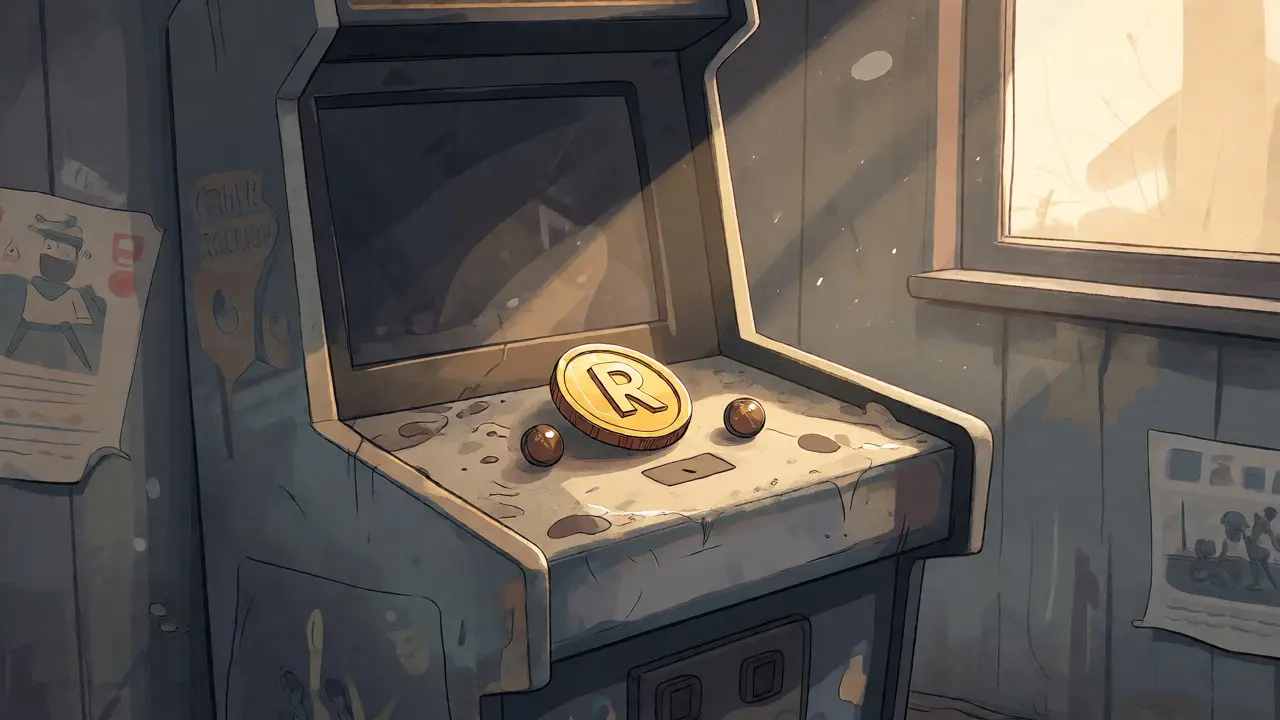
The most critical factor, however, is the lack of ongoing development. As of August 2026, the official Refereum website states that the currency has achieved "full decentralization" and is "no longer supported, managed, or associated" with the original team. In plain English, this means the company behind the token has stepped away. There is no new roadmap, no marketing push, and no active community management from the founders. The token now exists primarily as a speculative asset traded by holdovers and speculators rather than a functioning product with active maintenance.
Where Can You Buy and Store RFR?
Despite its small size, RFR is still tradable, though options are limited compared to major coins like Bitcoin or Ethereum. You won't find it on every top-tier exchange. Gate.io remains one of the most popular venues for trading RFR, offering live charts and decent liquidity relative to other platforms. Kraken also lists the token, providing access to a broader user base, although volumes remain low.
For storage, because RFR is an ERC-20 token, you can keep it in any Ethereum-compatible wallet. MetaMask, Trust Wallet, and hardware wallets like Ledger support it easily. Some regulated exchanges, such as Gemini, allow you to store and transfer RFR but may restrict trading due to internal risk assessments regarding its volatility and lack of active development.
Is RFR Still Useful in 2026?
This is the million-dollar question-or rather, the ten-cent question. Technically, the tools built on Refereum, such as the Twitch extension and Telegram trivia bot, can still function if independent developers choose to maintain them. The smart contracts on Ethereum are immutable; they don't stop working just because a company stops updating a website.
However, without a central team to drive partnerships or update integrations, the utility is largely residual. Some communities might still use the referral systems for specific indie games, but the widespread adoption envisioned in 2018 never materialized. For investors, buying RFR today is less about betting on a growing platform and more about speculating on a potential revival or simply holding a historical artifact of the early gaming crypto wave.
Is Refereum dead?
Not technically "dead," but inactive. The original team announced in 2026 that they no longer support or manage the project. The token still trades on exchanges, and the smart contracts function, but there is no active development or marketing pushing the ecosystem forward.
Can I still earn RFR by playing games?
Possibly, but it depends on individual game developers. Since the central platform is not actively managing partnerships, earning opportunities are sporadic. You would need to check if specific games still integrate the Refereum SDK and offer rewards.
Which exchanges list Refereum (RFR)?
The primary exchanges listing RFR include Gate.io and Kraken. Other smaller exchanges like HitBTC may also list it. Availability can change, so always verify current listings before attempting to trade.
What type of token is RFR?
RFR is an ERC-20 utility token built on the Ethereum blockchain. This means it follows the standard interface for fungible tokens on Ethereum and can be stored in any wallet that supports ERC-20 assets, such as MetaMask or Ledger.
Why did the price of RFR drop so much?
The price dropped due to a combination of factors: intense competition in the gaming crypto sector, lack of sustained user adoption, general crypto market downturns, and the eventual withdrawal of the founding team's active support. Its micro-cap status makes it highly sensitive to these negative pressures.