
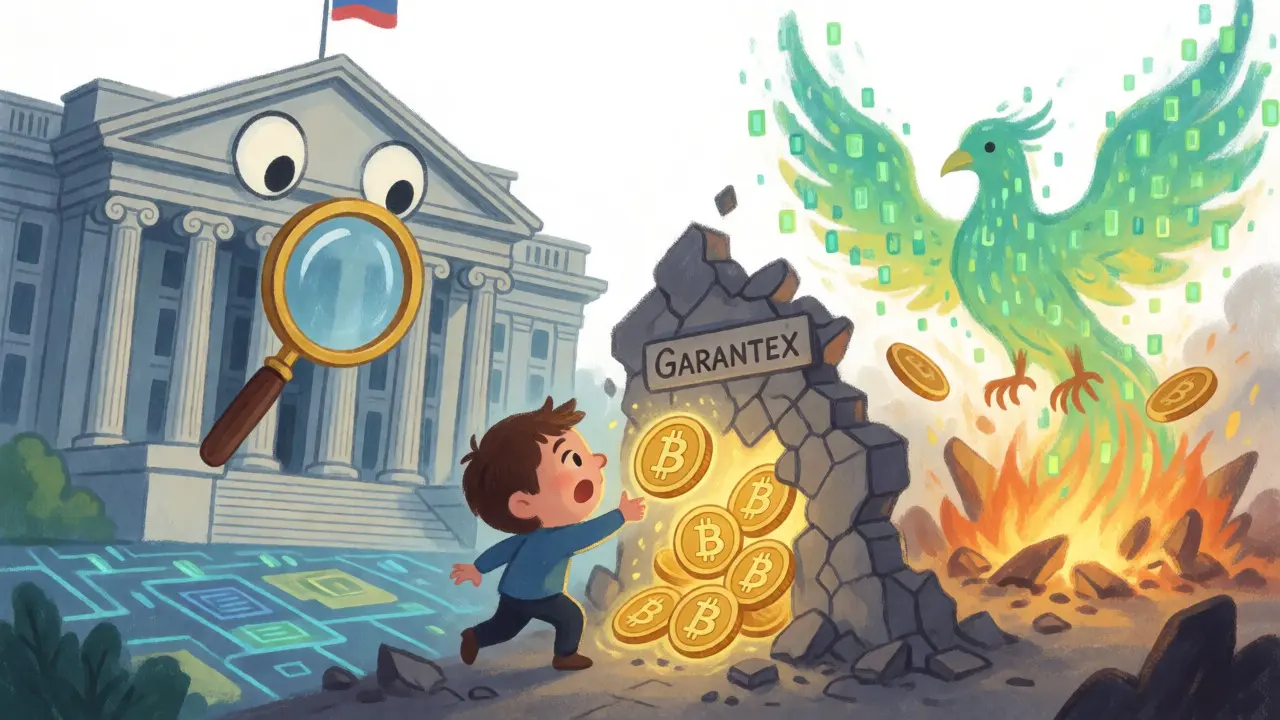
Imagine trying to cash out your Bitcoin only to find your favorite exchange suddenly blocked by the U.S. Treasury. That’s exactly what happened to thousands of Russian users when Garantex was hit with fresh sanctions in August 2025. But here’s the twist: instead of shutting down, the platform just rebranded as Grinex. This cat-and-mouse game between regulators and sanctioned entities has turned crypto access into a high-stakes puzzle for anyone dealing with Russian markets.
If you’re an investor, trader, or just someone curious about how global politics messes with your digital wallet, understanding these limitations is crucial. It’s not just about one exchange being banned; it’s about how entire financial ecosystems adapt to stay alive under pressure. Let’s break down what’s really happening with Russian sanctions and why your crypto access might be more fragile than you think.
The Rise and Fall (and Rise Again) of Garantex
Garantex wasn’t always a household name in Western media. Founded by Sergey Mendelev, Aleksandr Mira Serda, and Pavel Karavatsky, this exchange became a go-to spot for Russians looking to bypass traditional banking restrictions. But its reputation took a nosedive when the U.S. Department of the Treasury’s Office of Foreign Assets Control (OFAC) slapped it with sanctions back in April 2022. Why? Because OFAC claimed Garantex was helping Russia dodge economic penalties.
Fast forward to August 14, 2025, and things got serious. OFAC didn’t just renew the sanctions; they escalated them. They accused Garantex of processing over $100 million in illicit transactions since 2019. To make matters worse, the U.S. Secret Service seized domains, froze servers, and locked up $26 million in cryptocurrency earlier that year in March. One co-founder, Aleksej Besciokov, even got arrested while vacationing in India. It sounds like a spy movie, but it’s real life for crypto users in the region.
Enter Grinex: The Sanction-Evasion Successor
When Garantex went offline, its customers were left stranded. So, what did the team do? They created Grinex. Think of it as a phoenix rising from the ashes-or rather, a new account number hiding behind a different logo. Grinex explicitly stated it was formed to help users regain access after the asset freezes. It’s a clever workaround, but regulators weren’t fooled for long. By mid-August 2025, OFAC designated Grinex itself as a sanctioned entity, claiming it was effectively controlled by Garantex.
This move highlights a growing trend: authorities are no longer just blocking websites. They’re targeting the infrastructure and the people running it. Three executives from Garantex were personally sanctioned, along with six associated companies. It’s a clear message: if you try to sidestep rules by changing names, we’ll come for you anyway.
The A7 Network and the Billion Loophole
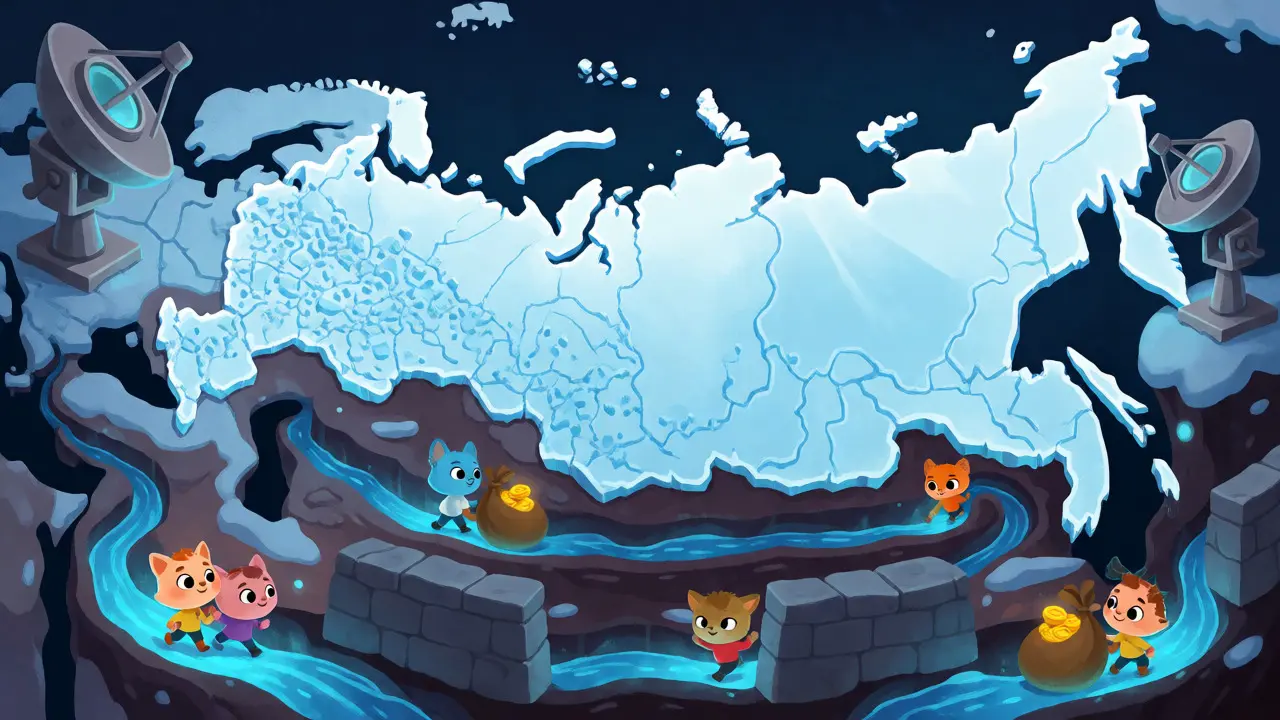
You might wonder how billions of dollars keep flowing despite all these bans. The answer lies in the A7 network. According to blockchain analytics firm Elliptic, companies linked to A7 have processed roughly $8 billion in crypto transactions since early 2024. These aren’t just random wallets; they include entities like A7 Agent, Old Vector, and InDeFi Bank.
The A7 leaks in mid-2025 exposed how these networks operate. They use sophisticated techniques to hide their tracks, making it hard for standard compliance tools to flag suspicious activity. But technology is catching up. Elliptic managed to de-obfuscate many of these wallets, providing actionable data to law enforcement. This allowed the freezing of millions in USDT, proving that anonymity isn’t absolute-it’s just expensive.
A7A5 Stablecoin: A Ruble-Backed Alternative?
One of the most interesting developments is the rise of the A7A5 stablecoin. Designed as an alternative to Tether’s USDT, A7A5 is backed by the Russian ruble. Why switch? Because USDT is centralized. If Tether decides to freeze your wallet because OFAC asks them to, your funds are stuck. A7A5 offers a way out, allowing users to transact without relying on Western-controlled assets.
| Feature | USDT (Tether) | A7A5 Stablecoin |
|---|---|---|
| Backing Asset | USD | RUB (Russian Ruble) |
| Control Type | Centralized (Freezable) | Regional/Local Issuer |
| Sanction Risk | High (Western Compliance) | Lower (Non-Western Jurisdiction) |
| Liquidity | Very High | Growing (via A7 Network) |
While A7A5 provides resilience, it comes with risks. It’s less liquid than USDT and operates on blockchains like TRON and Ethereum, which are still monitored globally. However, for users cut off from SWIFT, it’s a viable lifeline.
How Enforcement Is Evolving
The U.S. approach to Russian crypto sanctions has shifted from broad strokes to surgical strikes. Initially, sanctions targeted sectors. Now, they target specific individuals and successor entities. The State Department even offered rewards of up to $6 million for information leading to arrests, with $5 million specifically for Aleksandr Mira Serda. This incentivizes whistleblowers and makes leadership positions risky.
Moreover, the timing of these actions often aligns with broader geopolitical moves. For instance, President Trump’s statements in late August 2025 about imposing further economic sanctions if Ukraine ceasefire talks failed coincided with intensified crypto crackdowns. It shows that crypto regulation is now deeply intertwined with foreign policy.
What This Means for You
If you trade crypto involving Russian counterparties, you need to be extra careful. Here are some practical takeaways:
- Check the Origin: Not all exchanges are equal. Platforms with ties to sanctioned networks like A7 may face sudden delistings or freezes.
- Diversify Stablecoins: Don’t rely solely on USDT. Consider alternatives, but understand their liquidity risks.
- Monitor News: Sanctions lists update frequently. What’s compliant today might be blocked tomorrow.
- Use Analytics Tools: Services like Elliptic can help identify if a transaction source is tainted by sanctioned entities.
The landscape is shifting rapidly. As enforcement agencies get better at tracking blockchain movements, the era of easy evasion through simple rebranding is ending. Successors like Grinex show that adaptation is possible, but so is detection.
Why was Garantex sanctioned again in 2025?
Garantex was re-designated by OFAC in August 2025 due to allegations that it facilitated cybercriminal activities and processed over $100 million in illicit transactions since 2019, continuing its role in sanctions evasion despite previous restrictions.
What is Grinex and how is it related to Garantex?
Grinex is a successor exchange created by former Garantex employees to allow customers to regain access to their accounts after Garantex faced asset freezes. OFAC considers Grinex to be owned or controlled by Garantex.
What is the A7A5 stablecoin?
A7A5 is a ruble-backed digital asset issued by a Kyrgyzstani firm, designed as an alternative to USDT for Russian users seeking to bypass sanctions and avoid centralized freezing capabilities.
How much money has flowed through the A7 network?
According to Elliptic, companies linked to the A7 network have received approximately $8 billion in cryptocurrency transactions since early 2024, serving as a key channel for sanctions evasion.
Are there rewards for reporting Garantex leaders?
Yes, the U.S. State Department announced rewards totaling up to $6 million for information leading to the arrest or conviction of Garantex leaders, including up to $5 million specifically for Aleksandr Mira Serda.