
Have you ever seen a cryptocurrency name that sounds like a mashup of two completely different internet icons? That’s exactly what Pepa Inu is. It combines the viral energy of Pepe the Frog with the childhood familiarity of Peppa Pig. But before you rush in to buy, you need to understand what this token actually is. It is not a tech powerhouse or a financial revolution. It is a Binance Smart Chain (BSC) meme-token built for speculation, community hype, and high-risk trading.
If you are looking for the next Shiba Inu, you might be intrigued by the promises made by the project. However, the reality on the ground tells a much more cautious story. This guide breaks down the facts, the numbers, and the risks so you can decide if PEPA belongs in your portfolio or if it’s best left as an observation exercise.
The Basics: What Is Pepa Inu?
Pepa Inu operates on the BNB Smart Chain (formerly Binance Smart Chain). This means it is a BEP-20 token, which allows for fast transactions and low fees compared to Ethereum. The project describes itself as "community-driven" and emphasizes that no single entity controls it. According to data from CoinMarketCap, the founder is identified as Elroy, known online as "illuuhhh," a 32-year-old entrepreneur from the Netherlands.
The branding is intentionally playful. The website greets users with "Oink, oink!" and talks about taking the crypto world by storm. But look past the memes, and you find a standard reflection-based token model. The goal is simple: get people to hold the token so they benefit from transaction taxes redistributed to holders. There is no complex technology here. It is pure social experiment meets financial speculation.
Tokenomics: How the Money Moves
Understanding the math behind Pepa Inu is crucial because the numbers are astronomical and confusing at first glance. The project launched with a total supply of 420 quadrillion PEPA tokens. Yes, quadrillion. To manage this massive number, the team burned 50% of the initial supply right out of the gate. This left an effective supply of around 210 quadrillion, though current circulating supply figures vary between data providers.
Here is how every trade affects your wallet:
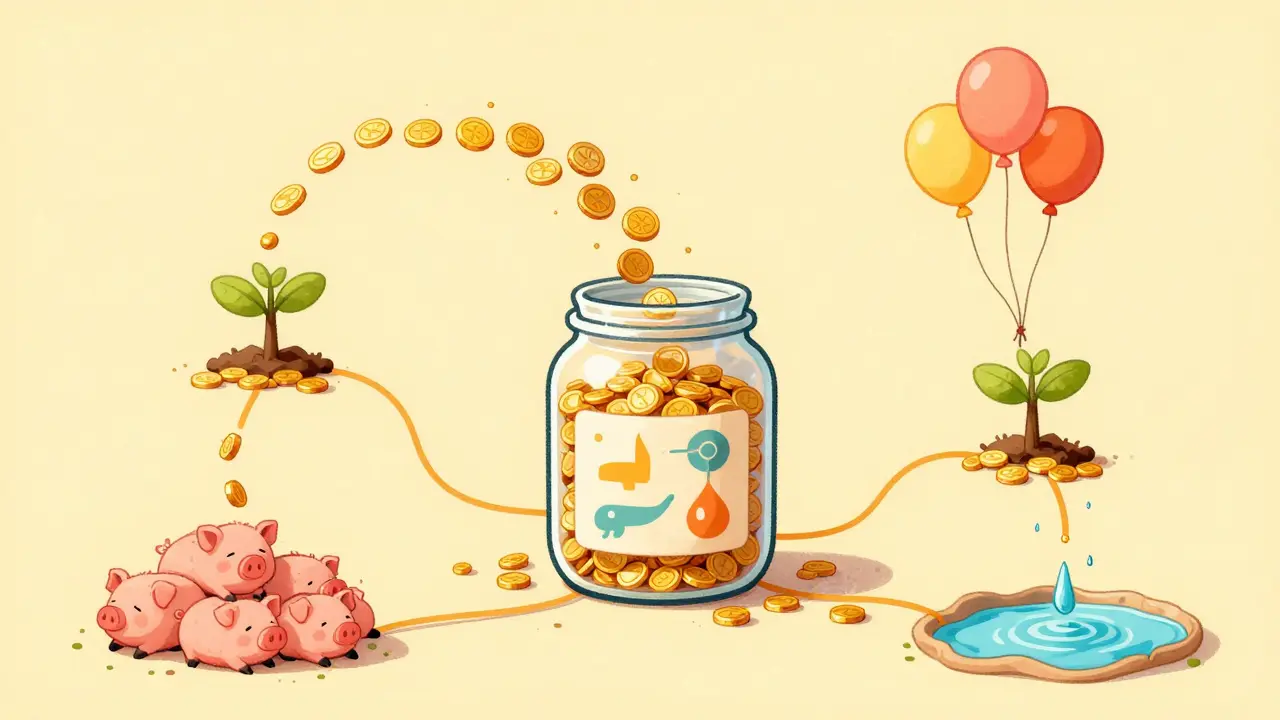
- 5% Reflections: These are automatically sent back to existing holders. If you hold PEPA, you earn more PEPA just by sitting on your hands while others trade.
- 2% Buyback and Growth: Funds intended to support development or buy back tokens.
- 2% Marketing: Used to promote the project.
- 1% Liquidity: Added to liquidity pools to stabilize trading.
This adds up to a 10% tax on transactions. While reflections sound attractive, remember that you cannot withdraw them as cash easily without selling, which triggers another tax. It is a mechanism designed to encourage holding, but it also complicates calculating your actual profit or loss.
Market Reality: Price and Liquidity
Let’s talk about the hard numbers. As of recent data snapshots, PEPA trades at approximately $0.0000000000003675 USD. The market capitalization hovers around $54,600 according to CoinMarketCap, though other sources like Cointips have shown higher estimates near $500,000. Why the discrepancy? Because data aggregation for micro-cap tokens is messy and often delayed.
The most concerning metric is volume. Recent 24-hour trading volumes reported by CoinMarketCap were as low as $11.07. Binance showed even less, at $1.83. What does this mean for you? It means there is almost no liquidity. If you try to sell a significant amount of PEPA, you will likely face massive slippage. Your sale could crash the price further, meaning you get far less money than the chart suggests. This is not a liquid asset; it is a stagnant pool with very few swimmers.
| Metric | Value | Context |
|---|---|---|
| Price | $0.0000000000003675 | Extremely low unit value |
| Market Cap | ~$54,600 | Micro-cap status |
| 24h Volume | $11.07 | Critical lack of liquidity |
| Holders | 14,770+ | Small community base |
| Chain | BSC (BEP-20) | Low gas fees, high speed |
Roadmap vs. Reality
Every meme coin needs a dream. Pepa Inu promises a "mememarket" for digital assets, a "futures Dapp" for derivatives trading, an NFT collection, and merchandise. On paper, this looks like a growing ecosystem. In practice, none of these features appear to be fully launched or widely used based on available data.
There are no external audits from firms like CertiK mentioned in public records. Without an audit, you are trusting the code blindly. The claim that ownership has been renounced is positive, as it prevents the developer from minting new tokens arbitrarily. However, renounced ownership does not fix bad code or malicious backdoors. You must verify the contract address yourself before interacting with it.
How to Buy PEPA (And Where Not To)
You won’t find PEPA on Coinbase or Binance for direct trading. Coinbase only tracks the price via its converter, explicitly stating the token is not tradable on their platform. To buy PEPA, you need to go decentralized.
- Set Up a Wallet: Download MetaMask or Trust Wallet. Configure it to use the BNB Smart Chain network.
- Get BNB: Buy BNB on a major exchange and transfer it to your wallet. You need BNB to pay for gas fees on the BSC network.
- Connect to PancakeSwap: Go to PancakeSwap.finance and connect your wallet.
- Find the Contract: Paste the official PEPA contract address into the search bar. Never click links from social media posts, as scammers create fake tokens with similar names.
- Swap: Swap your BNB for PEPA. Be prepared for high slippage settings due to the low liquidity.
Alternatively, some centralized exchanges like LBank may list the token, but liquidity there is often thin as well. Always double-check the contract address against multiple reputable sources like CoinMarketCap or Dextools.
Is Pepa Inu a Good Investment?
Let’s be direct. Pepa Inu is a high-risk speculative asset. It lacks the utility, institutional backing, or deep liquidity of established cryptocurrencies. Its value relies entirely on community sentiment and viral marketing. If the hype dies, the price drops. With daily volumes under $20, exiting a position can be difficult without losing significant value.
It is not suitable for conservative investors or those who cannot afford to lose their entire investment. If you choose to participate, treat it like buying a lottery ticket, not investing in a company. Only allocate funds you are willing to see vanish overnight. The potential for "going viral" exists, but so does the potential for total irrelevance. Do your own research, check the live charts, and never invest based solely on a catchy name.
Is Pepa Inu listed on Coinbase?
No, Pepa Inu is not tradable on Coinbase. Coinbase only provides a price converter and tracking page for PEPA. You must use decentralized exchanges like PancakeSwap or specific centralized exchanges like LBank to trade it.
What blockchain is Pepa Inu on?
Pepa Inu runs on the BNB Smart Chain (BSC). This makes it a BEP-20 token, allowing for fast transfers and lower transaction fees compared to Ethereum-based tokens.
Who created Pepa Inu?
The founder is identified as Elroy, also known by the handle "illuuhhh." He is described as a 32-year-old crypto entrepreneur from the Netherlands. The project claims to be community-driven with renounced ownership.
Why is the PEPA price so low?
The price is extremely low due to the massive total supply of 420 quadrillion tokens and very low market demand. Additionally, the lack of liquidity and minimal trading volume contribute to its micro-cap status.
Are there any audits for Pepa Inu?
There are no publicly available independent security audits from firms like CertiK for Pepa Inu. Investors should exercise extreme caution and verify the smart contract code themselves before interacting with the token.
What are the transaction taxes for PEPA?
Pepa Inu charges a 10% tax on transactions. This includes 5% for holder reflections, 2% for buyback/growth, 2% for marketing, and 1% for liquidity.