
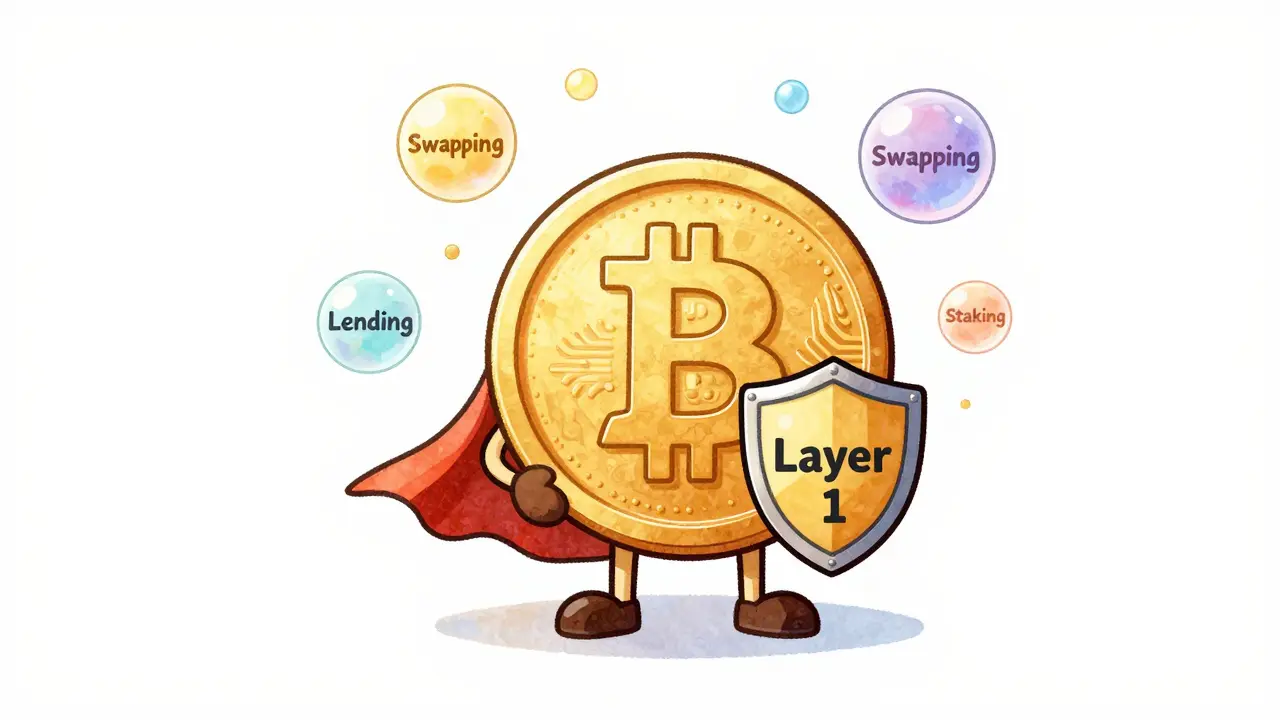
Bitcoin was built to be simple. It was designed as digital gold-a secure store of value and a peer-to-peer payment network. But for years, developers have been trying to do more with it. They wanted smart contracts. They wanted decentralized finance (DeFi). And they wanted all of this without leaving the safety of the Bitcoin network.
This is where Tap Protocol comes in. Also known by its ticker symbol TAP, this project claims to bring full programmability directly to Bitcoin Layer 1. No sidechains. No bridges. Just native Bitcoin security with complex financial features on top.
If you’ve seen the ticker $TAP popping up in crypto chats or noticed mentions of "OrdFi" (Ordinal Finance), you might be wondering what it actually does. Is it just another meme coin riding the Bitcoin wave? Or is it a serious technical upgrade to how we use Bitcoin?
In this guide, we’ll break down exactly what Tap Protocol is, how it works under the hood, who created it, and whether it’s worth your attention in the current market landscape.
The Core Idea: Bringing DeFi to Bitcoin Without Bridges
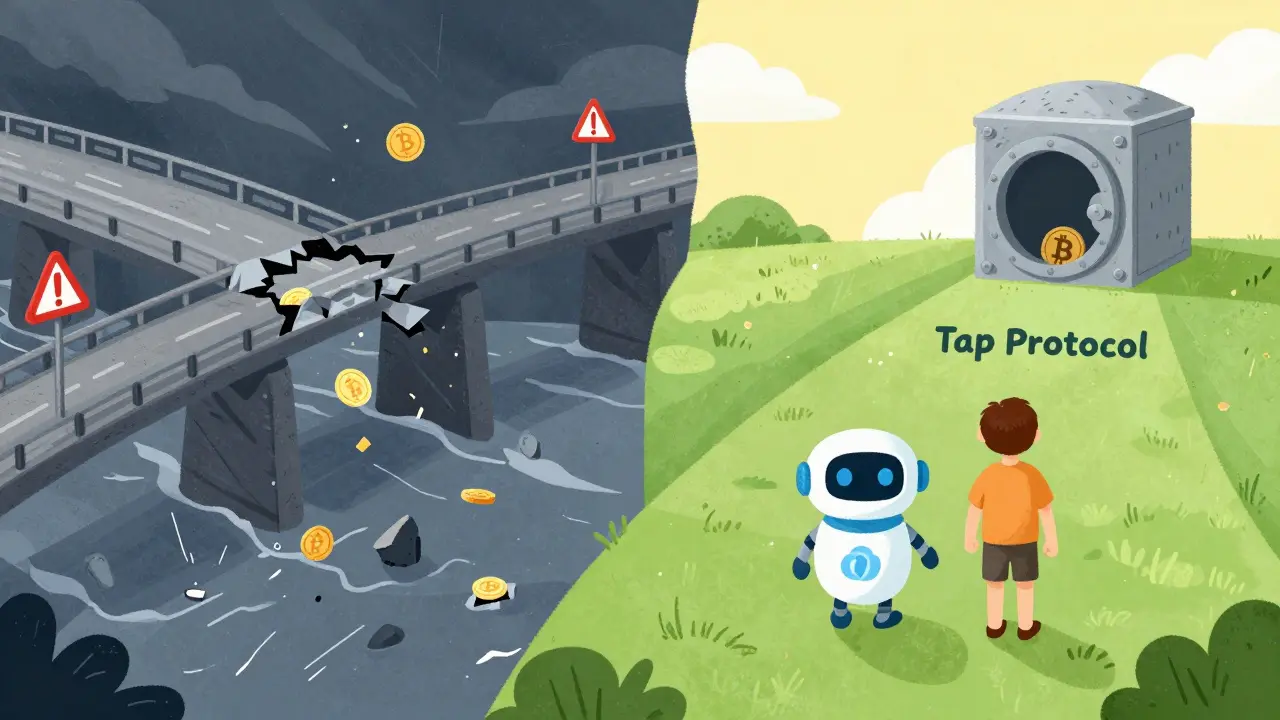
To understand Tap Protocol, you first need to understand the problem it solves. For most of Bitcoin’s history, if you wanted to use DeFi-like swapping tokens, lending money, or staking for rewards-you had to leave Bitcoin. You’d bridge your BTC to Ethereum, Solana, or a Bitcoin-specific sidechain like Rootstock or Liquid.
Bridging introduces risk. Every time you move assets across chains via a bridge, you’re trusting a third-party system. We’ve seen billions of dollars stolen from hacked bridges. That’s why many Bitcoin maximalists refuse to touch anything outside the main chain.
Tap Protocol aims to eliminate that trust issue entirely. It describes itself as a multi-asset protocol built on top of the Bitcoin Ordinals Protocol. Instead of moving your Bitcoin to a different chain, Tap Protocol lets you keep your assets natively secured by Bitcoin while still using them in complex financial applications.
Think of it this way: Imagine being able to run an Ethereum-style smart contract, but the code and the data are anchored directly onto the Bitcoin blockchain. That’s the promise of Tap Protocol. It uses a concept called "L1 co-processing," which means the computation and data availability happen in a way that is verified by Bitcoin itself, rather than relying on a separate validator set.
Who Created Tap Protocol?
Every major crypto project has a story behind its creation. Tap Protocol was created by a pseudonymous developer known as BennyTheDev. This isn’t a faceless corporate entity; it’s part of a broader ecosystem called Trac.
The Trac ecosystem consists of three main parts:
- Trac Core: Handles indexing and data management.
- Pipe Protocol: Provides infrastructure support.
- Tap Protocol: Focuses on asset issuance, token standards, and Ordinal Finance (OrdFi).
BennyTheDev’s goal with this stack is to build a complete environment on Bitcoin. By leveraging the Bitcoin Ordinals Protocol, which allows attaching data (like images or text) to satoshis, Tap Protocol extends this capability to create programmable assets. This means you can mint tokens, create NFTs, and even build gaming economies directly on Bitcoin, keeping everything self-custodied.
How Does Tap Protocol Work Technically?
Let’s get into the weeds a bit. If you’re not a developer, you can skim this, but it helps explain why Tap Protocol claims to be better than previous attempts like BRC-20.
Previously, projects like BRC-20 tried to create fungible tokens on Bitcoin using JSON inscriptions within Ordinals. While innovative, BRC-20 had major flaws. It was expensive to use because every transaction required heavy inscription fees. Airdrops (sending tokens to many users at once) were nearly impossible due to high costs. And it lacked true smart contract functionality-you couldn’t easily build automated market makers (AMMs) or complex logic.
Tap Protocol improves on this by introducing a new token standard and execution model. Here are the key technical differentiators:
- Promises: These are smart-contract-like constructs. A "Promise" encodes both the desired outcome and the rules under which it occurs. This allows for conditional transfers and automated logic without needing a Turing-complete virtual machine like Ethereum’s EVM.
- 1-TX Transfers: Tap Protocol optimizes operations so that many actions can be completed in a single Bitcoin transaction. This drastically reduces fees compared to BRC-20.
- Account Abstraction: This simplifies the user experience. Instead of managing complex private keys for every interaction, users can delegate permissions and automate tasks more easily.
- No Sidechains: All critical asset movements and contract logic are anchored to Bitcoin Layer 1. There is no separate blockchain running in parallel that could fail or be hacked independently.
The protocol also supports advanced features like mass sending (for efficient airdrops) and native multi-chain integration. This means TAP assets can interact with other networks like Arbitrum, Solana, XRP, and Internet Computer (ICP), but the core security remains rooted in Bitcoin.
TAP Token Economics and Market Data
Like most protocols, Tap Protocol has its own utility token, TAP. This token is used for governance, paying fees within the ecosystem, and participating in DeFi activities like staking and liquidity provision.
Here are the key numbers you need to know about the TAP token as of mid-2026:
| Metric | Value |
|---|---|
| Maximum Supply | 21,000,000 TAP |
| Circulating Supply | ~15,500,000 TAP |
| All-Time High (ATH) | $11.71 USD (Nov 2, 2024) |
| All-Time Low (ATL) | $0.05392 USD (Feb 12, 2026) |
| Current Price Range | $0.12 - $0.14 USD |
| Market Cap | ~$3.2 Million USD |
A few things stand out here. First, the supply is capped at 21 million, mirroring Bitcoin’s own scarcity model. Second, the price volatility is extreme. The token hit an all-time high of over $11 in late 2024 during a period of intense speculation around Bitcoin Ordinals. However, by February 2026, it had crashed to roughly $0.05, representing a drawdown of more than 98%.
This level of volatility is typical for small-cap crypto assets. With a market cap in the low millions and only around 700 on-chain holders, TAP is considered a high-risk, high-reward investment. Liquidity is thin, meaning large buy or sell orders can significantly impact the price. Always check live data on aggregators like CoinMarketCap or CoinGecko before trading, as prices vary between exchanges.
Use Cases: What Can You Actually Do With Tap Protocol?
So, beyond the technical specs, what can you do with this technology? The Tap Protocol team envisions a full DeFi ecosystem on Bitcoin. Here are the primary use cases currently supported or in development:
- Token Issuance: Developers can create new fungible tokens (like stablecoins or governance tokens) and non-fungible tokens (NFTs) directly on Bitcoin. Examples include gaming tokens and art collections like "Natcats."
- Decentralized Swaps: Through integrated Automated Market Makers (AMMs), users can swap TAP assets for other tokens without leaving the Bitcoin network. This eliminates the need for external centralized exchanges for these specific pairs.
- Staking: Users can stake their TAP tokens or other protocol-native assets to earn rewards. This incentivizes holding and secures the network.
- Airdrops and Multi-Send: Projects can distribute tokens to thousands of addresses efficiently. This is crucial for community building and marketing campaigns, which were previously too expensive on Bitcoin.
- Cross-Chain Interoperability: Via the Trac Network Layer 1, TAP assets can flow into fast, peer-to-peer applications on other chains while retaining Bitcoin-level custody guarantees.
One interesting development is the introduction of real-world asset (RWA) exposure. The team has announced support for tokenized stock exposure, such as assets linked to the S&P 500 ($SPCX), tradable against TAP assets. This bridges traditional finance with Bitcoin’s decentralized infrastructure.
Risks and Limitations to Consider
No crypto project is without risks, and Tap Protocol is no exception. Before you invest or build on TAP, consider these factors:
1. Extreme Volatility and Small Market Cap
With a market cap under $5 million, TAP is highly susceptible to market manipulation and sudden crashes. The 98% drop from its ATH shows how quickly sentiment can shift. If you buy in, be prepared for wild swings.
2. Lack of Independent Audits
While the team emphasizes security and self-custody, there are no publicly available third-party security audits or formal verification reports cited in major sources. In DeFi, un-audited code is a red flag. You are trusting the integrity of the developers’ implementation.
3. Regulatory Uncertainty
The entire Ordinals and Bitcoin NFT space faces potential regulatory scrutiny. Governments are still figuring out how to classify these assets. If regulators decide that Ordinals-based tokens are securities, it could impact the usability and legality of Tap Protocol in certain jurisdictions.
4. Competition
Tap Protocol isn’t alone. Other projects like Rootstock (RSK) and Liquid Network offer smart contracts on Bitcoin. Additionally, newer standards like Runes and Inscriptions are evolving rapidly. Tap Protocol must prove its "L1 co-processing" model is superior to gain widespread adoption.
Conclusion: Is Tap Protocol Worth Your Attention?
Tap Protocol represents an ambitious attempt to solve one of Bitcoin’s biggest limitations: programmability. By bringing DeFi features directly to Layer 1 without relying on risky bridges, it appeals to Bitcoin purists who want more utility without compromising security.
However, it is still an early-stage project. The technology is novel, the market cap is tiny, and the price history is volatile. If you are a developer interested in Bitcoin-based dApps, the tooling (supporting TypeScript and Python) makes it an interesting playground. If you are an investor, treat TAP as a high-risk speculative asset. Only allocate funds you can afford to lose.
The future of Bitcoin DeFi is uncertain, but projects like Tap Protocol are pushing the boundaries of what’s possible on the world’s largest blockchain. Keep an eye on their development updates, particularly regarding audit releases and total value locked (TVL) growth, as these will be key indicators of long-term viability.
What is the difference between Tap Protocol and BRC-20?
BRC-20 is an experimental standard for creating fungible tokens on Bitcoin using Ordinals inscriptions. It is known for high transaction fees and limited functionality. Tap Protocol builds on top of Ordinals but introduces a new token standard with features like "Promises" (smart contracts), efficient multi-sends, and lower costs through 1-TX transfers. Essentially, Tap Protocol aims to fix the inefficiencies and lack of programmability found in BRC-20.
Is Tap Protocol safe to use?
Tap Protocol emphasizes self-custody and native Bitcoin security, meaning you don't need to trust a bridge or a sidechain. However, as with any DeFi project, there are risks. The code has not been widely audited by independent firms, and the smart contract logic is complex. Always do your own research and start with small amounts to test the waters.
Where can I buy TAP tokens?
TAP tokens are primarily traded on decentralized exchanges associated with the ecosystem, such as taparooSwap. They may also be listed on smaller centralized exchanges. Due to low liquidity, prices can vary significantly between platforms. Check aggregators like CoinMarketCap or CoinGecko for the most up-to-date trading venues.
Who created Tap Protocol?
Tap Protocol was created by a pseudonymous developer known as BennyTheDev. It is part of the wider Trac ecosystem, which includes Trac Core and Pipe Protocol, aimed at building a comprehensive Bitcoin-based development environment.
Does Tap Protocol require a Layer 2 blockchain?
No. One of Tap Protocol's main selling points is that it operates directly on Bitcoin Layer 1. It uses a concept called "L1 co-processing" to anchor execution and data availability to the main Bitcoin blockchain, eliminating the need for separate Layer 2 networks, sidechains, or custodial bridges.
Ella Collinson
The technical architecture of Tap Protocol represents a significant deviation from the inefficient BRC-20 standard, primarily through its implementation of 'Promises' as conditional smart contract constructs. By leveraging L1 co-processing, the protocol ensures that data availability and execution verification are anchored directly to the Bitcoin blockchain, thereby mitigating the systemic risks associated with cross-chain bridges. The introduction of 1-TX transfers drastically reduces gas costs for complex operations such as mass airdrops, which were previously prohibitive under the Ordinals inscription model. Furthermore, the account abstraction layer simplifies user interaction by delegating private key management permissions, enhancing usability without compromising self-custody principles. This paradigm shift allows for the deployment of automated market makers (AMMs) and tokenized real-world assets (RWAs) like $SPCX directly on Layer 1, expanding the utility of Bitcoin beyond mere store-of-value narratives. However, the lack of independent security audits remains a critical vulnerability in this high-stakes environment. The extreme volatility observed in the TAP token price history, including a 98% drawdown from its all-time high, underscores the speculative nature of early-stage DeFi protocols. Market participants must evaluate the risk-reward ratio carefully, considering the thin liquidity and small circulating supply. The integration with other networks via the Trac ecosystem suggests a roadmap toward interoperability while maintaining Bitcoin's security guarantees. Nevertheless, the absence of formal verification reports invites skepticism regarding the robustness of the codebase against potential exploits. Regulatory uncertainty surrounding Ordinals-based tokens further complicates the long-term viability of such projects. Developers interested in TypeScript and Python tooling may find the ecosystem promising for experimentation. Yet, investors should remain cautious of the concentrated holder distribution and potential manipulation vectors inherent in low-cap assets. The concept of native programmability is compelling but unproven at scale. Competition from established sidechains like Rootstock poses a significant challenge to adoption. Ultimately, Tap Protocol serves as an experimental sandbox rather than a mature financial infrastructure. Continuous monitoring of total value locked (TVL) metrics will be essential for assessing organic growth.
Hazel Fruitman
its so wrong to trust these anon devs with our money lol. BennyTheDev sounds like a scammer name. why would anyone put faith in something that hasnt been audited? it feels morally bankrupt to even consider investing in this garbage. people need to wake up and stop chasing hype. its just another rug waiting to happen.
Autumn Story
I think it's really brave of them to try new things! Maybe we should give them a chance?? I hope everything goes well for everyone involved... please be careful out there though!!!
Andrew Schneider
Oh look, another 'native' solution that probably won't work 😂. You guys are actually buying into this? It's hilarious how gullible you all are. I'm just here to watch the train wreck 🚂💥. Don't say I didn't warn you when your bags go to zero! #WAGMI (We All Gonna Miss Out)
Brad Semp
It is frankly disheartening to observe the level of intellectual laziness displayed in this thread. The notion that one can simply 'add DeFi' to Bitcoin without understanding the fundamental limitations of UTXO models is preposterous. Those who dismiss the technical nuances of L1 co-processing are clearly lacking in both education and discernment. Only the elite few who understand the intricacies of cryptographic verification should engage with such protocols. The rest of you are merely pawns in a game you do not comprehend.
John Harman
Listen, I've been around since the OG days. This stuff is cool but let's keep it real. Most of these ordinals projects are just memes with extra steps. But hey, if you want to gamble, go ahead. Just don't come crying to me when you lose it all. I told ya so.
Jackie D
i mean its kinda wild how they tryna make bitcoin do ethereum things right? like why fix what isnt broken? but also maybe its cool to see innovation? i dunno im just confused about the whole promise thing tho. sounds fancy but does it actually work?
Korn Arrieta
The valuation metrics presented are utterly absurd. A market cap of $3.2 million for a project claiming to revolutionize Bitcoin's utility is a glaring red flag indicating severe undervaluation or, more likely, a complete lack of genuine adoption. The volatility cited is not merely 'typical'; it is symptomatic of a illiquid asset prone to manipulation by whale actors. Investors ignoring the absence of third-party audits are displaying reckless negligence. The regulatory headwinds facing Ordinals are not 'uncertainty'; they are a looming existential threat. Any capital allocated to TAP is effectively burned. The technical claims of 'L1 co-processing' are marketing fluff designed to obscure the reality of off-chain computation dependencies. Do not fall for the narrative.
Steven Briggs
interesting read. seems risky though.
Natalie Lucas
omg this looks so exciting!! i love the idea of keeping my btc safe while still doing defi stuff. lets gooo team tap! cant wait to see where this goes 💖
Ruth Williams
It is imperative that individuals exercise extreme caution before engaging with unverified protocols. The lack of transparency regarding the development team's identity is unacceptable in professional finance. One must question the motives behind such pseudonymous operations. The historical performance of similar projects suggests a high probability of failure. Prudence dictates avoiding such speculative ventures entirely.
Sophie Nakasako
This raises profound questions about the nature of trust in decentralized systems. If we remove the bridge, do we truly eliminate risk, or merely displace it? The philosophical implication of 'native' security is intriguing. We must consider whether the complexity introduced by Promises outweighs the simplicity of Bitcoin's original design. What is the true cost of programmability?
Kristy Morrow
you're all missing the point. its not about the tech its about the vibe. bitcoin is boring. this makes it fun. who cares if its audited? live fast die young. the system is rigged anyway so might as well play the game differently. silence is golden but noise is profitable.
Curtis Johnson
hey hey lets all stay calm and open minded here ok? its a big world and there are lots of ways to skin a cat! maybe tap is the way maybe its not but we gotta respect the hustle right? no need to be harsh on each other!
Hamza k
What a spectacular display of technological hubris! To think that one could graft the sprawling, chaotic vines of DeFi onto the pristine, minimalist trunk of Bitcoin is nothing short of audacious. It’s either genius or madness, and honestly, I’m leaning towards the latter. The sheer drama of a 98% crash is enough to give anyone whiplash. Bravo, BennyTheDev, bravo indeed!
Kim Kay
i think its important to remember that everyone learns at their own pace. if you want to try tap thats great just make sure you understand the risks first. dont let others pressure you into decisions you regret. take your time and do your research okay?
Mark Tuason
While the technical specifications appear robust, the absence of comprehensive security audits remains a significant concern. It is advisable to proceed with caution and conduct thorough due diligence before allocating any resources. The potential for innovation is evident, but risk management must remain paramount.
Ray Arney
seems interesting. i'll keep an eye on it.