
When a cryptocurrency project announces a token burn, it’s not just marketing fluff - it’s a real, on-chain event that permanently removes coins from circulation. But how do you know if that burn actually happened? And does it matter for your investment? Tracking token burns isn’t just for devs or analysts - it’s a simple way to verify claims, spot manipulation, and understand real supply changes in crypto.
What Exactly Is a Token Burn?
A token burn is when tokens are sent to a special wallet address that no one can access. Once there, those tokens are gone forever. They can’t be spent, traded, or recovered. Think of it like shredding cash - once it’s burned, it’s out of the system. This isn’t new. Binance Coin (BNB) started doing this back in 2017, burning a portion of its supply every quarter. But the game changed in August 2021, when Ethereum rolled out EIP-1559. Instead of relying on manual burns, Ethereum started automatically burning a portion of every transaction fee. Since then, over 4.2 million ETH has been burned - worth more than $12 billion as of early 2026.Why Should You Care About Token Burns?
Token burns affect supply and demand. Less supply, with steady or growing demand, can push prices up. But not all burns are equal. Some are real. Others? Not so much. Projects often claim they’re reducing supply to boost value. But without verification, you’re just taking their word for it. That’s where tracking comes in. You can see exactly how many tokens were burned, when, and where. This helps you avoid scams and spot projects that actually follow through on their promises. According to CoinGecko’s 2023 Tokenomics Report, 78% of the top 100 cryptocurrencies now use some kind of burn mechanism. That means if you’re investing in crypto, you’re probably dealing with a token that burns. Ignoring it is like ignoring trading volume.How Token Burns Are Tracked
All burns happen on public blockchains. That means every transaction is visible. To track a burn, you need to find the burn address. Ethereum uses a standard burn address:0x0000000000000000000000000000000000000000. Any ETH sent there is burned. Binance Smart Chain uses 0x000000000000000000000000000000000000dead. Solana, Polygon, and others have their own. The key is knowing which address to check.
Blockchain explorers like Etherscan and BscScan make this easy. They show you every transaction sent to these addresses. You can see the exact amount burned, the timestamp, and even the transaction hash. Etherscan alone handles over 12 million queries per day - and a huge chunk of those are burn checks.
Some platforms go further. Tools like Burned.to track over 450 tokens across multiple chains. They alert you when a burn happens, show historical data, and even calculate burn rates. For example, Ethereum burns between 0.5 and 5 ETH per block, depending on network activity. On busy days, that’s over 1,800 ETH burned daily.
Real Examples of Burn Tracking
Let’s look at three real cases:- Ethereum (ETH): Every transaction fee includes a base fee that gets burned. No manual intervention. No guesswork. It’s automatic, transparent, and verifiable. As of March 2026, over 4.2 million ETH are gone forever.
- BNB (Binance Coin): Binance burns BNB quarterly. But unlike Ethereum, this is manual. They announce it. Then you check BscScan to confirm the tokens were sent to the burn address. In 2025, they burned 1.7 million BNB in one event - worth around $1.1 billion.
- SHIB (Shiba Inu): The community runs its own burn tracker at ShibBurn.com. As of May 2024, over 410 trillion SHIB were burned - that’s 41% of the total supply. That burn campaign helped push SHIB’s price up 137% in a single month.
Tools You Can Use Right Now
You don’t need to be a coder to track burns. Here are the best free tools:- Etherscan - Best for Ethereum, ERC-20 tokens, and EIP-1559 burns. Search for the burn address and filter by token.
- BscScan - For BNB, CAKE, and other Binance Smart Chain tokens. Check the burn address and compare with Binance’s official announcements.
- Burned.to - Aggregates burns from 450+ tokens. Gives alerts, charts, and historical trends. Highly rated by users.
- TokenSniffer - Scans token contracts to see if they have a burn function. Helps avoid fake burns.
What Doesn’t Count as a Burn
Not every transaction to a weird-looking address is a burn. Here are common mistakes:- Wrong address: Some projects use addresses that look like burn addresses but aren’t. For example, SafeMoon claimed burns that were just transfers to inactive wallets - not true burns.
- Locked tokens: If tokens are locked in a smart contract, they’re not burned. They’re just frozen. You can’t spend them - but they’re still in circulation.
- Privacy chains: Monero, Zcash, and similar coins hide transactions. You can’t track burns on these networks. If a project says it’s burning on Monero, it’s likely fake.
Does Burning Tokens Actually Raise Prices?
Short answer: Sometimes. But not always. Dr. Linda Xie from Scalar Capital studied 200 burn events and found that 67% had no lasting price impact beyond 48 hours. Markets often overreact. A big burn might spike prices for a day, then fade. But there’s another angle: holder retention. Messari’s Q2 2024 report showed that projects with transparent, regular burns had 23% higher wallet retention than those without. Investors trust projects that prove they’re reducing supply. Ethereum’s burn mechanism changed how people value ETH. Vitalik Buterin said it created "unprecedented supply transparency." Institutional investors now use burn data as part of their analysis. Fidelity Digital Assets reported that 89% of institutional investors track burns - up from just 32% in 2021. So while a burn alone won’t make a coin go up, consistent, verifiable burns build long-term trust.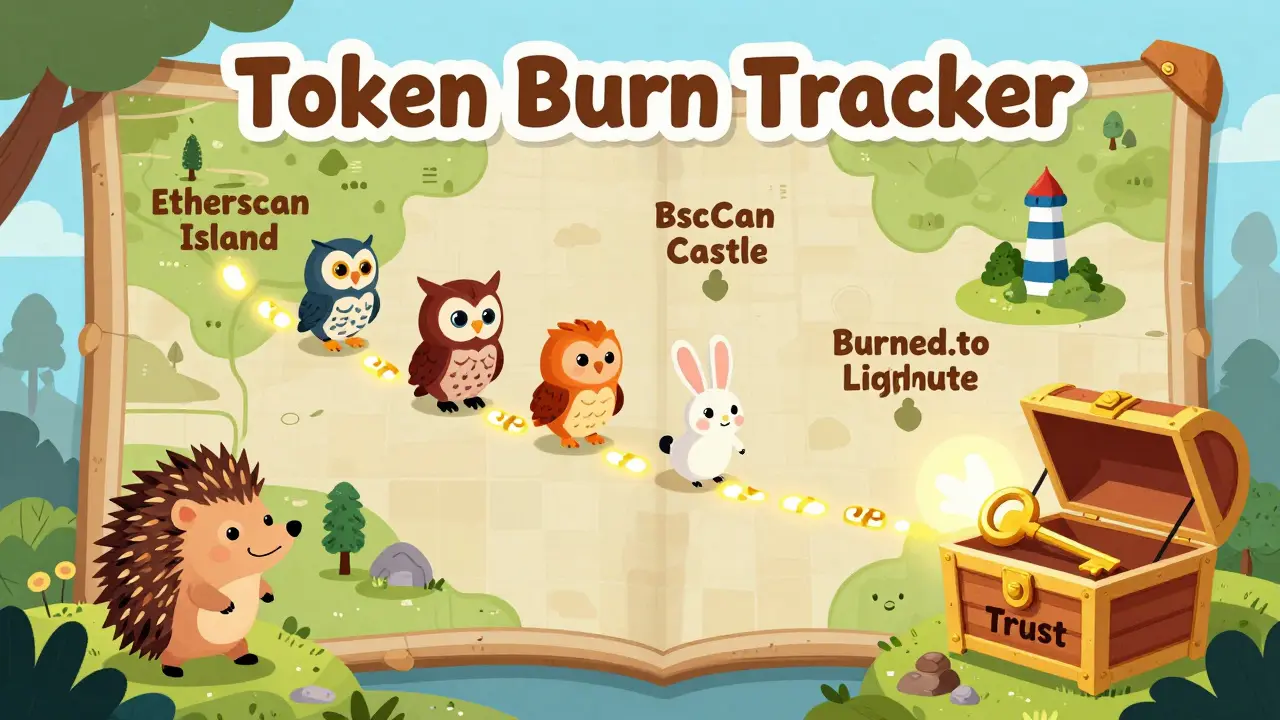
What’s Coming Next
The future of burn tracking is getting smarter:- EIP-4895 (Ethereum, Q3 2024): Will integrate validator withdrawals with burn tracking - making ETH’s supply reduction even more transparent.
- ERC-6812: A proposed standard to unify burn addresses across blockchains. Right now, each chain uses its own format. This will make tracking easier.
- AI-powered burn analysis: Bloomberg Intelligence predicts that by 2026, 90% of crypto trading algorithms will include real-time burn data.
How to Start Tracking Burns Today
You don’t need a PhD. Here’s how to get started in under 10 minutes:- Identify the token you’re interested in.
- Search its official website or whitepaper for the burn address.
- Go to the right blockchain explorer (Etherscan for ETH, BscScan for BNB, etc.).
- Paste the burn address into the search bar.
- Check the transaction history. Look for large outgoing transfers labeled as "burn" or "sent to 0x000..."
- Compare with official announcements. If a project says they burned 10 million tokens, verify it on-chain.
Final Thoughts
Token burns aren’t magic. They won’t turn a bad project into a great one. But they’re one of the few transparent mechanisms in crypto. When a project burns tokens and proves it on-chain, you know they’re not just talking. In a space full of hype, burns are one of the few things you can actually verify. And that’s powerful. If you’re serious about crypto investing, tracking burns isn’t optional - it’s basic due diligence. Start with Ethereum or BNB. Learn how to read Etherscan. Then expand. The more you verify, the less you’ll be fooled.Can you track token burns on Bitcoin?
No, not in the traditional sense. Bitcoin’s protocol doesn’t support token burns. While the Ordinals protocol lets people inscribe tokens on Bitcoin, there’s no standard burn address or mechanism. Any claim of a Bitcoin token burn is either misleading or refers to a token built on top of Bitcoin - not Bitcoin itself.
Are all token burns real?
No. Some projects fake burns by sending tokens to inactive wallets that still have private keys. Others confuse locked tokens with burned ones. Always verify using a blockchain explorer. Look for the standard burn addresses (like 0x000... for Ethereum) and cross-check with official announcements.
Which is better: automated burns or manual burns?
Automated burns are more trustworthy. Ethereum’s EIP-1559 burns fees automatically with every transaction - no human intervention. Manual burns, like BNB’s quarterly events, rely on project teams to follow through. History shows some teams delay or skip manual burns. Automated burns are verifiable 24/7; manual ones need trust.
Do token burns guarantee higher prices?
Not by itself. A burn reduces supply, but price depends on demand too. If no one wants the token, burning more won’t help. Studies show that 67% of burns have no lasting price impact. However, consistent, verifiable burns build investor trust - which can lead to stronger long-term value.
Can I set up alerts for token burns?
Yes. Platforms like Burned.to and Etherscan offer email or app alerts when a burn occurs. You can also use blockchain APIs to build your own alerts. For example, if you’re tracking ETH, set a notification for any transaction over 100 ETH sent to 0x000... address. This way, you’ll know instantly when something big happens.
prasanna tripathy
This is actually one of the clearest guides I've seen on burns. I've been checking Etherscan for months now just to see if ETH burns are consistent. It's weird how many people think burns = price pump. Nah. It's about trust. And trust matters more than hype.
Rachel Rowland
I started tracking burns after I got burned by a fake SHIB announcement and now I check BscScan before I even look at a token's whitepaper. Game changer. No more FOMO buying without proof.
Jamie Hoyle
Lmao. You think people care about burns? Most of these projects are rug pulls with a fancy burn address. The real burn is your wallet when you buy into their 'transparent' token. I've seen 12 different 'burns' on Solana that were just transfers to a dead wallet. They call it a burn. I call it a lie.
Cerissa Kimball
I appreciate the breakdown of tools but I think you missed a key point. TokenSniffer doesn't just detect burn functions. It checks if the burn function is callable by the owner after deployment. If it is? Red flag. Many projects keep the burn function unlocked so they can reverse it later. That's not transparency. That's a backdoor.
Leah Dallaire
Burns are a psyop. The blockchain doesn't care about supply. It doesn't know what 'burned' means. It just moves numbers. The whole narrative was invented by marketers to make weak projects look like they're doing something. You think 4.2 million ETH burned changed anything? The price moved because VCs dumped their bags after the merge. Not because of burns. Don't fall for the myth.
Jane Darrah
I love how everyone acts like burns are this revolutionary thing. It's just a fancy way of saying 'we deleted some tokens'. But here's the real question: who decided those tokens needed to be deleted? Was it the community? Or was it the dev team deciding they didn't want to share the pie? And if they can delete tokens... can they also mint more later? The whole system feels like a magic trick where the rabbit is always in the hat. I don't trust it. Not one bit.
Denise Folituu
I just watched a video where someone said burns are 'proof of commitment'. That's so naive. Commitment to what? To making money? Because that's all this is. A PR stunt wrapped in blockchain jargon. I've seen projects burn 50% of their supply and then a month later, the dev wallet gets a new influx of 10x that amount. Burn? More like rearrange. And we all just clap like idiots.
Ethan Grace
It's funny how we treat burns like they're sacred. But what if the burn address is actually controlled by the dev team? What if they just moved the tokens to a wallet they can still access? The 0x000... address is a standard, yes. But standards are made by humans. And humans lie. I don't believe in ghosts. And I don't believe in burns that can't be verified by on-chain logic alone.
Jonathan Chretien
I mean... I get it. Burns look cool. But honestly? The real value isn't in the burn. It's in the community that shows up to verify it. That's the real signal. If people are checking Etherscan every day, if they're sharing screenshots, if they're arguing about the burn rate - that's the network effect. Not the number. The attention. The ritual. That's what builds long-term value. Not math. Culture.
Nash Tree Service
I'm sorry but this whole thing feels like a cult. People are worshipping a 0x000... address like it's holy scripture. I've seen wallets with 0.00000001 ETH in them labeled as 'burned' and people are losing their minds. Meanwhile, the real issue - the fact that 78% of these tokens have zero utility - is being ignored. Burns are just a distraction. A shiny object to keep you from asking the real question: why does this token even exist?
Drago Fila
For anyone new to this - start with Etherscan. Bookmark the burn address. Set up a simple alert. You don't need to be a dev. Just check once a week. You'll be surprised how many projects skip their 'quarterly burn'. It's like watching a diet plan - if they don't show up, they're not serious. Burn tracking is just due diligence. No big deal. Just be consistent.
jack carr
This is gold. I’ve been following ETH burns since 2022 and it’s honestly the only thing that gives me peace of mind. No hype. Just numbers on a screen. I sleep better knowing that 4.2 million ETH are gone. Not locked. Not hidden. Just... gone. That’s the kind of transparency crypto needs more of.
nalini jeyapalan
Burned.to is useless. It aggregates from unverified sources. I checked their data against BscScan for a recent BNB burn. They were off by 12%. If you're making investment decisions based on third-party aggregators, you're already losing. Go to the source. Always.
Bill Pommier
The premise of this article is dangerously naive. Token burns are not a mechanism of value creation. They are a mechanism of narrative control. The market doesn't care about supply reduction - it cares about liquidity. If you burn 10 million tokens but 100 million more are being dumped on DEXes, you're not creating scarcity. You're creating a liquidity vacuum that gets filled by whales. This guide is a marketing pamphlet disguised as education.
Basil Bacor
I just wanna say - if you're using CoinMarketCap to track burns, you're already late. Their data is 18 hours behind. I set up a webhook to Etherscan's API. Got notified within 22 seconds of a 250 ETH burn last week. That's how you do it. Not some website with a pretty chart. Real-time on-chain. Or don't bother.
Emily Pegg
I don't trust ANY of this. I used to be all in on burns. Then I found out that the 'burn address' for one of my tokens was actually a multisig controlled by the dev team. They moved the tokens there... then moved them back. Twice. They called it a 'burn and reissue'. I called it theft. Burn tracking? More like burn deception.
Christina Young
Burns are irrelevant. If a project has no revenue, no users, and no utility, burning tokens doesn't fix that. It just makes the math look prettier. The only thing that matters is adoption. Not supply. Not burns. Not charts. Real people using it. Everything else is noise.
Bonnie Jenkins-Hodges
AMERICA FIRST! Why are we even talking about ETH burns? Bitcoin is the only real money. If you're not tracking Bitcoin, you're already behind. And no, Ordinals aren't burns. They're just digital graffiti. Get your priorities straight. 🇺🇸🔥
Nancy Jewer
I think people miss the bigger picture. It's not about the burn. It's about the *consistency*. Ethereum’s burn is beautiful because it’s automatic, continuous, and protocol-level. BNB’s quarterly burn is nice... until they skip one. That’s when trust breaks. Automated = trust. Manual = risk. That’s the real lesson here.
Steven Lefebvre
I set up a simple Python script to ping Etherscan every 5 minutes. Now I get a Slack alert whenever a burn over 50 ETH happens. It’s not glamorous. But it’s real. And it’s changed how I think about ETH. No more guessing. Just data. That’s the power of transparency.
Ken Kemp
I tried tracking burns for a week. Got overwhelmed. Ended up just using Burned.to. It’s not perfect but it’s way better than nothing. I don’t need to be a dev. I just need to know if the project is keeping its word. That’s all.
Julie Potter
I’m sorry but this whole guide feels like a paid ad. Burned.to? Really? That site is owned by a guy who used to work for Binance. CoinGecko’s report? Also funded by crypto projects. This isn’t education. It’s propaganda. And if you’re buying into it, you’re part of the problem.
Melissa Ritz
I don’t know why people are so impressed by this. It’s like writing a guide on how to tell if your steak is cooked. You look at it. You smell it. You don’t need a 2000-word essay. Burn addresses are public. Check them. If you can’t figure that out... maybe crypto isn’t for you.
Drago Fila
Just a quick heads-up - if you're using the 0x000... address for Ethereum, make sure you're looking at the right chain. Some DeFi protocols use testnet addresses or legacy addresses that look similar. I lost $8k once because I checked the wrong network. Always double-check the chain.
James Burke
Thanks for the breakdown. I’ve been reading up on this for weeks and this finally made it click. Especially the part about locked vs burned. That’s a huge red flag I never thought about. I’m going to start checking contracts on TokenSniffer before I even look at price charts.
Ken Kemp
I'm not a dev but I use TokenSniffer daily now. Just paste the contract address and it tells you if the burn function can be paused. If it can? I walk away. No exceptions. I don't care how big the project is. That's a backdoor.