

North Korean hackers don't just steal cryptocurrency anymore; they have built a sophisticated industrial machine for washing it. If you thought mixing services were the end of the story, think again. The Lazarus Group, the primary cyber-espionage unit linked to the Democratic People's Republic of Korea (DPRK), has shifted its focus from simple theft to complex cross-chain laundering. This evolution is not just about hiding money-it’s about funding nuclear weapons programs through digital shadows. With over $2 billion stolen in 2025 alone, understanding how these actors move funds across blockchains is critical for anyone involved in crypto compliance or security.
The Shift from Mixers to Cross-Chains
For years, North Korean hackers relied on centralized mixers like Tornado Cash or Wasabi Wallet to obscure transaction trails. These tools worked by pooling funds from multiple users and redistributing them, breaking the link between sender and receiver. However, as regulatory pressure mounted and sanctions targeted these platforms, the Lazarus Group needed a new approach. Around 2022-2023, they pivoted aggressively toward cross-chain bridgesprotocols that allow assets to move between different blockchain networks.
This shift wasn't accidental. It was a response to enforcement. When regulators seized mixer assets or listed them as sanctioned entities, the path of least resistance changed. Instead of staying on one chain and mixing, hackers began hopping chains. They would take stolen Ethereum, bridge it to Tron, then swap it for Bitcoin, and finally move it to an obscure Layer-1 network. Each hop adds a layer of complexity, forcing analysts to track funds across multiple ledgers with different data structures. According to Elliptic, this strategy contributed to an 111% surge in funds processed through cross-chain conversion services since mid-2023.
The key insight here is speed and volume. The Lazarus Group doesn't just move money slowly; they flood the zone. By executing thousands of small transactions across multiple bridges simultaneously, they overwhelm compliance teams and automated monitoring systems. This tactic, known as "flood the zone," turns transparency into noise. Blockchain analytics firms must process terabytes of data to find the signal, giving hackers precious time to liquidate or further obfuscate the assets.
Anatomy of a Cross-Chain Heist
To understand the threat, we need to look at how these operations unfold in real-time. Let’s break down the typical lifecycle of a DPRK-linked attack, using the record-breaking Bybit heist in February 2025 as a case study. In this incident, hackers stole over $1.5 billion, making it the largest crypto theft in history.
- Infiltration: Unlike past attacks that exploited smart contract bugs, recent breaches often involve social engineering. Phishing emails, fake job offers, and compromised vendor accounts are used to gain access to private keys or API credentials. As Elliptic noted, the weak point is now human, not technological.
- Extraction: Once inside, hackers drain wallets rapidly. Funds are initially moved to fresh addresses controlled by the group. In the Bybit case, large amounts of Ethereum and stablecoins were extracted within minutes.
- Cross-Chain Bridging: The stolen assets are immediately routed through bridges like Ren Bridge or Avalanche Bridge. Bitdefender reported that the Lazarus Group deposited more than 9,500 BTC through the Avalanche Bridge alone in previous campaigns. This step moves funds off the vulnerable mainnet.
- Token Swapping: On the destination chain, tokens are swapped for native assets. For example, ERC-20 tokens might be converted to Ether on Binance Smart Chain or TRC-20 tokens to Tron on the Tron network. This reduces the footprint of specific token contracts.
- Obfuscation: Finally, the funds are layered through additional techniques. This includes using obscure blockchains with limited analytics coverage, creating custom tokens issued by the laundering network itself, or employing "refund addresses" to redirect assets to new wallets, effectively breaking the chain of custody.
Each stage is designed to complicate tracing. By the time law enforcement identifies the initial breach, the funds may have already hopped through five or six different ecosystems.
Key Tools and Platforms Exploited
Not all bridges are created equal, but hackers exploit whichever ones offer speed and anonymity. Here are some of the most frequently targeted infrastructure components:
| Platform/Tool | Type | Role in Laundering | Risk Factor |
|---|---|---|---|
| Avalanche Bridge | Cross-Chain Bridge | Moves BTC and ETH between chains rapidly | High volume usage by Lazarus Group |
| Ren Bridge | Cross-Chain Bridge | Converts wrapped assets to native coins | Used for early-stage obfuscation |
| Tornado Cash | Mixer | Historical primary tool for anonymization | Sanctioned, but still used via frontends |
| Obscure L1s | Blockchain Network | Hosts funds where analytics coverage is low | Difficult for investigators to trace |
| Custom Tokens | Digital Asset | Created by hackers to trade among themselves | No external price feed, hard to value |
The reliance on bridges highlights a vulnerability in the broader crypto ecosystem. While bridges enable interoperability, they also create trust assumptions. If a bridge is compromised or if its governance is weak, it becomes a highway for illicit funds. Moreover, many bridges do not perform strict KYC checks, allowing anyone to deposit and withdraw without verification.

The "Flood the Zone" Technique
One of the most concerning developments in DPRK hacking tactics is the emphasis on overwhelming defensive capabilities through sheer volume. Nick Carlsen, a North Korea expert at TRM Labs, describes this as "flooding the zone." Imagine trying to track a single drop of water in a rushing river. Now imagine dumping a bucket of water into that river every second. That’s what happens when hackers execute hundreds of transactions per minute across multiple chains.
This technique serves two purposes. First, it delays detection. Compliance algorithms often flag anomalies based on thresholds. If the volume of suspicious activity exceeds the threshold, the system may alert too late or generate false positives that drown out real threats. Second, it complicates attribution. When funds are split into thousands of smaller chunks and scattered across dozens of addresses, reconstructing the original wallet becomes a massive computational challenge.
Interestingly, despite this rapid movement, much of the converted Bitcoin remains stationary after the initial hops. TRM Labs notes that this suggests the hackers are not looking for immediate liquidity but rather preparing for large-scale liquidation through over-the-counter (OTC) desks. OTC trades allow them to convert crypto to fiat currency without hitting public exchanges, which are heavily monitored. This patience indicates a high level of strategic planning and access to sophisticated financial networks.
Regulatory Response and Restrictions
The scale of these operations has forced governments and international bodies to act. The United States Department of the Treasury’s Office of Foreign Assets Control (OFAC) has imposed numerous sanctions on North Korean entities and individuals involved in cybercrime. However, enforcing these sanctions in the decentralized world is notoriously difficult.
Here’s where restrictions come into play. Exchanges and DeFi protocols are increasingly required to implement travel rule compliance, which mandates sharing sender and receiver information for transactions above a certain threshold. While this helps with traditional finance, it’s less effective against cross-chain movements where identities are pseudonymous. Furthermore, many bridges operate globally, making jurisdictional enforcement challenging.
The FBI has taken a proactive stance by urging exchanges to freeze assets linked to known Lazarus Group wallets. In August 2023, they released a list of identified Bitcoin addresses associated with the group. Yet, as seen in the Bybit heist, hackers often bypass these lists by moving funds quickly before freezes can be executed. The gap between detection and action remains the biggest hurdle for regulators.
Another emerging restriction is the blacklisting of specific smart contracts or bridge interfaces. Some analytics firms now provide real-time alerts when funds interact with high-risk addresses. Protocols that integrate these feeds can automatically pause transactions or require additional verification. However, this creates a tension between security and decentralization. Too many restrictions could stifle innovation, while too few leave the door open for abuse.
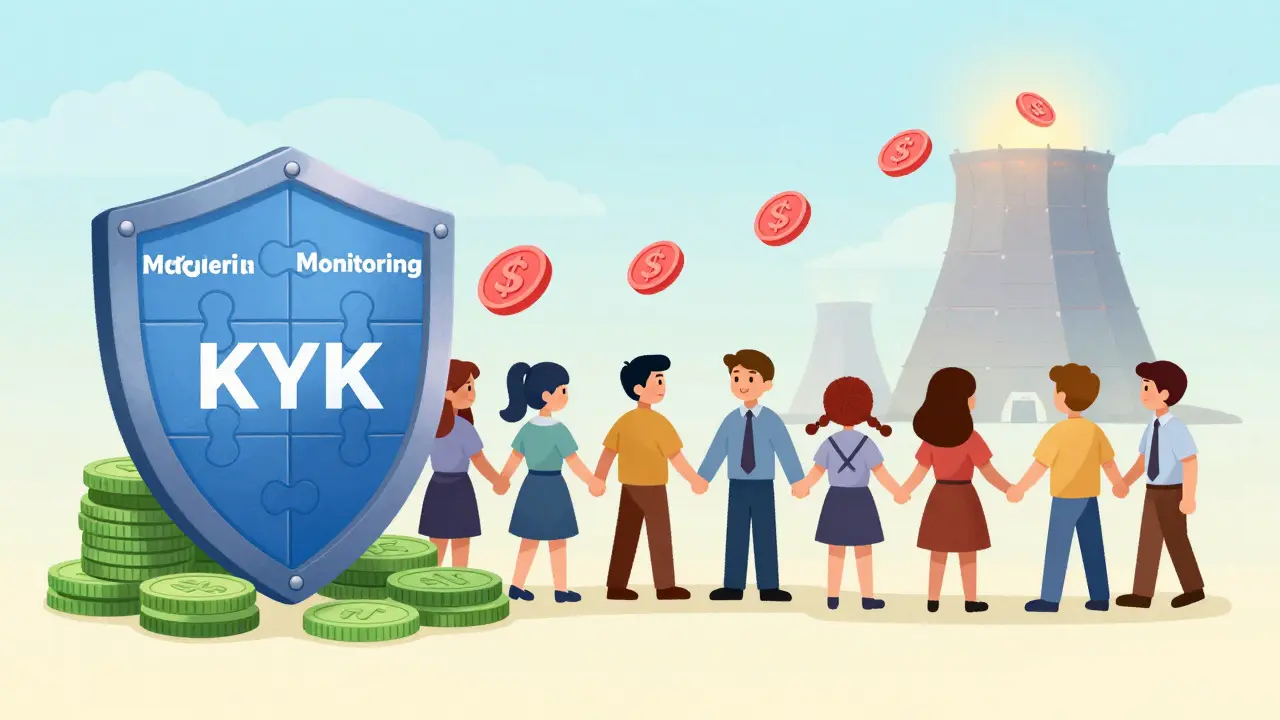
Defending Against Cross-Chain Threats
If you’re building or managing a crypto platform, you need to adapt your security posture. Traditional perimeter defenses are no longer sufficient. Here are actionable steps to mitigate risk:
- Implement Real-Time Monitoring: Use blockchain analytics tools that support cross-chain tracing. Look for solutions like TRM Phoenix or Chainalysis Reactor that can visualize fund flows across multiple networks. Set up alerts for unusual patterns, such as rapid bridging followed by swapping.
- Enhance Identity Verification: Strengthen KYC procedures, especially for high-value withdrawals. Consider implementing multi-party computation (MPC) wallets, which require multiple keys to authorize transactions, reducing the risk of single-point compromise.
- Educate Your Team: Since social engineering is a primary vector, train employees to recognize phishing attempts. Simulate attacks regularly to test readiness. Remember, the weakest link is often human error.
- Collaborate with Industry Peers: Share threat intelligence with other exchanges and security firms. The more data points available, the easier it is to identify coordinated attacks. Initiatives like the Crypto Crime Coalition facilitate this kind of collaboration.
- Prepare for Incident Response: Have a clear plan for what to do if a breach occurs. This includes freezing affected wallets, notifying authorities, and communicating transparently with users. Speed is critical in minimizing losses.
Remember, defense is not just about technology; it’s about culture. A security-first mindset ensures that every decision, from code review to customer support, considers potential risks.
The Geopolitical Stakes
This isn’t just a tech problem; it’s a global security issue. The Wilson Center emphasizes that North Korea’s cyber operations directly fund its weapons programs. A UN report claims that a significant portion of the DPRK’s foreign-currency earnings comes from cybercrime. When hackers steal billions in crypto, they aren’t just enriching themselves-they’re advancing nuclear proliferation.
The escalation from $660 million in 2023 to over $2 billion in 2025 shows no signs of slowing down. As long as there is profit to be made, the Lazarus Group will continue to innovate. Their ability to adapt-from mixers to bridges, from technical exploits to social engineering-demonstrates a highly organized and well-funded operation.
For the crypto industry, this means constant vigilance. We cannot afford to treat these incidents as isolated events. They are part of a larger trend where state-sponsored actors leverage decentralized technology for centralized power. Addressing this requires cooperation between governments, regulators, and private companies. Only by closing the loopholes in cross-chain infrastructure can we hope to curb this threat.
Future Outlook
What’s next? Expect even more sophisticated laundering techniques. Hackers may turn to zero-knowledge proofs to hide transaction details entirely, or use decentralized identity solutions to mask their origins. Bridges will become smarter, perhaps integrating AI-driven fraud detection, but so will the attackers.
The race is on. Blockchain analytics firms are developing better models to predict and detect anomalous behavior. Regulators are drafting clearer guidelines for cross-border transactions. And developers are building more secure protocols. But until we solve the fundamental tension between privacy and transparency, the battle will continue.
For now, the best defense is awareness. Understand how cross-chain bridges work, know the red flags of laundering, and stay updated on the latest threats. In the world of crypto, ignorance is not bliss-it’s liability.
Who are the Lazarus Group?
The Lazarus Group is a collective name for several cyber-espionage units linked to North Korea's Reconnaissance General Bureau (RGB). They are responsible for major cyberattacks, including the Sony Pictures hack and numerous cryptocurrency heists. Their primary goal is to generate revenue for the DPRK regime through theft and fraud.
What is cross-chain laundering?
Cross-chain laundering involves moving stolen cryptocurrency across different blockchain networks using bridges and swaps. This technique obscures the origin of funds by breaking the direct link between the initial theft and the final destination, making it harder for analysts to trace the money.
Why did North Korean hackers stop using mixers?
Mixers like Tornado Cash faced heavy regulatory scrutiny and sanctions, making them risky to use. Additionally, increased monitoring of mixer inputs and outputs reduced their effectiveness. Cross-chain bridges offered a faster and less scrutinized alternative for moving large volumes of funds.
How does the "flood the zone" technique work?
This technique involves executing a massive number of transactions across multiple chains simultaneously. By overwhelming monitoring systems with volume, hackers delay detection and make it computationally difficult for analysts to reconstruct the flow of funds.
Can regulations stop cross-chain laundering?
Regulations can help by forcing exchanges and bridges to implement stricter KYC and monitoring measures. However, because many bridges are decentralized and global, enforcement is challenging. A combination of legal pressure and advanced analytics is needed to effectively combat these threats.
Alicia Hull
It is genuinely alarming how sophisticated these operations have become. The shift from simple mixers to complex cross-chain bridges indicates a level of industrial organization that most people fail to grasp. I find it disturbing that the primary vulnerability is now human error rather than technological flaws. This suggests that our security models are fundamentally misaligned with the actual threat landscape. We need to address the social engineering aspect immediately.
Johan Otto
Boring stuff lol 😴
Anuj Kashyap
The irony is palpable here 🤔. We built this entire decentralized utopia on the premise of financial freedom and transparency, yet it has become the perfect laundering machine for one of the most oppressive regimes on Earth. It’s like watching a grand experiment go horribly wrong in real-time. The 'flood the zone' tactic is particularly fascinating because it weaponizes the very openness that crypto advocates championed. Instead of privacy, we get noise. Instead of freedom, we get exploitation. It makes you wonder if the technology itself is neutral or if it inherently attracts chaos. 🌊💸
Tracy Marshall
its obvious the whole system is rigged against us (y) they dont want us to know where the money goes but they track every penny we make. its a global conspiracy to control wealth through digital shadows. north korea is just a pawn in a much larger game played by western banks who use these hackers as deniable assets. wake up sheeple. the bridges are not accidents they are designed backdoors for the elite to move funds without taxation. trust no one.
Guy Davis
This is why i hate crypto. It's just a tool for criminals and terrorists. No KYC means no accountability. The fact that billions are stolen and never recovered proves that this industry is nothing more than a scam wrapped in tech jargon. People need to stop pretending this is legitimate finance. It's wild west robbery with extra steps. Shut it all down before it collapses the entire banking system.
KEITH WONG
Listen up folks 🧠. You guys are missing the big picture here. It's not about the code, it's about the mindset. These hackers are smarter than your average dev because they understand leverage. They don't hack the bridge; they hack the human operating the bridge. If you're still relying on passwords and basic 2FA, you're already dead. You need MPC wallets, hardware keys, and a paranoid streak a mile wide. Don't be a victim. Educate yourself or get wrecked. 🚀📉
Natalie Lucas
I mean sure its scary but look at the bright side! We are learning so much about security now. Every time they attack we get stronger. Its like a workout for our defenses 💪. Dont let the fear win. Keep building keep coding and keep pushing forward. The community is resilient and we will figure this out together. Stay positive everyone!
Curtis Johnson
I really feel for the victims of these heists though... it must be devastating to lose life savings in minutes. At the same time, we have to accept that this is the price of innovation sometimes. We can't just ban everything because bad actors exist. We need balance. We need empathy for those hurt but also understanding that progress requires risk. Let's work together to build better systems instead of pointing fingers. Peace and love ❤️
Steven Briggs
just quiet observation here. the volume is insane.
Hamza k
Oh, the sheer audacity of it all! 🎭 To think that a regime isolated from the world economy is pulling off the biggest financial heists in history using the very technology meant to liberate us? It’s theatrical. It’s dramatic. It’s absolutely terrifying. The Lazarus Group isn’t just stealing money; they’re stealing hope. They’re showing us that our digital fortresses are made of paper. And yet, we keep playing along. Why? Because the greed is too strong. The potential reward outweighs the catastrophic risk. It’s a tragedy written in blockchain code. 🩸⛓️
Kim Kay
i think we need to talk more about the human element. its not just code its people. people making mistakes. people getting phished. we need to be kinder to each other when discussing this. not everyone knows how to secure their wallet. lets help instead of judge. education is key here. lets spread awareness gently.
Brad Semp
The article demonstrates a profound lack of understanding regarding the nuances of cryptographic obfuscation. To suggest that 'flood the zone' is merely about overwhelming compliance teams is reductive. It is a strategic exploitation of computational asymmetry. Furthermore, the reliance on centralized analytics firms like Chainalysis creates a false sense of security. True anonymity cannot be achieved through mere transactional noise; it requires zero-knowledge architectures that are currently underdeveloped. The average reader would benefit from studying the underlying mathematics rather than skimming journalistic summaries.
Kristy Morrow
you are all so naive. the government wants this to happen. they need an enemy to justify more surveillance. north korea is a scapegoat. the real thieves are inside the exchanges themselves. look at the timing of these hacks. always right before major regulatory announcements. coincidence? i think not. stop falling for the narrative. think for yourselves. the matrix is feeding you lies.
Winston Lacewing
OMG 😱 this is literally the end of the world as we know it!!! 💀💀💀 How can anyone sleep at night knowing that nuclear weapons are being funded by my Bitcoin??? 😡😡😡 I am so angry right now!! 😤😤😤 Why isn't anyone stopping this??? 😭😭😭 It's a disaster!!! 🌋🌋🌋 We need action NOW!!! 🚨🚨🚨 This is unacceptable!!! 🤬🤬🤬
Kristine Lawson
It is imperative that we recognize the moral bankruptcy of allowing such activities to continue unchecked. The argument for decentralization crumbles when faced with the reality of state-sponsored terrorism. We cannot claim ethical high ground while facilitating the funding of weapons of mass destruction. Regulatory oversight is not an infringement on liberty; it is a necessary safeguard for global security. Those who oppose such measures are either ignorant of the stakes or complicit in the harm caused. Precision in language matters: this is not 'theft'; it is aggression. Period.
Tawny Holmes
Facts. Bridges are weak points. Simple as that.
Jessie Smith
Look, the common man thinks he understands crypto but he doesnt. He sees charts and thinks he sees value. But the value is an illusion constructed by algorithms and manipulated by entities like Lazarus. They dance around the perimeter of the law, exploiting the gaps in our collective ignorance. It's a symphony of deceit. And we are the audience, clapping along while our portfolios burn. The elites know this. They smile behind closed doors. We are pawns in a game we didn't agree to play. Wake up. Or stay asleep. Your choice.
Drew M
Wow! 🤯 Just wow! 🙌 This article is a masterpiece of analysis! 👏👏👏 It really highlights the brilliance of these hackers! 🧠✨ Even though it's terrible, you have to admire the ingenuity! 💡🔥 It's like watching a master thief pull off the impossible! 🎩🕵️♂️ Kudos to the researchers for exposing this! 📚🔍 Great read! 📖✅
Deep Rahman
I was thinking about the nature of money and how it has changed over time and how now it is digital and invisible and how this makes it easier for bad people to take it from good people because there is no physical paper trail to follow and the computers are fast and the networks are global and it seems like we have created a system that is too complex for us to control and maybe we should have stuck with gold or something simpler that does not require electricity to exist and does not need bridges to move from one place to another because then the thieves would have to physically steal it which is harder and riskier and less efficient for large scale operations like this.