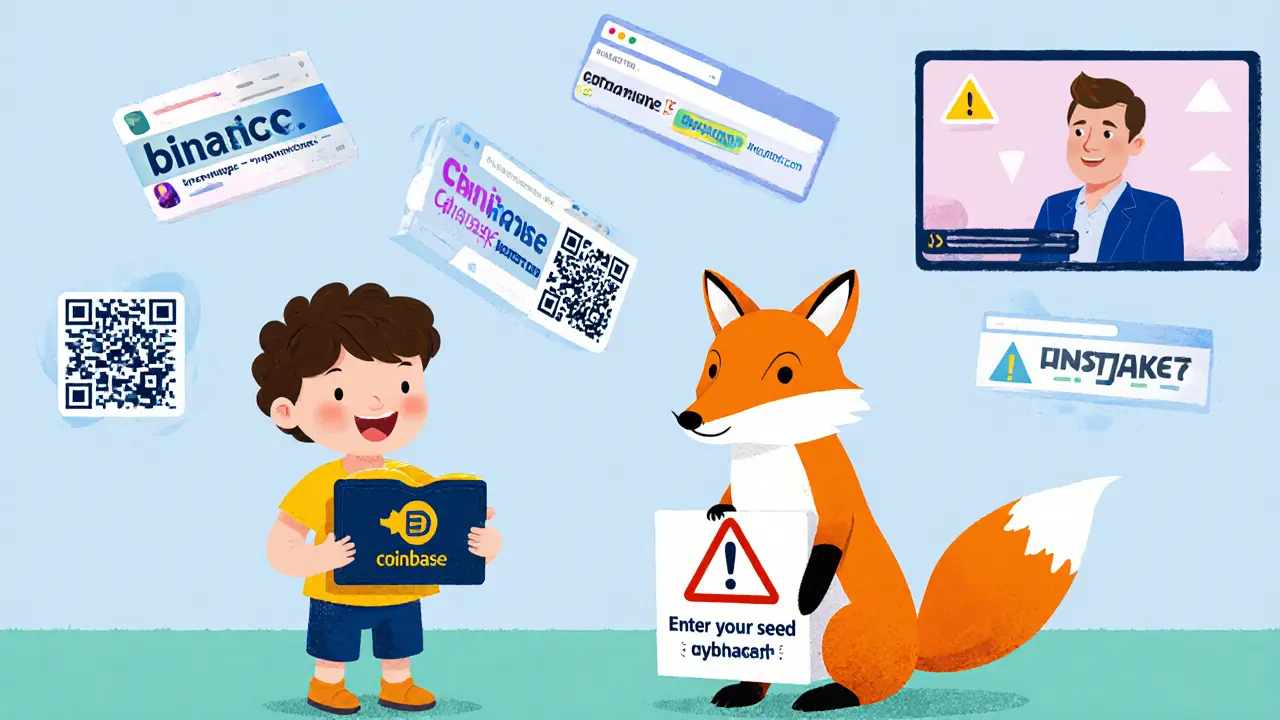
Phishing Detection: How to Spot Crypto Scams Before You Lose Money
When you click a link that looks like your wallet or exchange, but it’s not, you’re walking into a phishing detection, the practice of identifying fake websites, messages, or apps designed to steal your crypto keys or login details. Also known as crypto phishing, it’s not a theoretical risk—it’s happening right now to people who think they’re being careful. Every day, users lose thousands because they didn’t recognize a fake popup, a cloned website, or a DM that says "your wallet needs updating."
Phishing attacks don’t need hackers to break into your system—they just need you to give them the keys. That’s why crypto scams, fraudulent schemes that trick users into sending funds or revealing private information are so dangerous. They don’t use malware. They use psychology. A message saying "Your Airdrop Is Ready!" for BABYDB or CSS tokens? That’s not real. It’s a trap. You’ve seen posts here about fake airdrops like BABYDB and CSS—those aren’t just bad luck. They’re phishing campaigns dressed as opportunities. And they’re designed to look exactly like the real thing.
Good phishing detection, the practice of identifying fake websites, messages, or apps designed to steal your crypto keys or login details isn’t about being paranoid. It’s about knowing what to check. Look at the URL—does it really say uniswap.org or uniswap-security[.]xyz? Does the email come from [email protected] or bybit-support@randommail[.]net? If you’re being asked to connect your wallet to a site you’ve never heard of, walk away. The DeFi security, measures and practices that protect users from hacks, scams, and exploits in decentralized finance systems tools won’t save you if you approve a transaction you didn’t understand. No wallet backup, no hardware device, no two-factor auth can undo a signed approval.
And then there’s the wallet security, the practices and tools used to protect cryptocurrency holdings from unauthorized access or theft part. People think if they store crypto in a wallet, they’re safe. But if you paste a seed phrase into a fake site because it "looks official," you’ve already lost everything. That’s why real phishing detection starts with habits: never click links from DMs, always type exchange URLs manually, and double-check every transaction before signing. You don’t need a PhD in blockchain to avoid getting ripped off—you just need to pause before you click.
Below, you’ll find real case studies of scams that fooled people—like fake KyberSwap pages, cloned DEx.top interfaces, and phishing emails pretending to be from Bybit or StormGain. These aren’t hypotheticals. These are the exact tricks being used today. You’ll learn how to spot them before you’re the next victim.