

If you're running a crypto exchange in the U.S., you can't afford to ignore FinCEN. It's not a suggestion. It's not optional. And it's not something you can delay until you're bigger. FinCEN - the Financial Crimes Enforcement Network - has been watching crypto transactions since 2013. Back then, Bitcoin was still a niche experiment. Today, nearly 28% of American adults own some form of cryptocurrency. That’s millions of people moving money through platforms that, by law, must be registered with FinCEN as Money Services Businesses (MSBs).
What Exactly Is FinCEN?
FinCEN isn’t a bank. It’s not a stock exchange. It’s a unit of the U.S. Department of the Treasury that tracks financial crime. Its job? To stop money laundering, terrorist financing, and other illegal flows of cash. And since 2013, it has treated convertible virtual currencies - like Bitcoin, Ethereum, and other coins you can trade for dollars - as financial instruments under the Bank Secrecy Act (BSA). That means if your business accepts crypto, sends it out, or holds it for customers, you’re a money transmitter. And money transmitters must register with FinCEN.Who Must Register?
Not every crypto business needs to register. But if you do any of these, you’re required to:- Exchange cryptocurrency for fiat currency (like USD or EUR)
- Trade one cryptocurrency for another
- Hold customer funds in custodial wallets
- Process payments using crypto on behalf of others
The Registration Process: Step by Step
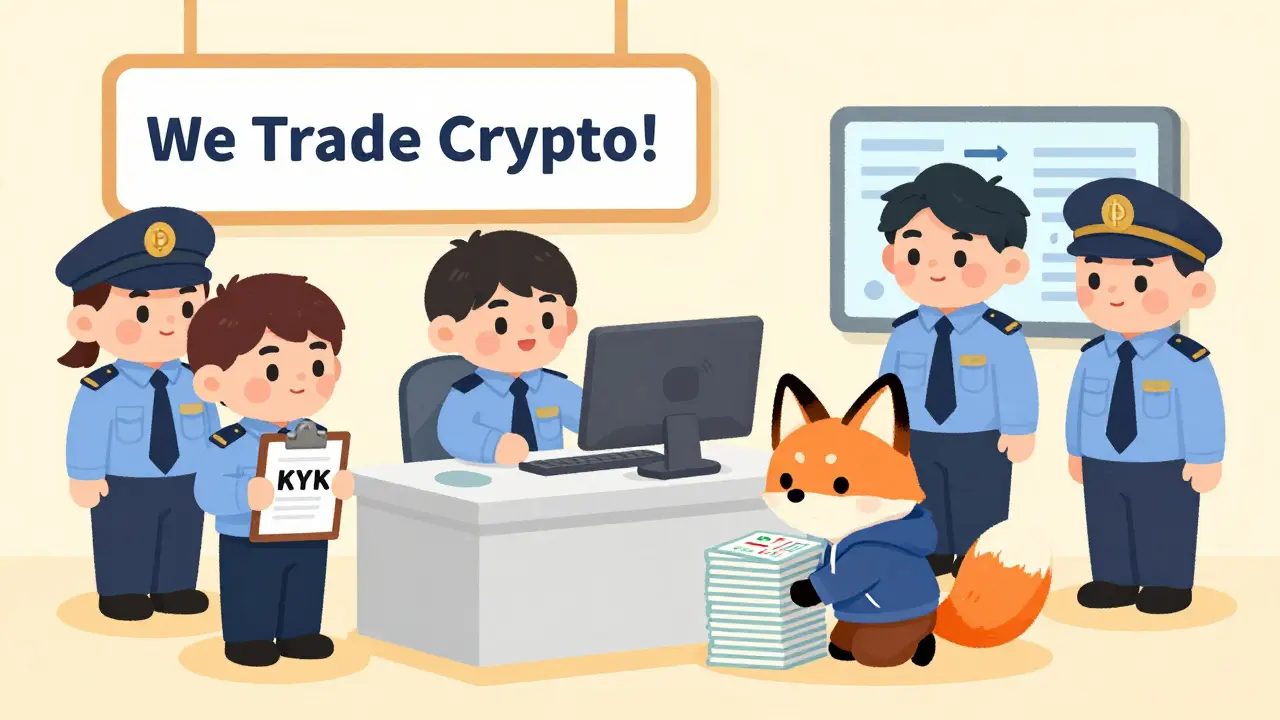
FinCEN doesn’t issue licenses. It doesn’t give you a shiny certificate. It gives you a registration number - and then it watches you. Here’s what you actually have to do:- File FinCEN Form 114 (BSA E-Filing System). This is the MSB registration form. You’ll need your business details, ownership info, and a description of your services.
- Designate a compliance officer. Someone in your company must be officially responsible for AML/CFT rules. This person can’t be an afterthought - they need authority, training, and access to systems.
- Create a written AML program. This isn’t a one-page document. It must include policies for customer identification, transaction monitoring, recordkeeping, and reporting suspicious activity.
- Implement KYC procedures. You must verify every customer’s identity: name, address, date of birth, government ID. No exceptions. No gray areas.
- Set up transaction monitoring software. Your system must flag unusual patterns: rapid deposits and withdrawals, small transactions just under reporting thresholds, transfers to known mixing services.
- File Suspicious Activity Reports (SARs). If something looks off - even if you’re not sure - you file a SAR. Failure to file can mean fines, criminal charges, or shutdown.
- Renew your registration every two years. Yes, it’s not a one-time thing. FinCEN checks in regularly.
State Licenses Are Just as Important
FinCEN is federal. But you can’t stop there. Every state has its own rules. If you want to operate in California, you need a Money Transmitter License from the DFPI. In New York? You need a BitLicense - one of the toughest in the world. In Texas? Another license. In Florida? Another. There are 50 states. Each has its own application, fee, background checks, and reporting requirements. Some require $1 million in bonding. Others demand monthly audits. You can’t just register with FinCEN and assume you’re good to go. You need state licenses too - unless you partner with an existing licensed entity, like a bank or a licensed payment processor. That’s why some exchanges operate out of Wyoming or Delaware. They’re not just tax havens - they’re regulatory havens with clearer, more predictable rules. But even then, if you serve customers in New York, you still need that BitLicense.What Happens If You Don’t Register?
The penalties are brutal. In 2021, a crypto exchange called BitMEX was fined $100 million for failing to register as an MSB. The founders were charged with criminal violations. In 2023, another exchange, Crypto Capital Corp., was shut down after being accused of laundering over $1 billion in crypto without any compliance controls. FinCEN doesn’t just go after big players. They’ve started targeting small operators too. In 2024, a Florida-based crypto kiosk operator was fined $15,000 for not registering - even though he only processed $20,000 in crypto per month. You don’t need to be a millionaire to get caught. You just need to be operating without registration. And FinCEN has tools to find you: blockchain analytics firms, bank reports, customer complaints, and whistleblower tips.What About Decentralized Exchanges (DEXs)?
This is a gray area. If you’re running a DEX like Uniswap - where users trade directly from their wallets and you don’t hold funds or control keys - FinCEN hasn’t formally targeted you. But the proposed 2025 rule change could change that. FinCEN’s new proposal would classify any transaction involving unhosted wallets (like MetaMask) as reportable if it’s over $3,000. That means even if you’re just a software provider, you might be forced to track where your users are sending crypto - and report it. If that rule passes, DEX platforms may have to build KYC into their interfaces, or risk being classified as money transmitters.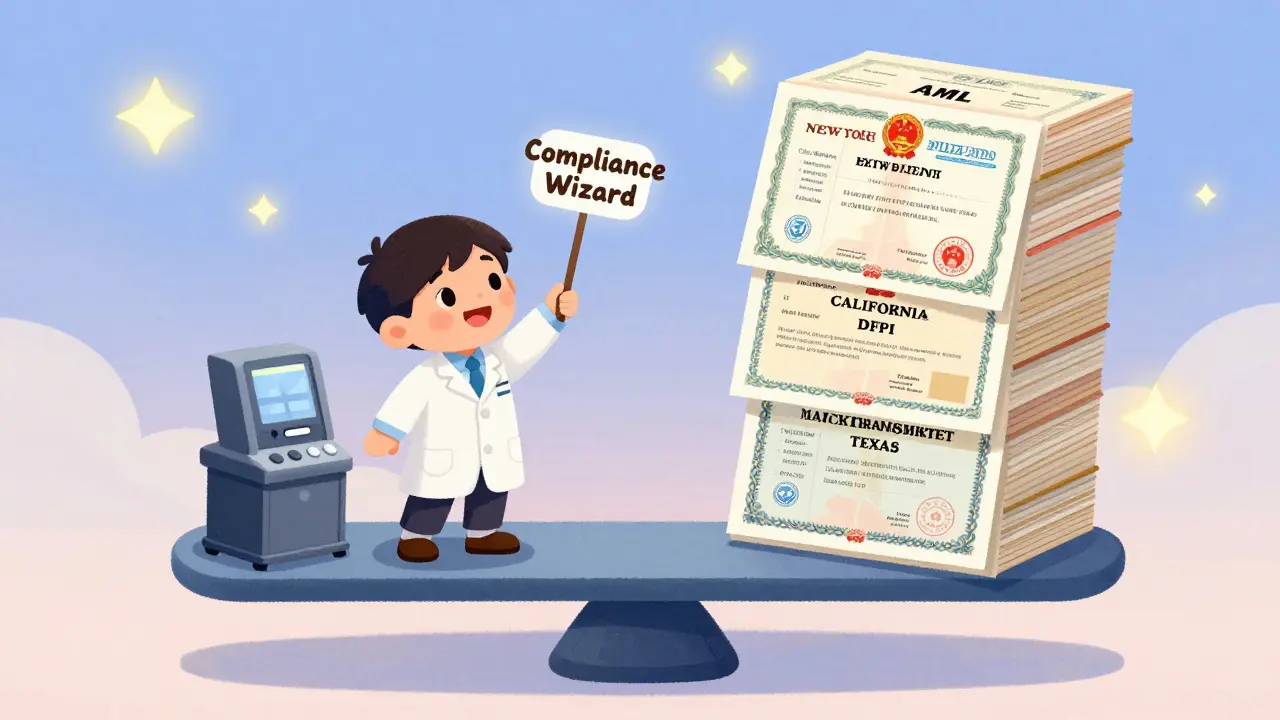
Other Agencies You’re Also Dealing With
FinCEN isn’t alone. The SEC watches you if you’re trading tokens that look like securities. The CFTC watches you if you’re trading derivatives or futures on crypto. The OCC watches your banking partners. If you’re offering staking rewards, you might be running an unregistered securities offering. If you’re listing a token that’s deemed a security, you’re in SEC territory. You’re not just dealing with one regulator. You’re dealing with five - FinCEN, SEC, CFTC, state regulators, and sometimes even the IRS. Each has different rules. Each has different penalties. And each can shut you down.How to Stay Compliant in 2026
Here’s what actually works:- Start with FinCEN registration - don’t wait for a subpoena.
- Use a KYC/AML provider like Sumsub, Jumio, or Trulioo. Don’t build your own unless you have legal and engineering teams.
- Train your staff. Every customer support rep, every trader, every developer needs to know what a SAR is and when to flag something.
- Keep records for five years. Every transaction, every ID, every email. FinCEN can ask for them anytime.
- Review your AML program every six months. Regulations change. Your software must keep up.
- Don’t ignore state rules. Even if you’re based in one state, if you have customers in another, you need that state’s license.
What’s Next?
The future of crypto regulation in the U.S. isn’t about banning crypto. It’s about bringing it into the same system as banks. The proposed federal BitLicense idea could eventually replace the 50-state mess with one national standard. But that’s years away. For now, the only safe path is full compliance. Register with FinCEN. Get your state licenses. Build your AML program. Train your team. And never assume you’re too small to matter. You’re not a tech startup anymore. You’re a financial institution. And the rules are the same.Do I need to register with FinCEN if I only trade crypto-to-crypto?
Yes. If you facilitate trades between cryptocurrencies and take fees or hold customer funds, you’re acting as a money transmitter under FinCEN rules. Even if you don’t touch fiat, exchanging one crypto for another still counts as money transmission if you’re running the platform.
How long does FinCEN registration take?
The application itself can be filed in a day. But FinCEN takes 60 to 90 days to process it. If your paperwork is incomplete or unclear, they’ll ask for more info - which can add another 30 to 60 days. Plan for at least three months before you go live.
Can I operate without FinCEN registration if I’m based outside the U.S.?
If you serve U.S. customers - even one - you’re subject to U.S. law. FinCEN has gone after foreign exchanges before. If your website accepts USD, allows U.S. IP addresses, or markets to Americans, you’re in scope. Location doesn’t protect you.
What’s the difference between FinCEN registration and a BitLicense?
FinCEN registration is federal and covers AML compliance. A BitLicense is a state license from New York that adds stricter requirements: capital reserves, cybersecurity audits, and consumer protection rules. You need both if you serve New York customers.
Do I need to register if I only run a crypto ATM?
Yes. Crypto ATMs that exchange cash for crypto or vice versa are classified as money transmitters by FinCEN. Even single-location kiosks must register, implement KYC, and file SARs if transactions look suspicious.
What happens if I accidentally miss a SAR filing?
One missed filing might result in a warning. Repeated failures or willful neglect can lead to civil penalties up to $1 million per violation, criminal charges, and permanent shutdown. FinCEN doesn’t tolerate negligence.
Can I outsource my compliance to a third party?
You can outsource KYC checks, transaction monitoring, or reporting to a vendor. But you can’t outsource responsibility. You’re still legally liable. FinCEN holds the business owner accountable, not the software provider.
Shawn Roberts
This is insane but also makes sense 🤯 I just thought crypto was lawless, turns out it’s just heavily regulated now. Guess I’m sticking to HODLing.
Daniel Verreault
bro i tried registering with fincen last year and their system crashed 3 times. they literally have a 1998 website. how is this even legal? the compliance cost is 5x what i made in profits. im out.
prashant choudhari
The requirement for a designated compliance officer is non negotiable. Many small operators overlook this and assume automation replaces human accountability. It does not.
Jake West
Wow so now I need a lawyer just to trade ETH for BTC? What happened to freedom? This is just the government sucking the life out of innovation. I’m moving to El Salvador.
surendra meena
I JUST GOT FINCEN REGISTERED!! AND THEN MY BANK CLOSED MY ACCOUNT BECAUSE I WAS A 'HIGH RISK CRYPTO BUSINESS'!! I HAVE NO BANKING!! NO PAYROLL!! I’M BROKE!! THIS IS A TRAP!!
Jordan Fowles
The real irony is that FinCEN wants transparency through KYC and SARs, yet the blockchain itself is the most transparent ledger ever created. The system is fighting a war with a mirror.
Andrew Prince
Let me be clear: anyone who thinks they can 'fly under the radar' with a crypto exchange is either delusional or criminally negligent. The blockchain is immutable. Every transaction is a fingerprint. You are not clever. You are exposed.
Elisabeth Rigo Andrews
Let’s be real - if you’re using Sumsub or Jumio, you’re already paying $20k/year just for KYC. Add state licenses, AML software, legal retainers, and you’re looking at $300k before you even onboard your first user. This isn’t regulation. It’s a paywall for innovation.
Joydeep Malati Das
The fact that decentralized exchanges might soon be forced to track unhosted wallets is a dangerous precedent. It turns software developers into de facto financial regulators. The line between tool and institution is vanishing.
rachael deal
I’m so glad someone finally laid this out clearly. I’m a solo founder and this post saved me from making a huge mistake. Thank you for not sugarcoating it. You’re a real one 💪
Mandy McDonald Hodge
i just wanna trade my dogecoin for usdc and now i need a compliance officer?? i dont even know what a sar is 😭 i think i’m gonna stick to binance...
Bruce Morrison
If you're building something that touches U.S. users, you owe it to your customers to do this right. It’s not about fear. It’s about trust. Compliance isn’t the enemy - recklessness is.
Adam Hull
The entire regulatory framework is a performance. FinCEN doesn’t care if you’re compliant. They care if you’re profitable. Once you’re profitable, they’ll come. Until then, you’re invisible. This is rent-seeking dressed as protection.
Abhisekh Chakraborty
I just got a letter from fincen saying i owe $250k for not filing sar's on 12 transactions i didn't even know happened. my platform was just a script. i'm not a bank. why is this happening to me? i'm crying right now
Mike Pontillo
So let me get this straight. If I run a crypto ATM that takes $100 from Grandma and gives her Bitcoin, I’m a money transmitter. But if I run a bank that loans $10 million to a shell company, I’m just doing business. Yeah. That tracks.
nayan keshari
You all act like this is new. In 2015 India banned crypto and now they tax it like gold. The world is moving toward regulation. Fighting it is like fighting gravity. Adapt or disappear
Brandon Woodard
The notion that small operators are being targeted is misleading. FinCEN’s resources are finite. They prioritize entities moving millions, not kiosks processing $20k/month. The $15k fine you mention? That’s a warning shot - not a death sentence. The real threat is systemic noncompliance at scale.
Steve Williams
In Nigeria, we have no formal crypto regulations. But we still operate with full KYC because we respect our users. Regulation is not the enemy of trust. Lack of integrity is. Build with ethics first - compliance follows.