
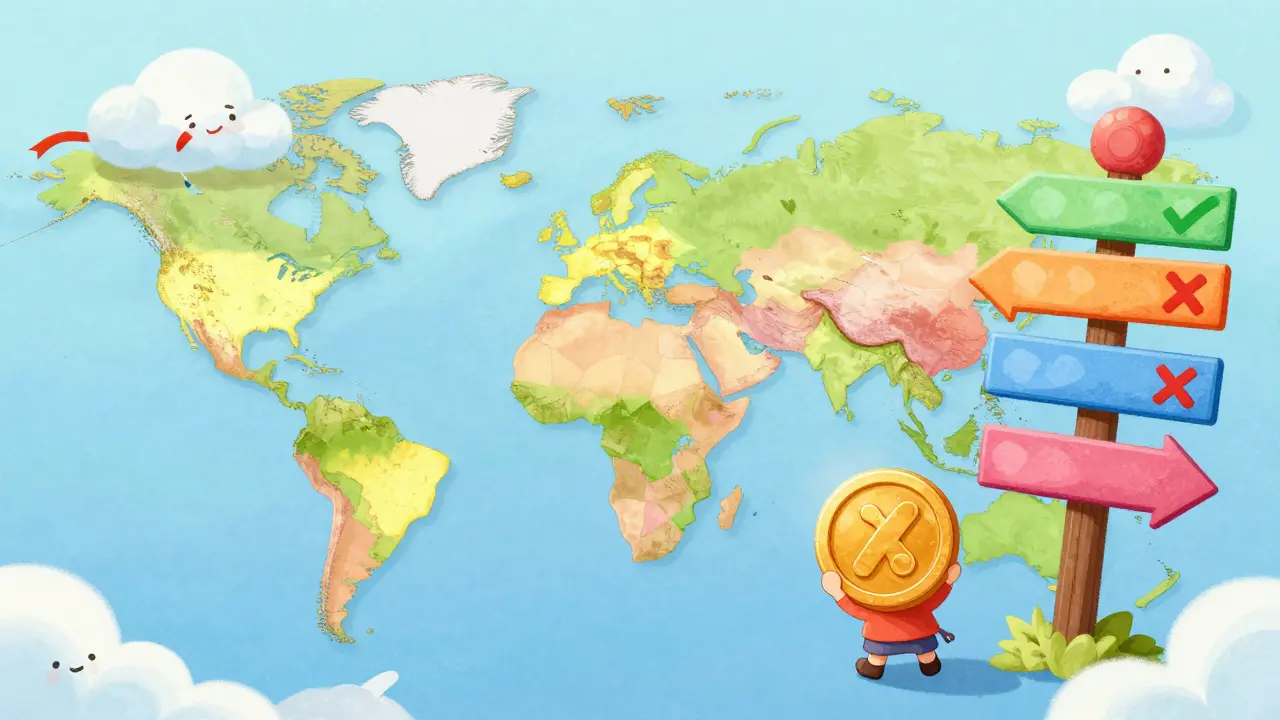
| Feature | Coinbase App (Custodial) | Coinbase Wallet (Non-Custodial) |
|---|---|---|
| Fiat On-Ramps | Available in ~48 countries (US, UK, Germany, etc.) | Generally unavailable |
| Geographic Reach | Highly restricted by local laws | Global (except OFAC-sanctioned zones) |
| Verification | Strict KYC (ID & Address) | No KYC required for basic setup |
| Control | Coinbase holds the keys | User holds the private keys |
Why does Coinbase block certain countries?
Coinbase doesn't just wake up and decide to ignore a country. Most restrictions stem from the Office of Foreign Assets Control is an agency of the U.S. Department of the Treasury that enforces economic and trade sanctions (OFAC). If a country is on the OFAC SDN list, Coinbase cuts them off entirely to avoid massive federal fines. For example, Russia saw a total shutdown of fiat services following the 2022 sanctions. Beyond sanctions, there are regional regulatory frameworks. In Europe, the MiCA is the Markets in Crypto-Assets regulation designed to harmonize crypto laws across the European Union has forced Coinbase to shift its operational structure. If you're in Malta or Hungary, you'll notice your account is now managed by Coinbase Luxembourg S.A. instead of the older Europe Limited entity. These aren't just name changes; they are legal maneuvers to keep the platform operational while following strict EU laws.The gap between the App and the Wallet
This is where most users get confused. There is a massive difference between the custodial App and the non-custodial Coinbase Wallet is a self-custody Ethereum-based wallet that allows users to manage their own private keys. If you live in a place like Pakistan or the Philippines, you might find that the Wallet works perfectly. You can store tokens, interact with decentralized apps (dApps), and send crypto to friends. However, the moment you try to use the App to buy Bitcoin with your local currency, you'll likely hit a wall. This is because the App requires a "fiat on-ramp"-a bridge between traditional banks and crypto. Since Coinbase doesn't have the necessary licenses or banking partnerships in those regions, they simply disable the App. For users in these "half-restricted" zones, it's a bit of a nightmare. You have the tool to hold the asset, but no way to get it into the system without using a third-party P2P service or a local exchange, which often comes with much higher fees.High-risk zones and transaction hurdles
Even if you are in a supported country, your experience might not be seamless. Coinbase uses a risk-based approach to security. If you're operating from a jurisdiction flagged as "high-risk"-such as Colombia-you might encounter mandatory 24 to 72-hour holds on your transactions. This is a security measure to prevent fraud, but for a trader trying to catch a price swing, it's a major deterrent. Then there are the asset-specific restrictions. Just because you can use the platform doesn't mean you can use every feature. For instance, due to transitional rules under MiCA, staking for certain assets like Cardano (ADA) has been unavailable in 12 different EU countries. It's a fragmented experience where your zip code determines your earning potential.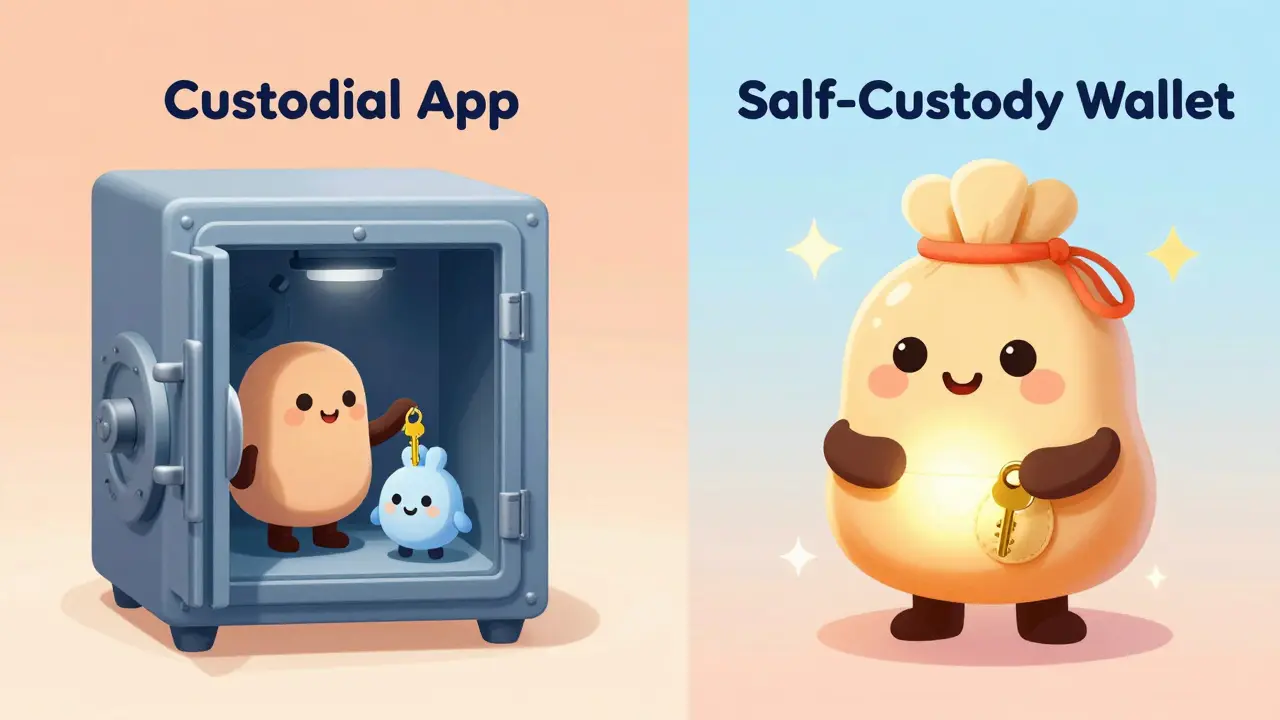
The danger of using a VPN to bypass blocks
It's tempting to fire up a VPN and pretend you're in New York or London to get around these restrictions. Don't do it. Coinbase doesn't just check your IP address; they require KYC is Know Your Customer verification involving government-issued IDs and proof of residency. If your IP address says you're in the US but your passport says you're from the UAE, it triggers a massive red flag. There are documented cases of users losing thousands of dollars after their accounts were terminated due to IP mismatches. The platform's automated systems are designed to spot this, and once your account is flagged for circumventing geographic restrictions, getting your funds back becomes a bureaucratic ordeal.Comparing Coinbase to other giants
When you look at the competition, Coinbase is generally more conservative than Binance is the world's largest cryptocurrency exchange by trading volume, known for a wider array of supported regions or Kraken is a veteran crypto exchange known for extensive global fiat support. Kraken, for example, operates in over 190 countries with fiat services in 55, giving it a broader reach. Binance often provides local currency pairs in markets where Coinbase is completely absent, such as the Russian ruble. However, Coinbase's strategy is "compliance first." By staying strictly within the lines of the SEC and BaFin (the German regulator), they've become the dominant player in the US market, capturing over 50% of the domestic share. They are trading global breadth for regulatory security.
What to expect in 2026 and beyond
Looking ahead, the map of available countries will keep shifting. India is a key battleground; Coinbase has attempted to work with the Reserve Bank of India (RBI), but the future remains uncertain. If the SEC litigation concludes with a ruling against Coinbase's broker-dealer status, we might see the platform pull back from certain jurisdictions to avoid further legal heat. On the bright side, as more countries adopt clear frameworks like MiCA, the "gray zones" should shrink. We'll likely see more countries moving from "Wallet-only" to "Full App access" as Coinbase secures the necessary licenses to operate legally without risking its US standing.Can I use a VPN to access Coinbase if I'm in a restricted country?
It is highly discouraged. While a VPN might hide your location, Coinbase requires KYC verification with a government ID and proof of address. An IP address that doesn't match your legal residence can lead to immediate account suspension and frozen funds.
Why does the Coinbase Wallet work in my country but the App doesn't?
The Wallet is non-custodial, meaning Coinbase doesn't hold your funds or manage your identity. The App, however, is a custodial service that handles fiat money (like USD or EUR), which requires strict banking licenses and regulatory approval in every country it operates.
What happens if my country becomes restricted while I have funds on the platform?
Typically, Coinbase provides a grace period for users to withdraw their assets before services are terminated. This is usually communicated via email and in-app notifications, as required by their User Agreement.
Does Coinbase support all EU countries?
Yes, generally, but the specific entity managing your account may vary. Due to MiCA regulations, users in several EEA nations are now served by Coinbase Luxembourg S.A. to ensure compliance with unified European standards.
Are there limits on how much I can deposit in supported countries?
Yes. Daily limits vary based on your verification level. Unverified users may be limited to around $500 daily, while fully verified users can move up to $50,000 daily depending on the region and payment method.
Next steps for users in restricted regions
If you find yourself blocked from the Coinbase App, you have a few options depending on your goal:- If you just want to hold crypto: Set up a Coinbase Wallet. It's free, takes less than five minutes, and works in almost every country except those under heavy OFAC sanctions.
- If you need to buy crypto: Look for local regulated exchanges. In the Philippines, for example, users often turn to PDAX. In other regions, P2P (Peer-to-Peer) platforms are the common alternative, though be wary of higher premiums.
- If you are moving countries: Update your KYC information immediately. Provide your new proof of address and government ID to avoid being flagged for "suspicious activity" when your IP address changes.
Caiaphas Konkol
Typical corporate theater. They claim it's about "compliance" but it's really just about carving up the global financial system into manageable silos for the elites. The whole distinction between the App and the Wallet is just a way to keep a foot in both doors while they figure out how to better monitor every single cent moving across borders. If you think the SEC is actually trying to "protect" you, you're dreaming. It's about control and centralizing power under the guise of legality. Just look at how they pivot the second a new regulation like MiCA drops. It's not about the law, it's about the optics of the law.
Jennifer Taylor
They are watching everything. Even if you use the wallet they know who you are because the internet has no secrets. These companies just want your ID so they can sell it to the government.
Candace Sherrard
It is quite a fascinating juxtaposition when you consider the original ethos of cryptocurrency, which was essentially designed to be a borderless, permissionless system that existed outside the traditional spheres of geopolitical influence, yet here we are in an era where the most prominent gateways to that world are heavily gated by the very national boundaries and legal frameworks the technology sought to transcend in the first place. There is a profound irony in the fact that to enter a decentralized world, one must first pass through a highly centralized, corporate-monitored portal that demands proof of residency and government-issued identification, effectively turning the act of financial liberation into a bureaucratic exercise in permission-seeking. It makes me wonder if we have simply traded one set of masters for another, replacing the old banking monoliths with new digital intermediaries who wield the same restrictive powers under a different name.
Lisa Camp
Just stop complaining and use a P2P exchange if you're blocked! It's not that hard to find a workaround if you actually want to make money!
Alex Wan
I am absolutly floored by the shear audasity of these restrictive measures!! It is a travesty that such inovative tools are held back by red tape! Truly a catastrophie for global finanace!!
Gloris Young
P2P is a good shout for those in the gray zones. Just be careful with who you trust.
Jagdish Sutar
For my friends in India, it's definitely a waiting game right now. Until the RBI clears things up, sticking to the non-custodial options is the safest bet for everyone involved.
debashish sahu
The situation in India is quite a struggle for many people trying to enter the space.
Kyle Bush
USA FIRST! 🇺🇸 If you can't handle the rules here, just get out! We have the best laws and the best exchanges in the world! 🚀💰💰💰
Clair Geary
such a wild ride watching the map change every few months... it's like a game of digital musical chairs but with your actual savings on the line haha
Doc Coyle
People forget that KYC is actually for their own safety. It's a basic requirement for any legitimate business. Those complaining just want to avoid accountability.
Sarah Ingrams
it really is a nightmare when you just want to buy some btc and your country is suddenly off the list
Ellie Drews
I think it's helpful to remember that these rules are usually beyond the company's control. They just want to stay in business!
Hannah Rubia
It is imperative that users meticulously review the Terms of Service regarding their specific jurisdiction to avoid the unfortunate risk of account suspension.
Mary Tawfall
Hopefully the 2026 outlook is right and more people get access. It'll be great to see the gap close.
Mike Word
Interesting breakdown of the custodial vs non-custodial split.