
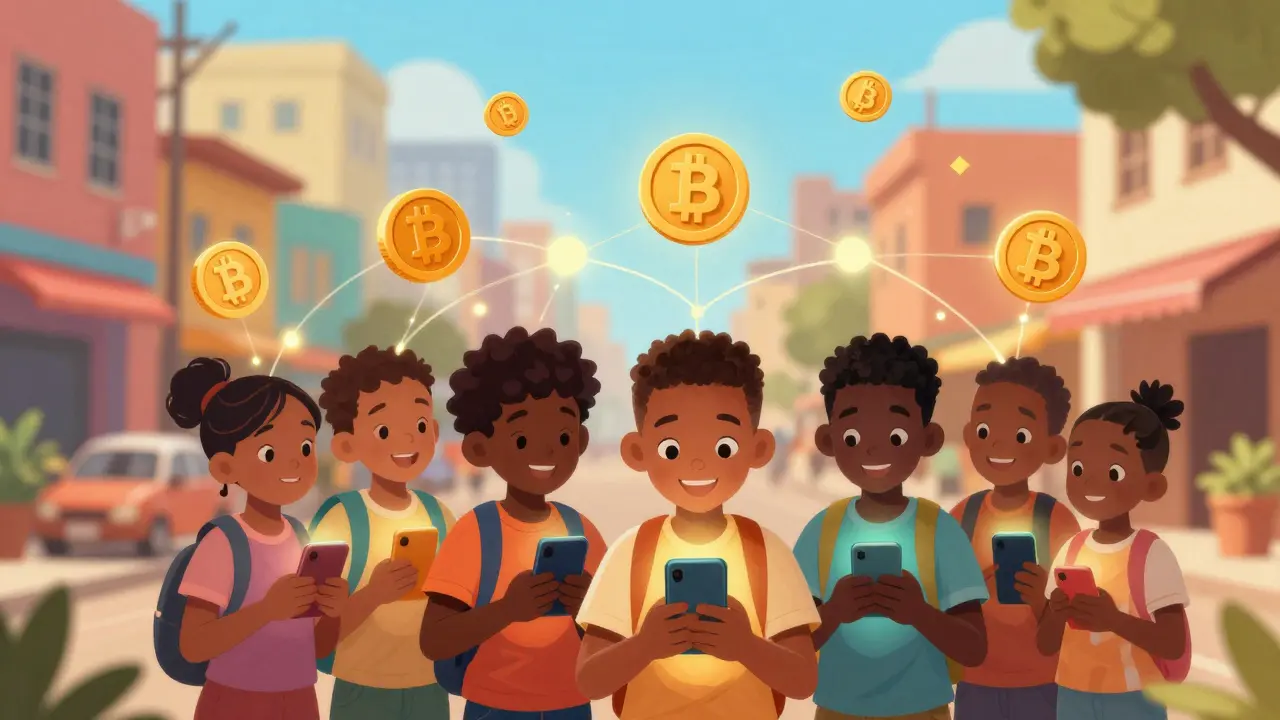
The ban wasn't a total blackout. The CBN technically didn't make owning Bitcoin illegal; they just told banks to stop facilitating the trades. This created a strange "gray market." Nigerians didn't stop trading; they just stopped using traditional bank gateways. This move shifted the entire financial ecosystem toward peer-to-peer (P2P) networks, turning the country into one of the most active crypto hubs in the world despite the official hostility.
The P2P Pivot: Trading Outside the System
When the formal doors closed, the P2P window swung wide open. The most dominant player here was Binance P2P, which became the primary way Nigerians swapped naira for crypto. By late 2022, over 1.2 million Nigerians were using this platform, moving roughly $150 million every single month. Because they couldn't rely on official bank APIs, traders turned to social media for the "real" work.
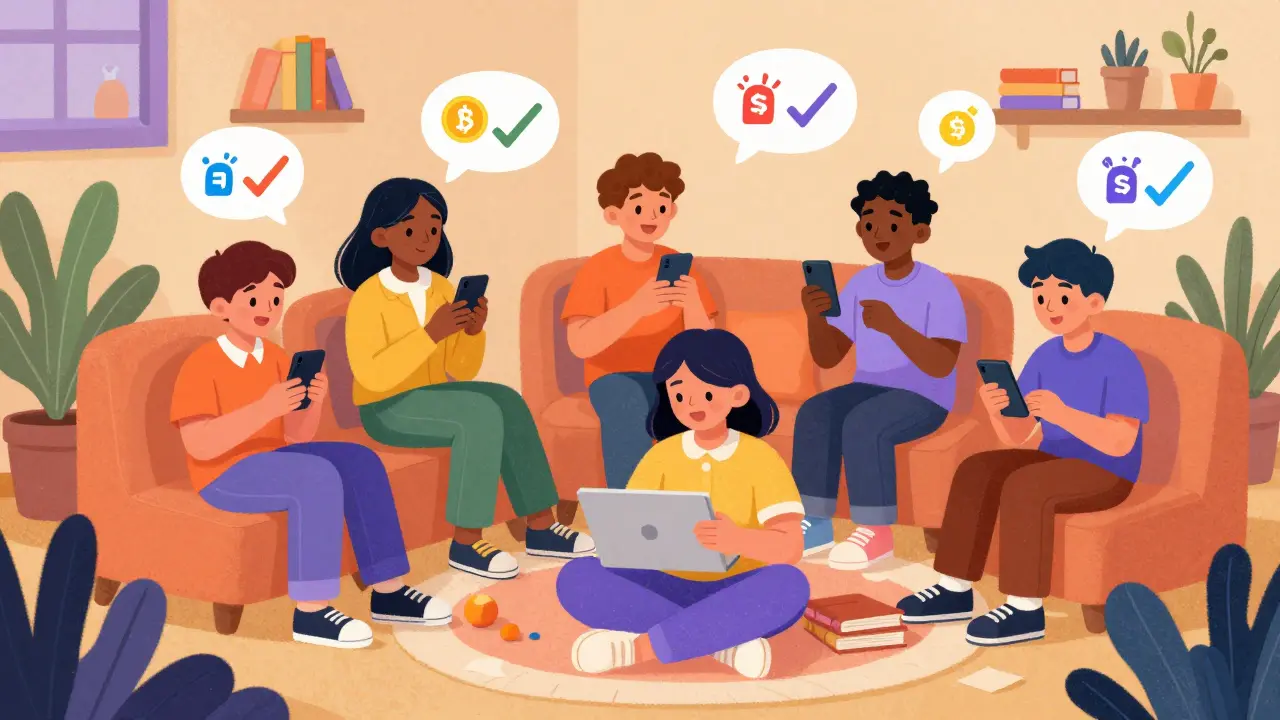
WhatsApp and Telegram became the actual trading floors. About 78% of underground traders used WhatsApp groups to verify that a payment had actually hit their account, while Telegram was the go-to for tracking the current market price. It was a digital frontier where trust was the only currency that mattered. To manage the risk of getting scammed, the community built its own security layers, including massive blacklists of fraudulent traders shared across groups with 50,000+ members.
A Parallel Financial Infrastructure
The scale of this shadow economy was staggering. While Nigeria represented a tiny fraction of global GDP, its crypto transaction volume hit $56.7 billion between July 2021 and June 2022. This wasn't just a few tech enthusiasts; it was a systemic shift. Students and small business owners led the charge, using digital assets to hedge against currency devaluation and fund their lives. For many, like the university students who used P2P profits to pay tuition, crypto wasn't a gamble-it was a survival strategy.
| Feature | Nigeria (Gray Market) | China (Hard Ban) | Egypt/Algeria (Restrictive) |
|---|---|---|---|
| Legal Status of Ownership | Legal | Prohibited/Discouraged | Restrictive |
| Primary Trade Method | High-Volume P2P | Underground/OTC | Limited P2P |
| Market Driver | Currency Hedge/Youth Tech | Capital Flight | Remittances |
| Banking Access | Blocked via Direct API | Completely Banned | Strictly Monitored |
The High Cost of Trading in the Shadows
Operating in the underground wasn't without its dangers. The lack of a formal regulatory umbrella meant that if you got scammed, you had no one to call. Roughly 42% of underground traders reported experiencing at least one scam. The common story involved a buyer or seller disappearing on Telegram immediately after the crypto was released. To fight this, the community developed a "trade verification protocol"-doing a tiny test transaction first to ensure the other party was legitimate, which reportedly cut scam rates by 37%.
The banks were also playing a game of cat and mouse. Many users found their accounts frozen when the banks spotted suspicious patterns of P2P transfers. Since most banks limited single transactions to ₦500,000, traders had to split payments across multiple accounts, which only flagged them further. This led to a paradox where 89% of users trusted P2P trading more than their own banks, even while those banks were freezing their funds.
Innovation Born from Restriction
Strangely, the ban acted as an incubator for local tech. Nigerian developers didn't wait for permission; they built 14 locally-focused platforms to serve the hungry market. Entities like Quidax emerged, processing millions of dollars monthly by providing an interface that felt safer than a random Telegram chat. These platforms integrated with mobile money and airtime exchanges, proving that when you block the main road, people will simply build a dozen side streets.
This era also saw the rise of educational influencers. YouTube channels like "Crypto With Tolu" became essential guides, teaching hundreds of thousands of people how to use multi-signature escrow services and identify fake traders. The infrastructure developed during the ban-the trust networks, the escrow habits, and the P2P fluency-created a level of crypto literacy that is now among the highest in the world.
The Legacy: From Shadows to Securities
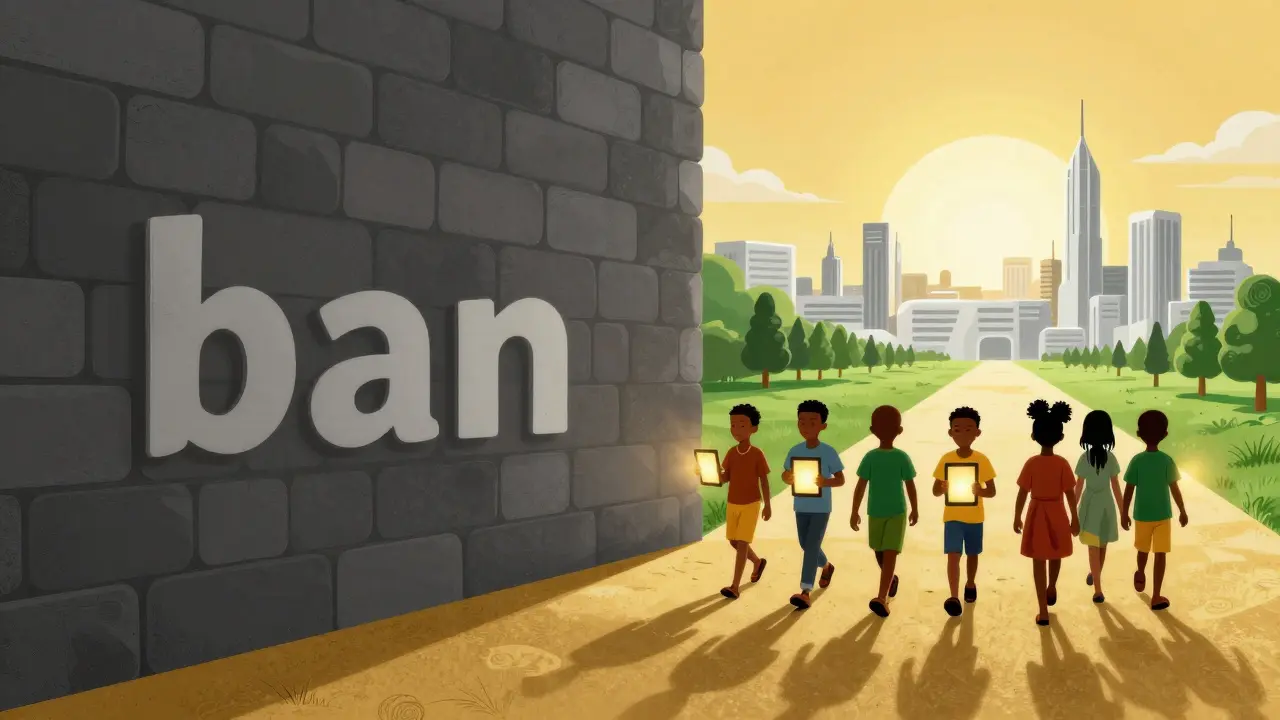
By the time the CBN reversed the ban in December 2023, the damage (or the progress, depending on who you ask) was already done. The underground economy had already proven that a centralized authority cannot stop a decentralized network. Even after the ban lift, the government remains uneasy. The SEC's attempt to curb P2P naira trading in 2024 shows a lingering fear of the very system that the 2021 ban helped create.
We are now seeing a transition toward a formal framework. The Investments and Securities Act of 2025 aims to recognize digital assets as financial securities. However, the introduction of a 25% tax on crypto profits in 2026 might just push the market back into the shadows. History suggests that Nigerians are far more comfortable trading in a WhatsApp group than paying a heavy tax to a government that once tried to block them entirely.
Was cryptocurrency actually illegal in Nigeria during the ban?
No, owning or trading cryptocurrency was not illegal for individuals. The ban specifically targeted financial institutions, prohibiting banks from facilitating crypto-related transactions. This created a gap where individuals could still trade, provided they didn't use formal banking channels to do so.
How did people trade without banks?
Most users pivoted to Peer-to-Peer (P2P) platforms like Binance P2P. They used informal communication channels like WhatsApp and Telegram to coordinate payments and verify transactions, often using a system of trust, community blacklists, and escrow services to mitigate risk.
What were the biggest risks of the underground crypto market?
The primary risks were fraud and bank account freezes. Without regulatory oversight, scams were common, with many traders losing funds to dishonest partners. Additionally, banks often froze accounts that showed patterns consistent with P2P trading, as they were still attempting to enforce the CBN's restrictions.
Why did the ban fail to stop adoption?
The ban failed because it didn't address the underlying demand. Nigerians used crypto to hedge against the naira's devaluation and to access global markets. By blocking banks, the government simply pushed users toward decentralized P2P methods, which are much harder to monitor and control.
What is the current status of crypto in Nigeria?
The formal ban was lifted in December 2023, and the 2025 Investments and Securities Act moves toward recognizing digital assets as securities. However, tensions remain, with the government introducing taxes and occasionally targeting P2P platforms to protect the national currency.
What to do if you're navigating this market
If you are looking to engage with the Nigerian market or similar "gray markets," the strategy remains the same: diversify your platforms. Relying on a single exchange is a recipe for disaster if that exchange hits a regulatory wall. Use a mix of established P2P platforms and local alternatives like Quidax. Always prioritize verification-never release assets until you have confirmed the funds are in your account, and use small test transactions for new partners. For those concerned about bank freezes, avoid using words like "Bitcoin," "Crypto," or "Binance" in your transfer descriptions; keep it vague or treat it as a personal payment.
Greg Reynolds
The assumption that this is a "boom" is fundamentally flawed. What we are actually seeing here is a desperate migration toward volatile assets because the local fiat is a dumpster fire. It is not innovation; it is a survival reflex. Most people confuse a lack of options with a strategic choice.
Robert Mosolygo
It is painfully obvious that this is not about financial freedom, but rather a calculated experiment in social engineering. The Central Bank's "ban" was likely a honeypot designed to push users into traceable P2P networks where the government could map out the entire dissident financial web. We are witnessing the construction of a digital panopticon under the guise of a "gray market," and the sheer naivety of the participants is staggering. The a-priori assumption that decentralization equals anonymity is a lethal delusion in the modern era of chain analysis.
Tony Gurley-Ward
Haha, love the chaos! It's like a digital dance of the shadows. Who needs a boring bank when you have a WhatsApp group with 50k strangers and a prayer? Truly a kaleidoscopic mess of trust and greed.
Sarah Fisher
There is something deeply poetic about a government trying to erase a network only to end up sculpting it into a more resilient form. It is the classic paradox of control.
Lisa Camp
STOP COMPLAINING AND JUST DO IT! This is exactly how you build wealth when the system is rigged! If you're too scared of a Telegram scam, you don't deserve the gains! Get in the game or get left behind!
Liz Ariza
Such a wild ride for those students! 🌟 It's amazing to see people finding creative ways to pay for their education when the odds are stacked against them. Keep grinding everyone! ✨🚀
Doc Coyle
People should be more careful. Using these shadow markets is simply wrong and puts your family's future at risk for a few quick coins.
Alex Wan
I am truly moved by the resilence of the Nigerian youth! It is a most remarkabel display of ingenuity... tho I suspect some of the P2P platforms mite have had some issues with their security protocols in the begining.
jill huyo-a
It's really interesting how the community built their own blacklists. It shows that human trust evolves even faster than the software does.
Jennifer Taylor
The banks are lying. They didn't freeze accounts because of patterns; they did it to force everyone into the new CBDC system they're building in secret. Wake up.
debashish sahu
This is a very familiar story. Many developing nations face similar struggles with currency devaluation and the subsequent turn toward digital assets.
Larry Yang
Typical. The gov thinks a PDF ban is a firewall. Absolutely laughable. I've seen better security on a child's diary. The "innovation" here is just basic arbitrage that any first-year econ student could explain, but sure, let's call it a "boom" for the clicks.
Benjamin Forg
just another way for the elites to launder while the kids get scammed on telegram lol its all a shell game run by the same people who banned it
Hannah Rubia
It is imperative to note that while P2P offers a solution, the inherent lack of consumer protection remains a significant hurdle for mass adoption in a safe manner.
Mary Tawfall
I love seeing the spirit of innovation here! It's so inspiring to see people help each other through these tough times.
Yvette P
Oh, look at us discovering that liquidity preference shifts when you implement capital controls! Groundbreaking. I'm sure the 25% tax will be a total surprise to people who spent three years avoiding the state entirely. It's almost as if the regulatory arbitrage window is closing because the state finally figured out where the on-ramps are. Absolute genius move by the CBN to let the market mature so they can tax the harvest now. Truly a masterclass in delayed monetization of a shadow economy.
praveen subbiah
Nigeria's struggle is amazing but India would have handled this with even more power and precision! Our digital infrastructure is the gold standard of the world!!
Ali Tate
imagine thinking a 25 percent tax will stop these people lol they literally treat laws as suggestions. the sheer audacity of the state to think they can fence a ghost
Mike Word
The use of WhatsApp for verification is a fascinating cultural adaptation of financial trust networks.