
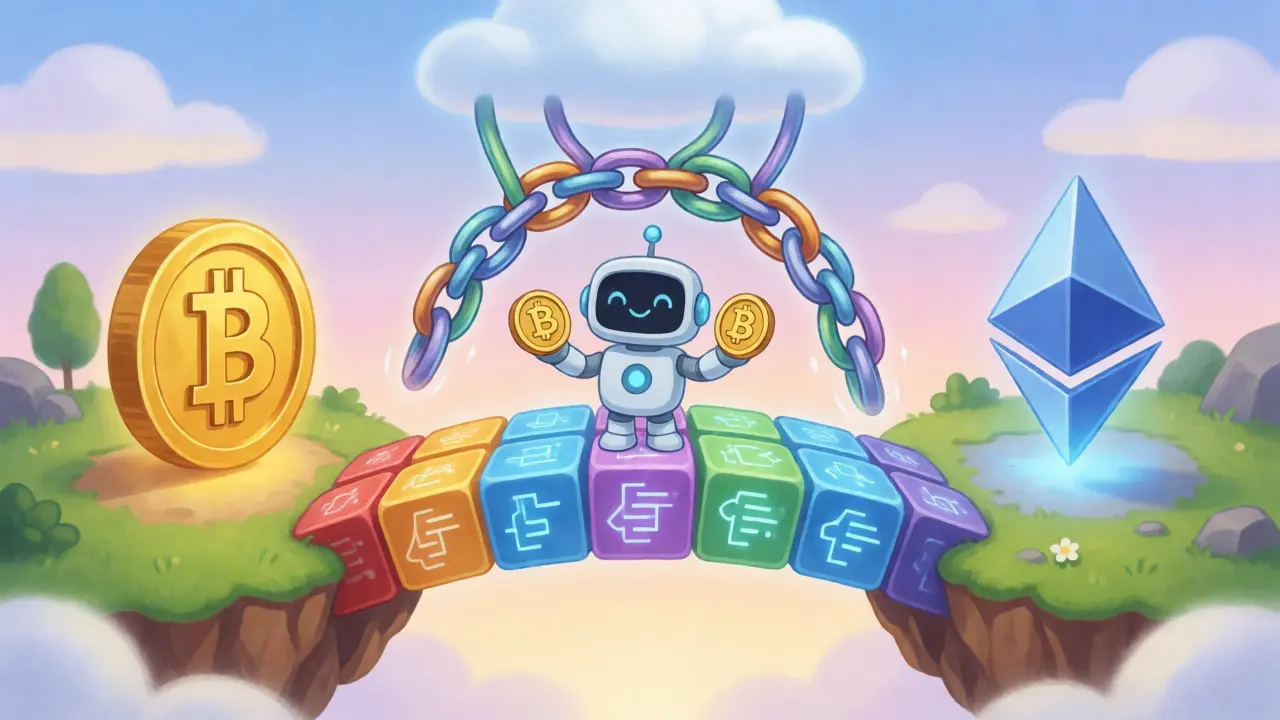
Have you ever tried to swap Bitcoin for Ethereum on a decentralized exchange and ended up holding a wrapped version of your asset, praying the bridge doesn't get hacked? It’s a nightmare scenario that has cost DeFi users billions. THORChain is a decentralized liquidity protocol designed to facilitate cross-chain asset swaps without requiring users to relinquish custody of their assets. Unlike centralized exchanges where you trust a third party with your keys, THORChain lets you trade native Bitcoin for native Ethereum directly, keeping you in control.
But here’s the catch: it’s not called "BTC" in its ticker; it uses RUNE, a token that serves as both the settlement asset and governance mechanism. If you’re looking for a quick, cheap swap like Binance offers, you might hate this. But if you value self-custody above all else, this might be your holy grail. Let’s break down whether THORChain lives up to the hype in late 2026.
What Makes THORChain Different?
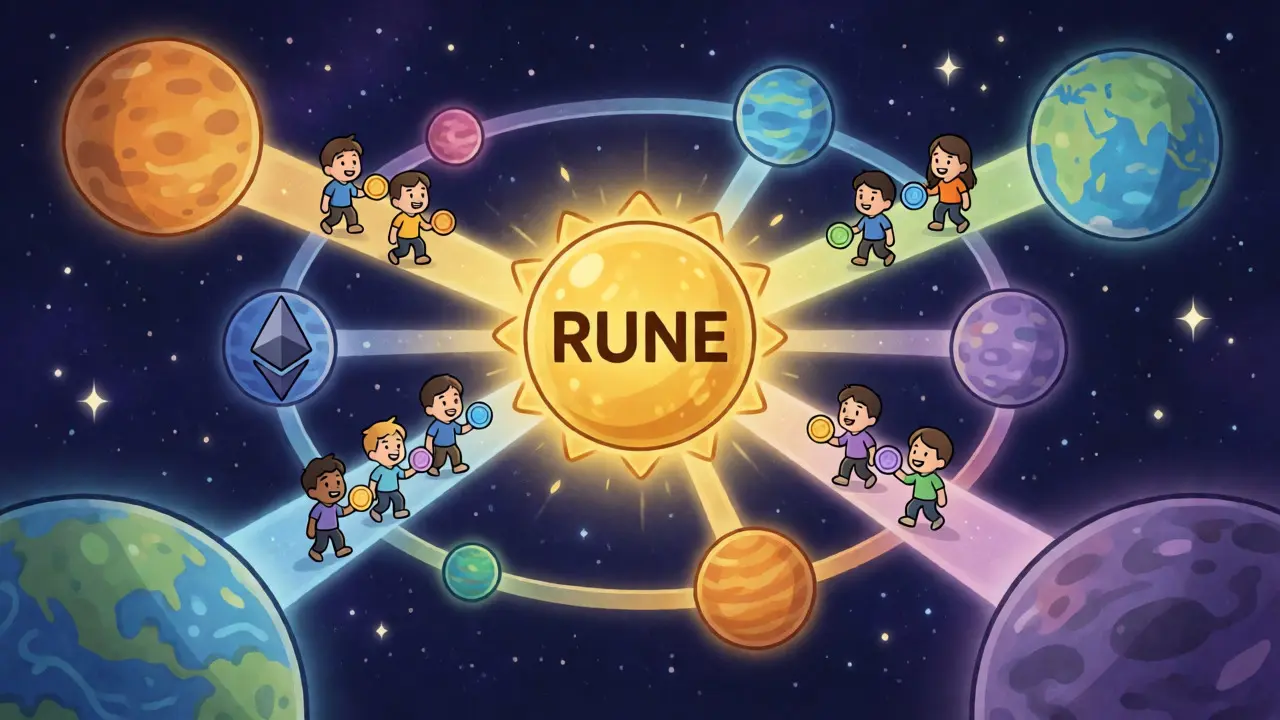
Most cross-chain solutions rely on "wrapping." You lock your BTC on Bitcoin, mint a WBTC token on Ethereum, trade that, then unwrap it later. Each step is a risk vector. THORChain skips the wrapping entirely. It operates on a Continuous Liquidity Pool (CLP) model where every pool contains a pair of assets, but always paired with RUNE. So, when you swap BTC for ETH, the protocol actually swaps BTC for RUNE, then RUNE for ETH. This ensures system equilibrium and allows for direct native asset transfers.
This architecture solves the interoperability problem that has plagued DeFi since its inception. You don’t need a centralized custodian. You don’t need KYC. You just connect your wallet-whether it’s MetaMask, Trust Wallet, or a hardware device-and execute the swap. The network processes this through a series of validator nodes secured by Byzantine Fault Tolerance (BFT). It’s complex under the hood, but for the user, it’s surprisingly straightforward once you get past the initial learning curve.
The Tokenomics: Why RUNE Matters
You can’t understand THORChain without understanding RUNE. It’s not just another governance token you hold for votes. RUNE is the backbone of security. Node operators must stake significant amounts of RUNE as collateral to participate in the network. If they act maliciously, they lose their stake. This "bonding" mechanism aligns incentives perfectly: the more secure the network, the higher the demand for RUNE.
However, the tokenomics have faced scrutiny. In early 2025, the protocol dealt with a crisis involving THORFi liabilities, leading to excessive RUNE minting which temporarily depressed prices. The team responded by introducing TCY (THORChain Yield) tokens to manage these debts without diluting RUNE holders further. As of late 2026, the market cap sits around $462 million, with a max supply capped at 500 million tokens. Analysts note that while the inflationary pressure has eased, the dual role of RUNE as both security bond and fee token creates volatility during market stress.
Performance and User Experience
Let’s talk speed, because this is where THORChain often gets criticized. It is not fast. While centralized exchanges process thousands of transactions per second, THORChain handles roughly 3-5 TPS across supported chains. A typical swap takes between 30 seconds and 2 minutes, depending on blockchain congestion. If you’re trying to scalp Bitcoin against Ethereum during a volatile pump, you will likely miss your entry.
| Feature | THORChain | Binance (CEX) | Uniswap (DEX) |
|---|---|---|---|
| Custody | Non-custodial (Self) | Custodial (Exchange) | Non-custodial (Self) |
| KYC Required | No | Yes | No |
| Native BTC Support | Yes | Yes | No (Wrapped only) |
| Avg Swap Time | 1-2 Minutes | Instant | Seconds |
| Supported Chains | 12+ (BTC, ETH, AVAX, etc.) | All Major | EVM Chains Only |
User feedback reflects this trade-off. On Reddit, experienced traders often praise THORChain for large swaps ($50k+) where trusting a centralized exchange feels risky. They say, "Worth the wait for peace of mind." Conversely, newcomers complain about the interface complexity. A 2025 survey showed that 63% of new users needed three or more attempts to complete their first successful swap, largely due to confusion over slippage settings and multi-wallet management.

Security and Risks
Is it safe? THORChain has been audited by firms like CertiK, and the post-2025 architecture improvements have hardened the protocol against oracle manipulation attacks. Security researcher William Entriken noted that the resilience against these specific threats has significantly improved. However, no system is invulnerable. The biggest risk isn’t a hack of THORChain itself, but a vulnerability in one of the connected blockchains. Since THORChain relies on external chains’ security models, a bug in Bitcoin or Ethereum could theoretically impact swap integrity.
Another consideration is regulatory uncertainty. The SEC’s October 2025 framework suggested THORChain might not constitute a securities exchange, which is good news, but regulations are still evolving. For now, it remains a favorite among privacy-conscious users who want to avoid handing over their passport details to a centralized entity.
Who Should Use THORChain?
If you are a high-frequency trader, skip this. You’ll hate the latency. But if you fit any of these profiles, THORChain is worth exploring:
- The Self-Custody Purist: You refuse to leave funds on an exchange overnight.
- The Cross-Chain Investor: You regularly move assets between Bitcoin, Ethereum, and Altcoins without wanting to deal with bridges.
- The Privacy Advocate: You want to swap assets without providing personal identification documents.
For developers, integration takes about 2-3 weeks for experienced coders, though the documentation rates poorly for beginners (5.8/10 friendliness). If you’re building a dApp, be prepared for a steep learning curve regarding UTXO vs. account-based blockchain interactions.
Is THORChain faster than Uniswap?
Generally, no. Uniswap operates within a single EVM chain, allowing for near-instant confirmations. THORChain coordinates across multiple blockchains (like Bitcoin and Ethereum), requiring confirmations from each source and destination chain. This makes THORChain slower, typically taking 1-2 minutes compared to seconds on Uniswap.
Do I need KYC to use THORChain?
No. One of THORChain's primary selling points is that it is permissionless and requires no Know Your Customer (KYC) verification. You simply connect your crypto wallet and start swapping.
Why do I need RUNE to swap Bitcoin for Ethereum?
You don't necessarily "need" to hold RUNE to initiate a swap, but RUNE is used internally by the protocol as the base pair for all liquidity pools. When you swap BTC for ETH, the protocol effectively swaps BTC -> RUNE -> ETH. This ensures balanced liquidity and secures the network via node staking.
What happens if the price moves during my swap?
Because swaps take time (due to blockchain confirmations), price volatility is a risk. Users should set appropriate slippage tolerance. If the price moves beyond your set slippage limit before the transaction finalizes, the swap may fail or revert, costing you gas fees.
Can I earn passive income with THORChain?
Yes. Liquidity providers can deposit assets into pools to earn fees from swaps. However, this comes with impermanent loss risks, especially given the volatility of cross-chain pairs. Recent updates like TCY have also introduced yield mechanisms to help stabilize returns.