
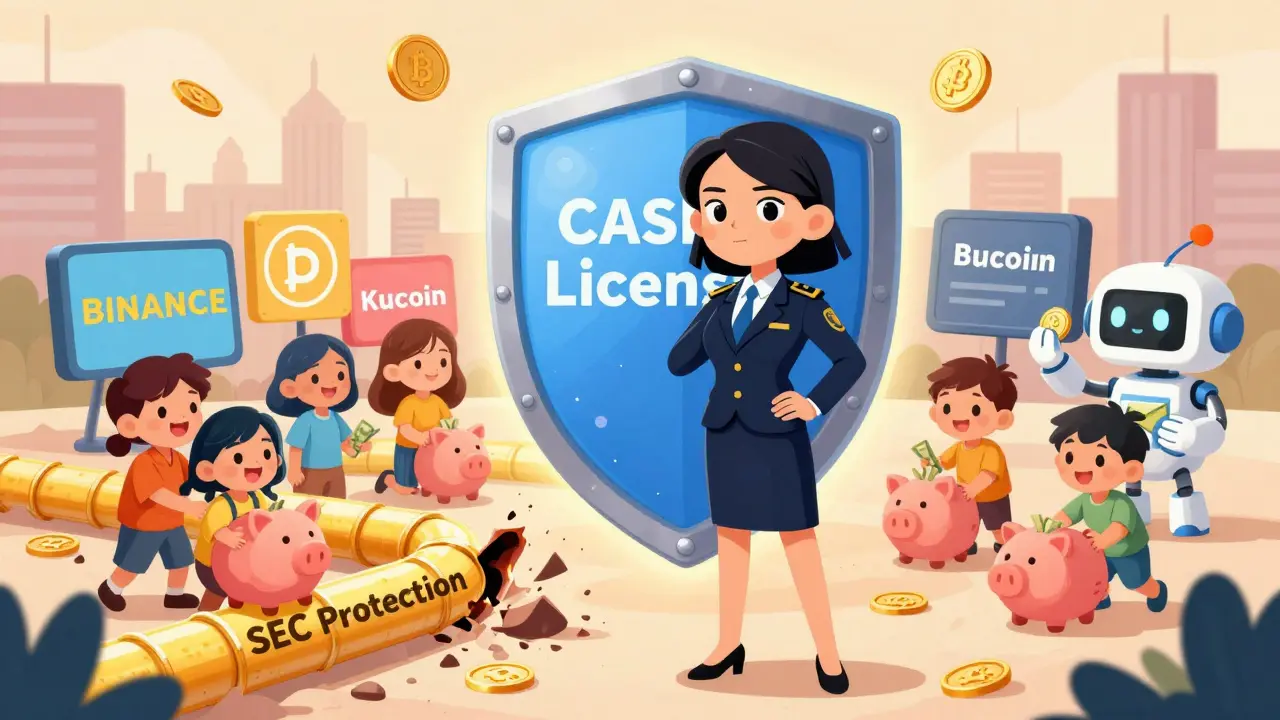
When the SEC Philippines launched its crypto enforcement actions in 2025, it didn’t just send a warning - it shut down an entire ecosystem. The move wasn’t about banning Bitcoin or stopping people from trading. It was about stopping scams. About protecting ordinary Filipinos who lost life savings on platforms that vanished overnight. And it worked.
In 2022, after the FTX collapse sent shockwaves through global crypto markets, the Philippines saw a spike in fraud cases. People lost millions. Some sold their homes. Others borrowed from relatives. The Philippines Securities and Exchange Commission (SEC) is the country’s financial watchdog, and by mid-2024, it had had enough. It targeted Binance, the world’s largest crypto exchange, and forced it out of the country. That move wasn’t just symbolic - it was a blueprint.
How the SEC Philippines Built Its Crypto Enforcement Machine
The real turning point came on May 30, 2025, when the SEC released two landmark rules: Memorandum Circular No. 4 and No. 5. Together, they created the Crypto Asset Service Provider (CASP) framework. This wasn’t a suggestion. It was a legal requirement. Any platform that wanted to serve Filipino users had to register - or get blocked.
The rules were strict. Not because the SEC hated crypto. But because it had seen too many people get burned. Here’s what every crypto platform had to do:
- Be incorporated as a Philippine domestic corporation - no offshore shells allowed.
- Hold at least 100 million PHP ($1.8 million USD) in paid-up capital.
- Have a physical office in the Philippines.
- Segregate customer funds from company assets - no more mixing user money with corporate expenses.
- Submit monthly financial reports to the PhiliFintech Innovation Office.
- Use blockchain analytics tools to flag transactions over 50,000 PHP ($900 USD).
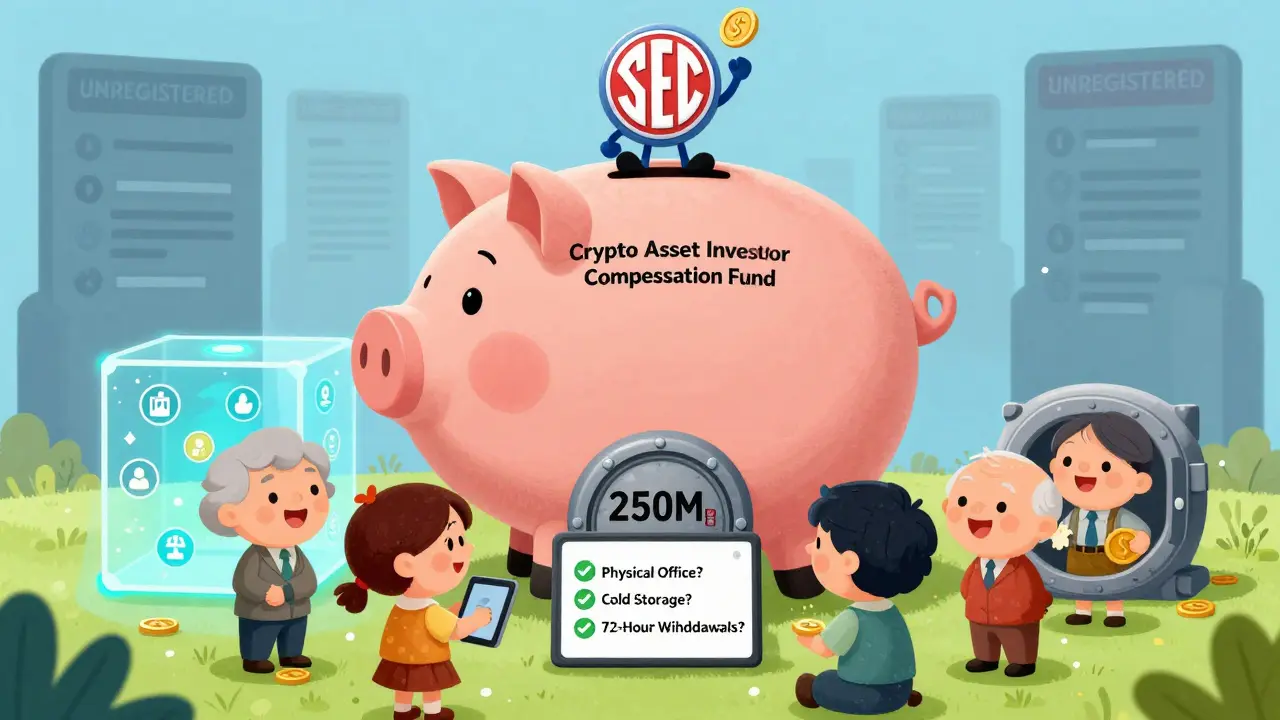
- Maintain 99.5% uptime and process withdrawals within 72 hours.
- Store 95% of customer assets in cold storage with multi-factor authentication.
- Pass third-party cybersecurity audits meeting ISO 27001 standards.
DeFi protocols? They’re still exempt. But if a CASP offers yield products over 20% APY? That needs special SEC approval. The message was clear: high returns are dangerous. And if you’re promising them without oversight, you’re playing with fire.
The Binance Case: A Warning Shot Heard Around the Country
Before the rules even took effect, the SEC had already tested its teeth. In early 2024, it ordered Binance to stop serving Filipino users. The platform had 90 days to wind down operations. During that time, over 78% of users successfully withdrew their funds. But 12% hit roadblocks - frozen accounts, missing KYC documents, delayed support.
After Binance left, something surprising happened. Crypto-related fraud cases dropped by 67% in 2024, according to the Philippine National Police’s Cybercrime Division. That’s not a coincidence. It’s proof that unregulated platforms were being used to launder money, run Ponzi schemes, and disappear with user cash.
The SEC didn’t stop there. In August 2025, it publicly named ten more platforms operating illegally: OKX, Bybit, KuCoin, Kraken, LBank, and CoinW. These platforms were given 30 days to comply. After that, internet service providers started blocking their websites. App stores pulled their apps. Public warnings went out on social media.
What Happens if You Don’t Comply?
The penalties aren’t fines. They’re life-changing.
- Initial fines: 50,000 to 10 million PHP ($900-$180,000 USD) per violation.
- Daily penalties: 10,000 PHP ($180 USD) for every day the violation continues.
- Criminal charges: Up to 2 million PHP ($36,000 USD) in fines and 5 years in prison under the Securities Regulation Code.
And it’s not just the platform that’s at risk. Executives can be personally held liable. The SEC has made it clear: if you’re running a crypto business in the Philippines without a CASP license, you’re not just breaking rules - you’re breaking the law.
Who’s Affected? The Real Numbers
Before the crackdown, 15 million Filipinos - about 9% of the population - were active in crypto. Chainalysis data showed most weren’t traders. They were remittance users. Sending money home from abroad. Paying bills. Supporting families.
68% of crypto activity in the Philippines is tied to remittances. That’s why the SEC focused so hard on protection. These users don’t understand smart contracts. They don’t track blockchain analytics. They just want their money to arrive safely. And too often, it didn’t.
As of August 2025, only about 12 out of 240 crypto platforms operating in the Philippines met all CASP requirements. That’s less than 5%. The rest? Either shut down, moved offshore, or are being actively blocked.
The Human Side: Reddit, Social Media, and Real Stories
On Reddit’s r/PhilippinesCrypto, users didn’t just complain. They shared stories.
One user, ‘CryptoPH2020’, wrote: “I lost 150,000 PHP on Celsius in 2022. These rules might be strict, but they’ll save others from the same fate.” That comment got over 1,200 upvotes.
Social media sentiment analysis from Trendrr showed 58% of Twitter/X users supported the SEC’s actions. The most common praise? “Protecting ordinary investors.” The most common criticism? “Now I can’t use the platforms I trust.”
But trust isn’t the issue here. It’s safety. The SEC isn’t asking users to stop trading. It’s asking them to trade on platforms that are accountable. That have skin in the game. That can’t just vanish with your money.
The Bigger Picture: How the Philippines Compares to Asia
Thailand, Indonesia, and Malaysia have all tightened crypto rules since 2024. But the Philippines stands out. Why?
Because it requires full domestic incorporation. Not just a local office. Not just a bank account. You have to be a Philippine company. That’s stricter than Singapore. Far stricter than Hong Kong. Only China’s total ban is tougher.
This isn’t just about control. It’s about accountability. If a CASP fails, the SEC can sue it in local courts. Seize its assets. Arrest its owners. That’s something no offshore exchange can do.
And the SEC is building more tools. By Q1 2026, it plans to launch a Crypto-Asset Investor Compensation Fund, funded by registration fees. It’s projected to collect 250 million PHP ($4.5 million USD) per year. That money will go to users who lose funds due to CASP failures - a first in Southeast Asia.
What Comes Next? The Road to 2027
DeFi is next. The SEC has signaled it will extend regulation to decentralized protocols by 2027. Smart contracts, liquidity pools, yield farms - all will need oversight. Commissioner Maria Lourdes Limgenco said during a Senate hearing: “The next phase of regulation will address smart contract risks and liquidity pool vulnerabilities.”
There are risks. Some users will turn to peer-to-peer trading or VPNs to bypass blocks. The Cybersecurity Bureau estimates 15-20% of activity may go underground. But the SEC is ready. It’s working with telecoms, banks, and law enforcement to track those flows.
Long-term, the market may shrink. Fitch Ratings predicts a 35-40% drop in transaction volume in 2026. But volatility will drop too. And investor confidence? That’s rising.
Final Thoughts: Is This a Ban? Or a Bridge?
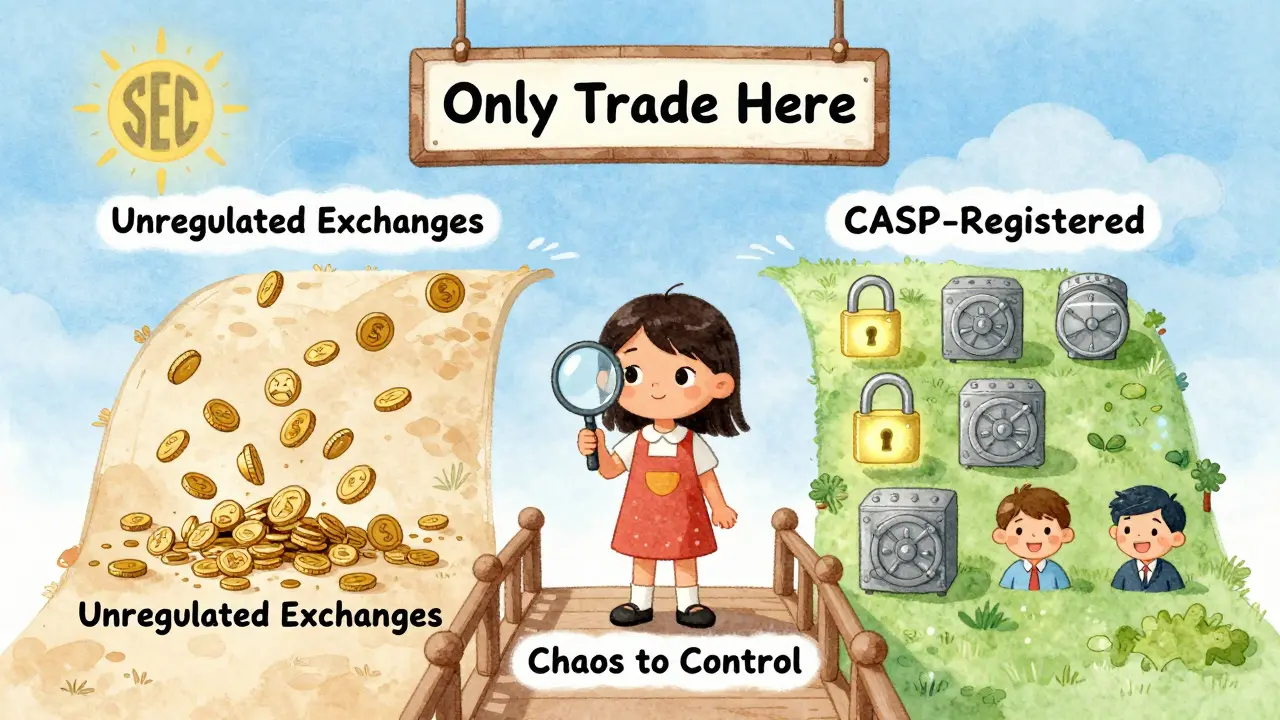
Some call it a ban. It’s not. It’s a bridge - from chaos to control. From risk to responsibility.
The SEC didn’t shut down crypto. It forced it to grow up. The platforms that survive will be stronger. The users will be safer. And the market, though smaller, will be real.
If you’re a Filipino investor, this means one thing: only trade on CASP-registered platforms. Check the SEC’s official portal. Verify their license. Don’t assume. Don’t trust. Confirm.
If you’re a crypto business? Register. Now. The clock isn’t ticking. It’s already run out for most of you.
Are crypto transactions still legal in the Philippines?
Yes. The SEC Philippines has not banned cryptocurrency trading. It only requires platforms serving Filipino users to register as Crypto Asset Service Providers (CASP). Individuals can still buy, sell, and hold crypto - but only through licensed platforms. Unregistered exchanges are blocked from operating in the country.
What happens if I use an unregistered crypto exchange like KuCoin or Bybit?
You can still access these platforms through a VPN, but they are no longer legally allowed to operate in the Philippines. Their websites are blocked by internet providers, and their apps have been removed from local app stores. More importantly, you lose all legal protection. If the platform freezes your funds or disappears, the SEC cannot help you. You’re on your own.
How do I know if a crypto platform is CASP-registered?
Visit the official SEC Philippines website and check the Crypto Asset Service Provider Registry. Only platforms listed there are authorized to serve Filipino users. You can also verify their license number, physical office address, and capitalization details. If it’s not on the list, it’s not compliant.
Can I still use Binance in the Philippines?
No. Binance was fully blocked from the Philippine market in September 2024 after failing to register as a CASP. The platform no longer accepts new users from the Philippines, and existing users were given a 90-day window to withdraw funds. Any remaining accounts are inactive and unsupported.
What’s the difference between CASP and a regular business license?
CASP is a specialized regulatory classification created specifically for crypto service providers. Unlike a general business license, CASP requires strict financial safeguards: fund segregation, cold storage, blockchain monitoring, cybersecurity audits, and monthly reporting to the SEC. It’s designed to prevent the kind of collapses seen with FTX and Celsius.
Will the SEC regulate DeFi and NFTs in the future?
Yes. While DeFi protocols are currently exempt from CASP registration, the SEC has publicly stated it plans to extend oversight to decentralized finance and NFT platforms by 2027. This will likely include rules around liquidity pools, smart contract audits, and yield-generating products. The goal is to prevent new forms of fraud before they become widespread.
Why does the SEC require physical offices in the Philippines?
Physical presence ensures accountability. If a platform fails, the SEC can serve legal notices, seize assets, and hold executives personally responsible. Offshore companies with no local presence are impossible to prosecute. Requiring a physical office closes that loophole.
How long does CASP registration take?
The SEC states it processes complete applications within 30 business days. However, early adopters report average processing times of 45 days due to high volume and incomplete submissions. The process requires submitting detailed business plans, proof of capital, cybersecurity audits, and anti-money laundering protocols. Rushing it increases the chance of rejection.
Are there any local crypto platforms that are CASP-registered?
Yes. A few local startups have successfully registered, including PhilCrypto, BitPinas, and RemitChain. These platforms are fully compliant, offer local peso deposits, and are backed by Philippine banks. They’re still small compared to global giants - but they’re growing.
What should I do if I lost money on an unregistered exchange?
Report it immediately to the SEC’s Enforcement and Investor Protection Department via their hotline (+632-8981-7963) or online portal. While recovery is unlikely, documenting the loss helps build cases against illegal operators. The SEC uses these reports to prioritize enforcement actions. You may also file a complaint with the Philippine National Police’s Cybercrime Division.
McKenna Becker
This isn't regulation. It's responsibility. The SEC didn't crush crypto-they forced it to grow up. People weren't investing. They were gambling with their rent money. Now, at least, there's a chance their savings won't vanish into thin air.
precious Ncube
Of course the SEC stepped in. Anyone who thought unregulated exchanges were safe was either naive or complicit. This isn't about freedom-it's about accountability. And if you can't handle that, maybe crypto isn't for you.
Jan Czuchaj
I've been watching this unfold for years. The real breakthrough here isn't the rules-it's the cultural shift. Before, crypto was a wild west where people thought 'trust us' was a business model. Now, you have to prove you're not going to disappear with people's life savings. That's not overreach. That's basic ethics. The platforms that survive will be better. The users will be safer. And honestly? That’s the only metric that matters. The market might shrink, but it’ll be real. And real markets last. The ones built on hype? They always collapse. This is the opposite of a ban. It’s a foundation.
Tracy Peterson
They didn’t ban crypto. They banned predators. That’s the difference. If you’re still mad you can’t use KuCoin, ask yourself: why did you trust a company with no physical presence, no legal accountability, and no transparency? That wasn’t freedom. That was foolishness.
George Suggs
The fact that 67% fewer fraud cases happened after Binance left says everything. People weren’t losing money because the market dipped. They lost it because the platforms vanished. This isn’t censorship. It’s cleanup.
KingDesigners &Co
LMAO. You think this is protection? Nah. This is control. You want to trade? Fine. But now you need to jump through 10 hoops just to access your own money. That’s not regulation. That’s surveillance dressed up as safety. And don’t even get me started on the cold storage thing. If your private keys are in a vault, you don’t own crypto. You’re just a renter. 😒
Felicia Eriksson
I know people who lost everything. My cousin sold her car to invest in some ‘high-yield’ platform. Vanished overnight. No one helped. No one even tracked it. This system? It’s painful, but it’s the first time anyone’s said: your money matters. That’s worth something.
aaron marp
The real win here isn’t the CASP rules-it’s the mindset shift. Before, people thought crypto was a get-rich-quick scheme. Now, they’re learning: if it looks too easy, it’s probably a trap. The SEC didn’t kill innovation. They just removed the grifters. And honestly? That’s the only thing crypto needed to survive long-term.
Patrick Streeb
The regulatory framework established by the Securities and Exchange Commission of the Philippines represents a paradigmatic advancement in the governance of digital asset services within the Southeast Asian region. The requirement for domestic incorporation, coupled with stringent capitalization and operational transparency mandates, ensures that investor protection is not merely an aspirational objective but a legally enforceable standard.
Tracy Whetsel
I used to think regulation was the enemy of innovation. Then I met someone who lost her entire life savings to a fake crypto platform. She cried for three days. I don’t care how ‘decentralized’ something is if it leaves people homeless. This? This is the bare minimum. And honestly? I’m proud of the Philippines for doing it right. 💛
Michael Teague
So what? Now I gotta use some local app I never heard of? Cool. Guess I’ll just use a VPN. Still got my coins. Still got my freedom. Still got my money. The SEC can keep their forms.
kati simpson
I don’t know much about crypto. But I know what it’s like to lose everything. My mom’s retirement fund? Gone. Because some guy on Instagram said ‘double your money in 30 days.’ I don’t care if this is strict. I care that no one else has to go through that. I’m not mad. I’m grateful.
lori sims
This is like when your grandma finally locks the cabinet after you kept sneaking cookies. You’re annoyed. But you also realize she was right. The SEC didn’t take away your snacks. They just stopped letting you eat them straight from the jar. Now you’ve got a spoon. And a plate. And a little less mess on the floor.
Reggie Fifty
The Philippines thinks it’s some kind of crypto hero? Please. This is just another authoritarian move wrapped in virtue signaling. You want safety? Move to China. They banned it completely. At least there, you know where you stand. Here? You’re just being micromanaged by bureaucrats who think they know better than you. And guess what? They don’t.