
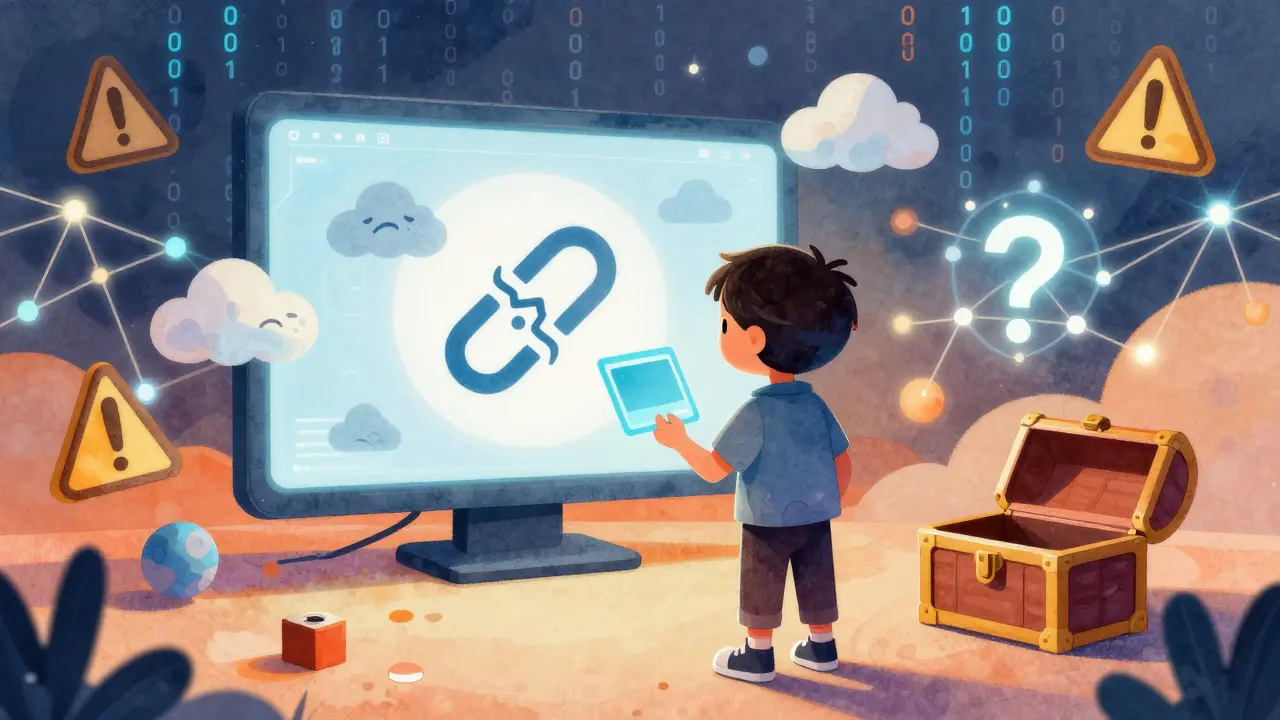
You hold a digital collectible worth thousands, but when you click to view the artwork, you see nothing. Just a broken link icon. This nightmare became reality for thousands in 2022 when server migrations wiped out metadata for prominent collections. As we navigate 2026, the choice between storing data directly on the blockchain or elsewhere remains the single biggest decision for creators. Your storage method dictates whether your asset lasts forever or disappears overnight.
Understanding the split between decentralized and centralized storage is not just a technical detail; it is a business survival strategy. We will break down exactly where your files live, why it matters for cost and security, and how to avoid the 37% failure rate seen in early projects.
The Core Problem of Metadata
Every Non-Fungible Token contains two parts: the token ID and the metadata URI. The ID is the serial number. The URI points to the actual description-image, attributes, or animation. When people discuss On-Chain NFT Metadata, they mean embedding this information directly into the smart contract itself. Off-chain means pointing the URI to a web address, like a server or a distributed network.
In the early days of the ERC-721 standard, formalized back in 2018, developers prioritized speed. Storing files on centralized cloud services was cheap. Fast. Easy. But as the market matured, the fragility of centralized links became obvious. A study from late 2023 revealed that 48% of top Ethereum projects relied on InterPlanetary File System (IPFS), while 31% stuck with centralized servers despite the known risks.
The core issue isn't just where the file sits. It is who controls the access. If a company hosting your JPEG shuts down, does your NFT become a blank placeholder? With traditional URLs, the answer is yes. With blockchain-native storage, the answer should be no. This distinction drives every developer's decision matrix in 2026.
Storing Data On-Chain
When metadata lives on-chain, it exists permanently as part of the blockchain ledger. There is no external server to crash. No account login required. The data is tied to the block hash. This offers absolute censorship resistance. If the network continues to run, your data survives.
However, putting data on Ethereum is expensive. Gas costs are the friction point. Encoding a single image in Base64 or creating Scalable Vector Graphics (SVG) code directly in Solidity can cost significantly. Estimates from late 2023 showed minting could range from 0.05 to 0.5 ETH per 1 kilobyte depending on network congestion. For high-resolution media, this cost becomes prohibitive.
| Feature | On-Chain Storage | Off-Chain Storage |
|---|---|---|
| Average Cost | $50 - $500 per mint | $0.01 - $0.50 per GB |
| Speed | Slow (12-15 seconds) | Fast (200-500ms) |
| Permanence | Guaranteed | Pinning dependent |
| Security | Immutability | Vulnerable to takedowns |
This table highlights the trade-off. You pay a premium for security. Projects like Art Blocks chose full on-chain implementation. Their metadata is encoded within the smart contract. This guarantees that their generative art survives regardless of external infrastructure failures. As of 2024, their system remained fully accessible since launch, proving the longevity of the approach. But for a casual PFP project, spending $500 in gas per avatar makes little financial sense.
Technical constraints also exist. Ethereum limits transaction data size. Currently, this caps complex metadata structures. Developers must compress aggressively, often using SVG for simple vector art to keep payload sizes low. Advanced compression techniques can reduce costs by up to 63%, but they require significant development time, sometimes adding 40 to 60 hours to a build schedule.
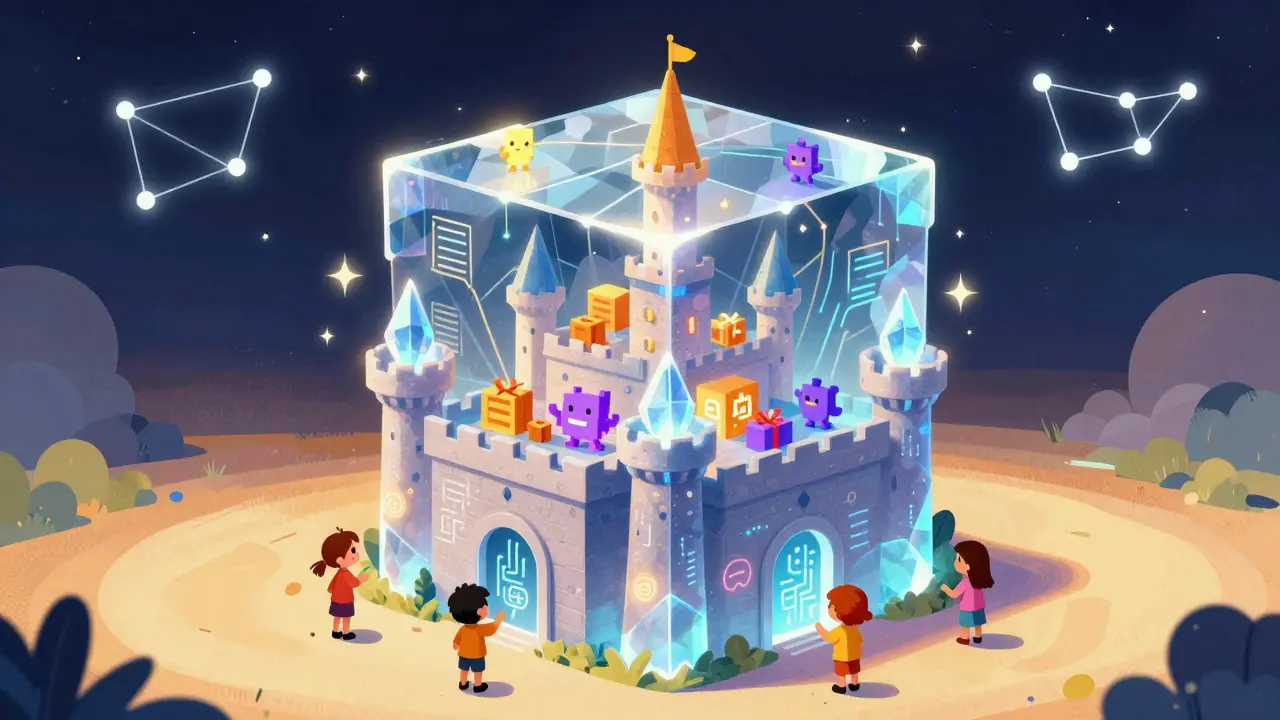
The Off-Chain Alternative
Off-chain solutions separate the token from the content. This drastically lowers entry barriers. Instead of writing bytes to the chain, you write a URL. The ecosystem has splintered into three main types: centralized servers, decentralized networks like IPFS, and permanent archives like Arweave.
Centralized cloud providers, such as Amazon Web Services (AWS S3), offer speed. Retrieval times under 500ms provide a snappy user experience. Costs are pennies per gigabyte. But the vulnerability is total. If the bucket goes offline, the link dies. In 2022, metadata outages affected 47,000 NFTs on LooksRare due to server issues. For investors, blank images kill perceived value instantly.
Decentralized networks attempt to fix this. IPFS distributes files across nodes. To prevent data deletion, you must "pin" the content. Pinata is a popular pinning service, trusted by 20% of major Ethereum projects. However, reliance on a single provider creates a central point of failure. Recent audits suggested that 68% of projects relying on free tier pinning faced risks during network maintenance windows.
Then there is Arweave. Unlike temporary storage, Arweave aims for permanence through a unique consensus mechanism called Proof-of-Access. It requires a one-time payment rather than recurring fees. Adoption is massive in specific ecosystems; Solana projects show a 90% preference for Arweave for metadata storage. This indicates that different blockchains favor different protocols based on cost structure. One-time payments suit projects wanting to avoid annual subscription costs.

Deciding Between Hybrid Models
Nobody forces you to choose one extreme. The industry trend in 2026 leans heavily toward hybrid systems. You store the cryptographic hash of the file on-chain while the actual heavy data sits off-chain. This verifies authenticity without bloating gas fees.
The logic is straightforward. If the file changes on the server, the hash won't match the contract. It signals a tamper event. Platforms like Thirdweb have released Software Development Kits (SDKs) to automate this process. Their 2024 tools reduced gas overhead by optimizing storage patterns, lowering deployment costs by roughly 47%. This is the pragmatic middle ground adopted by 22% of top Ethereum projects.
For high-value assets, you might lean harder on-chain. If an NFT represents ownership of a real estate deed or a royalty stream, the metadata is critical legal evidence. Immutability is non-negotiable here. Conversely, for gaming items or profile pictures where updates happen frequently, flexibility wins. Generative art projects needing post-mint modifications cannot rely on immutable chains unless they implement complex upgrade proxies, which introduces other risks.
Regulatory factors now influence this decision too. The EU’s Markets in Crypto-Assets (MiCA) framework, effective mid-2024, introduced requirements for metadata immutability on financialized tokens. Compliance teams are pushing for on-chain verification elements to satisfy auditing standards. This regulatory pressure is shifting some corporate NFT issuance, like Nike's .SWOOSH platform, toward hybrid models where hashes verify integrity on the public ledger.
Evaluating Long-Term Viability
Looking past the immediate costs, consider network upgrades. Ethereum's upcoming roadmap, including EIP-4844 modifications scheduled for earlier years, aimed to slash storage costs by up to 90%. Layer 2 rollups further reduce the price gap between on-chain and off-chain storage. If gas prices drop significantly, the economic case for on-chain strengthens.
Community feedback reveals pain points that statistics miss. Users on Reddit forums reported frustration when marketplace galleries failed during peak trading volume due to gateway timeouts. Trust scores for pinning services hover around 4.2 stars, but negative reviews specifically cite "downtime during market surges." This suggests that redundancy is vital. Using multiple gateways for off-chain storage mitigates the risk of a single gateway going down.
If you are launching a collection today, ask yourself: What is the lifetime value of this asset? If the floor price is expected to stay above 10 ETH, investing in robust on-chain features or Arweave storage pays off in long-term trust. For disposable utility tokens, minimizing upfront gas via off-chain methods makes economic sense. There is no universal solution, only the right tool for your specific lifecycle.
Is on-chain metadata truly permanent?
Yes, as long as the underlying blockchain (like Ethereum) continues to operate. Data written to the blockchain cannot be altered or deleted, unlike off-chain data which depends on third-party hosting uptime.
Why is off-chain storage cheaper?
Writing large amounts of data to the blockchain incurs high gas fees for every byte. Off-chain storage uses standard web servers or networks where data retrieval costs are negligible compared to blockchain transactions.
What happens if my IPFS link breaks?
Your NFT becomes inaccessible visually until the content is re-pinned. Unlike on-chain data, unpinned IPFS content is not guaranteed to remain online without paid or dedicated storage nodes.
Does Arweave guarantee 200-year storage?
Arweave's protocol is designed for infinite retention based on its permanent storage funding model. However, this relies on the continued existence and health of the Arweave network itself.
Should I use SVG for on-chain art?
SVG is the standard for on-chain because it is code-based and compact. It avoids the massive gas costs associated with storing binary image formats like PNG or JPG directly in the contract.
Justin Smith
The distinction regarding gas costs is accurate but often overlooked by retail investors who do not understand the underlying mechanics of the blockchain ledger.
Ashley Stump
They are all lying about permanence because centralized nodes control everything and you will lose your money eventually.
athalia georgina
i thnik ipfs is good bt pinata cost too much now adys and it is hard to find reliable hosts anymore
Callis MacEwan
You are fundamentally misunderstanding the implications of distributed consensus models when discussing reliability. Most projects fail because they ignore the latency inherent in retrieval gateways. We need to consider the trade-off between immediate accessibility and long-term persistence. Redundancy is key but also introduces significant complexity in verification protocols. Pinning services often operate with opaque backend infrastructures that lack transparency. Centralized cloud providers offer speed but create single points of failure. Decentralized storage requires active node maintenance to guarantee uptime. Proof-of-Archive mechanisms are theoretically sound but practically unproven at scale. Gas optimization techniques reduce costs but limit payload sizes drastically. Layer 2 rollups could mitigate fees but introduce their own abstraction risks. Many developers prioritize convenience over security when selecting storage solutions. This leads to a systemic fragility that affects the entire ecosystem. Smart contracts cannot enforce external data integrity without specialized off-chain validation tools. We see repeated patterns of metadata loss during network congestion events. The community fails to learn from historical failures despite obvious evidence. Technical debt accumulates faster than protocol upgrades can address it.
Joy Crawford
so trueee love the info u guys <3 i feel soo bad for people who lost art :( it hurts my heart to think about broken links everywhere
Lisa Miller
We are definitely learning from these mistakes and technology is improving every single day! It is great to see people advocating for better security standards.
Sean Carr
Check Thirdweb SDK for cheaper options
Tiffany Selchow
Oh sure just trust the cloud forever like that actually works here in reality
joshua kutcher
Please take the time to review the table carefully before spending any funds on deployment strategies.
Disha Patil
Why does everyone ignore the real problem of human error and negligence in the supply chain
Zackary Hogeboom
Hybrid models seem the most realistic way forward for now while we wait for full decentralization
Jamie Riddell
gas fees really stop small creators from trying new things though
Beverly Menezes
Just keep it safe so you dont lose it later
Jay Starr
Disaster strikes when servers go down and nothing remains for the owners