
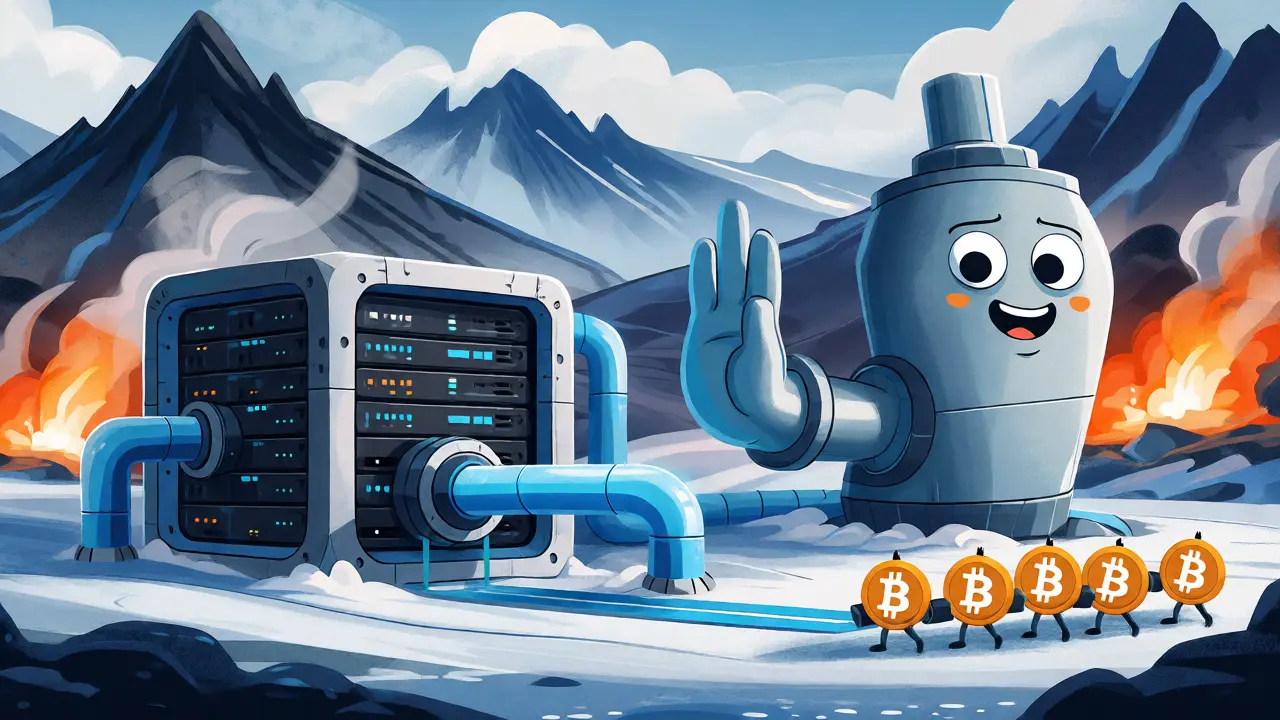
Imagine a country where the air is cold enough to cool your servers for free and the ground boils with electricity. For years, this was the dream for Bitcoin miners. They flocked to Iceland, drawn by abundant geothermal and hydroelectric power that made their operations incredibly cheap and green. But today, that open door has a lock on it. If you are looking at Iceland crypto mining restrictions, you need to understand that the bottleneck isn't just government policy-it's the physical limit of the national grid managed by Landsvirkjun, Iceland’s largest power company.
The Energy Bottleneck: Why Landsvirkjun Said "Stop"
It wasn’t always this way. In the early days, if you had capital and hardware, you could plug into Iceland’s grid. Today, the situation is drastically different. The core issue is capacity. Landsvirkjun generates about 70% of Iceland’s electricity, primarily from geothermal and hydropower sources. While renewable, these resources are finite in terms of immediate output capacity. The surge in data centers-overwhelmingly driven by crypto mining-created a supply-demand mismatch that threatened residential stability and industrial continuity.
By 2017, crypto processing already accounted for roughly 90% of Iceland’s data center power consumption. This massive draw meant that new mining farms were competing directly with aluminum smelters (a traditional heavy industry) and local households for every megawatt-hour. The result? A de facto moratorium on new large-scale connections. You can’t simply build a facility and demand power; you must negotiate long-term contracts, often years in advance, and even then, availability is scarce.
| Factor | Impact on Miners | Status in 2026 |
|---|---|---|
| Grid Capacity | Limited new connections available | Highly restricted; prioritized for existing contracts |
| Energy Cost | Rising due to scarcity and infrastructure upgrades | Higher than global averages despite renewables |
| Regulatory Oversight | Increased scrutiny by FSA and Ministry of Industries | Active monitoring of environmental impact |
| Environmental Rules | Strict compliance with sustainability goals | Mandatory reporting on carbon footprint |
Government Policy vs. Utility Reality
While Landsvirkjun manages the physical wires, the political landscape adds another layer of complexity. Prime Minister Katrín Jakobsdóttir publicly expressed concerns as recently as March 2024 about reducing cryptocurrency mining activities within the country. This wasn’t just talk. It signaled a shift from viewing miners as economic saviors post-2008 financial crisis to viewing them as resource hogs.
The Icelandic government doesn’t have a specific "Crypto Law" per se. Instead, they regulate through existing financial frameworks overseen by the Icelandic Financial Supervisory Authority (FME). The FME requires exchanges and businesses to comply with anti-money laundering (AML) policies, which indirectly affects miners who sell their mined coins locally or internationally.
But here’s the catch: the government’s desire to curb mining aligns perfectly with the utility’s practical inability to supply more power. There is no single decree banning mining. Instead, there is a combination of high entry barriers, strict environmental impact assessments, and the simple fact that there is no spare electricity. If you want to mine in Iceland now, you aren’t just buying GPUs; you’re buying a guaranteed energy contract that might not exist for three years.
The Economic Impact on Major Players
Companies like Hive Blockchain Technologies, Genesis Mining, and Bitfury Holding established significant footprints in Iceland. These entities represent billions in infrastructure investment. Their presence helped stabilize Iceland’s economy after the 2008 crash, providing jobs and tax revenue.
However, the restriction on new power allocations has created a two-tier market. Existing miners with locked-in contracts enjoy relatively stable rates. New entrants face prohibitive costs or simply cannot find space. This has led to a consolidation phase where smaller miners are exiting, while larger players with deep pockets secure long-term agreements. The risk for new investors is clear: without a confirmed power source, your hardware sits idle, depreciating daily.

Environmental Concerns and Sustainability
Iceland markets itself as a green energy leader. Almost 100% of its electricity comes from renewable sources. So why the pushback against mining? It’s not about carbon emissions from burning coal-it’s about resource depletion and local environmental strain.
Geothermal plants, while clean, affect land use and water tables. Hydropower dams alter river ecosystems. When mining farms expand rapidly, they require new transmission lines and substations, which disrupt local landscapes. Furthermore, the heat generated by mining rigs, while useful in some district heating projects, is often wasted if not integrated properly. The government is increasingly focused on ensuring that mining contributes positively to the local community rather than just extracting value.
This focus on sustainability means that any new project must pass rigorous environmental impact assessments. These processes are time-consuming and expensive, further discouraging speculative mining ventures that lack long-term commitment.
What Does This Mean for Future Miners?
If you are considering entering the Icelandic market, you need to adjust your expectations. The era of easy, cheap, unlimited power is over. Here is what you need to do:
- Secure Power First: Do not buy hardware until you have a signed Letter of Intent or contract with a power supplier. Verify the timeline for connection.
- Budget for Higher Rates: Assume energy costs will be higher than historical averages. Negotiate fixed-rate contracts to hedge against volatility.
- Compliance is Key: Engage with the FME early. Ensure your business structure meets all AML and KYC requirements before moving capital.
- Consider Alternatives: Look at countries with similar renewable profiles but less saturated grids, such as parts of Canada, Scandinavia, or the Pacific Northwest in the USA.
There is also a growing interest in Central Bank Digital Currencies (CBDCs) in Iceland. The central bank is exploring digital alternatives to traditional payments. This institutional focus might eventually divert attention and resources away from private crypto mining toward state-backed blockchain initiatives.

Public Sentiment and Local Community Relations
Locals have mixed feelings. On one hand, mining brings jobs and infrastructure improvements. On the other, residents worry about rising electricity bills and the visual impact of industrial facilities in pristine landscapes. The culture in Iceland is generally open to technology, a trait born from rebuilding the nation’s financial sector after 2008. However, patience wears thin when essential services feel threatened by foreign corporate interests.
Successful miners in Iceland today are those who integrate into the community. Some facilities feed excess heat back into local greenhouse operations or district heating systems. This symbiotic relationship helps mitigate public opposition. If you plan to operate there, think beyond profit margins. Think about how your operation fits into the local ecosystem.
Looking Ahead: Is Iceland Still Viable?
Iceland remains a premier location for sustainable mining, but it is no longer a low-barrier entry point. The restrictions imposed by Landsvirkjun and supported by government policy have matured the market. It is now a place for serious, long-term operators who prioritize stability and compliance over quick flips.
For small-scale hobbyists, Iceland is likely too expensive and complex. For institutional investors, it offers a unique blend of regulatory clarity and green credentials, provided you can navigate the energy maze. The key takeaway? Power is the product. In Iceland, you aren’t just mining Bitcoin; you are buying access to a limited natural resource.
Is cryptocurrency mining banned in Iceland?
No, it is not banned. However, new large-scale operations face severe restrictions due to limited grid capacity managed by Landsvirkjun. Existing miners with contracts continue to operate, but new connections are difficult to secure.
Who controls the power supply for miners in Iceland?
Landsvirkjun, the national power company, controls the majority of electricity generation and distribution. They manage the allocation of power to industrial users, including crypto miners, based on long-term contracts and available capacity.
Why did Iceland restrict crypto mining?
The primary reasons are grid saturation and environmental concerns. Mining operations consumed so much electricity that it threatened residential and industrial supply. Additionally, the government seeks to balance economic benefits with sustainability goals.
Are there taxes on crypto mining in Iceland?
Yes, mining profits are subject to corporate income tax. Individuals may also face personal income tax on gains. The Icelandic Financial Supervisory Authority oversees compliance with financial regulations, including anti-money laundering laws.
Can I start a small home mining rig in Iceland?
Technically yes, but economically it is challenging. Residential electricity rates are higher than industrial rates, and the climate, while cold, does not offset the cost for small setups compared to regions with cheaper power. Most small miners find better ROI elsewhere.