
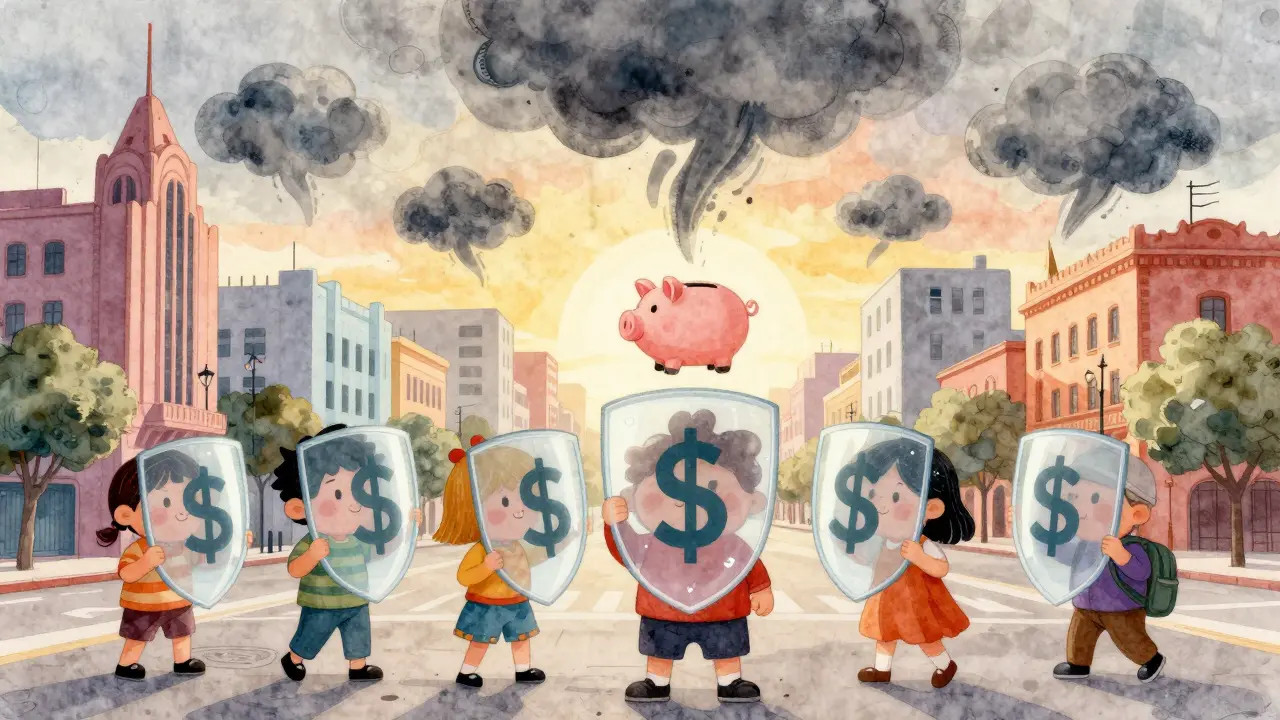
Imagine waking up to find that the money in your pocket is worth significantly less than it was yesterday. For millions of Argentines, this isn't a hypothetical scenario; it's daily life. The Argentine peso is the official currency of Argentina, which has suffered from chronic hyperinflation and severe devaluation in recent years crisis has done more than just hurt savings-it has fundamentally rewired how the country handles money. With inflation rates exceeding 200% in recent years and persistent devaluation, citizens have been forced to look for alternatives. The result? Argentina has become one of the world's most aggressive adopters of cryptocurrency, not because people are excited about blockchain technology, but because they need a way to keep their wealth from evaporating.
In 2025 and heading into 2026, this trend hasn't slowed down. In fact, it has accelerated. Argentina now sits as the second-largest cryptocurrency market in Latin America, processing nearly $94 billion in transaction volume. That’s massive, especially considering Argentina’s population is only one-fifth the size of Brazil’s, which leads the region. This article breaks down why this is happening, how ordinary people are using crypto to survive economic volatility, and what the future looks like for digital assets in Buenos Aires and beyond.
The Real Cost of the Peso Crisis
To understand the surge in crypto usage, you first have to understand the pressure cooker environment in Argentina. The peso operates within a managed currency band against the US dollar, fluctuating between 948 and 1,475 pesos per dollar. While the central bank has spent over $1.1 billion trying to defend the currency, these efforts often feel like putting a bandage on a bullet wound. Traditional interventions, including potential swap lines or debt purchases considered by the United States, face deep skepticism from the local population.
Why? Because traditional finance comes with strict rules. The government imposes severe capital controls, limiting official USD purchases to just $200 per month through banks at the official exchange rate. If you want more dollars, you’re forced into the black market, known locally as the "blue dollar," where rates are significantly higher and transactions carry legal risks. This creates a perfect storm: your local currency loses value rapidly, and you can’t easily convert it to a stable global currency like the US dollar through legal channels.
| Method | Monthly Limit | Exchange Rate Type | Risk Level |
|---|---|---|---|
| Official Bank USD | $200 | Official (Fixed) | Low (Legal) |
| Blue Dollar (Black Market) | Unlimited | Market-driven (High Premium) | High (Illegal/Risky) |
| Crypto Stablecoins | Unlimited | Pegged to USD | Medium (Regulatory Uncertainty) |
This gap in the market is exactly where cryptocurrency steps in. It offers a third option: unlimited access to dollar-denominated instruments without the government restrictions of the official channel or the legal dangers of the black market.
Why Stablecoins Dominate the Market
If you think Argentines are buying Bitcoin to get rich quick, you’re missing the point. The vast majority of crypto activity in Argentina is driven by stablecoins are cryptocurrencies pegged to stable assets like the US dollar, designed to minimize price volatility. In fact, 89% of all Argentine peso activity on centralized exchanges is directed toward acquiring stablecoins. This makes Argentina the second-highest user of stablecoins globally, right behind Colombia.
The most popular choices are USDT (Tether) is a widely used stablecoin pegged 1:1 to the US dollar, serving as a primary tool for preserving value in volatile economies, USDC (USD Coin) is a regulated stablecoin offering transparency and compliance features, popular among businesses and cautious investors, and DAI. These tokens serve as digital alternatives to traditional dollarization. When the peso drops, the value of your USDT stays steady relative to the dollar. It’s a simple hedge against chaos.
DAI has gained particular traction recently because its collateral is published on the Ethereum blockchain. This transparency appeals to users who have lost trust in traditional banking systems. Unlike a bank balance that you can’t verify, you can see exactly what backs DAI. This feature resonates deeply in a country where financial opacity has led to repeated crises.

Bitcoin: From Speculation to Savings
While stablecoins handle daily preservation, Bitcoin plays a different role. Local trading platform Lemon reported a significant shift: more Argentines now hold Bitcoin than crypto dollars on their platform. This represents a move toward long-term wealth preservation strategies rather than just short-term hedging.
For many, Bitcoin is viewed as "digital gold." In an environment where holding cash is a losing game, Bitcoin offers a scarce asset that no government can print away. However, this comes with volatility. Users must be willing to tolerate price swings in hopes of long-term gains. This dual approach-stablecoins for immediate safety and Bitcoin for long-term growth-has become a standard strategy for middle-class families in Buenos Aires.
Real-World Usage: Beyond HODLing
Cryptocurrency in Argentina isn't just sitting in wallets. It’s being used for real transactions. Cross-border payment innovations have emerged, such as Brazil’s PIX instant payment system crossing borders through FinTechs like Mercado Pago. This allows Brazilian tourists to pay Argentine merchants directly, avoiding foreign exchange conversion fees entirely.
For local businesses, accepting crypto can mean the difference between staying open and closing down. If a business accepts payments in stablecoins, they don’t lose purchasing power while waiting to pay suppliers. Remittances also flow more efficiently. Families abroad can send money via crypto, bypassing expensive wire transfer fees and banking delays. According to Chainalysis research, households and businesses use stablecoins as both a hedge and a practical payments tool where the local currency fails to provide stability.

The Learning Curve and Accessibility
You might wonder if this requires coding skills or advanced tech knowledge. The answer is no. Basic stablecoin adoption through platforms like Lemon requires minimal technical expertise. Most users can register and complete their first transaction within hours. The interface is designed to be intuitive, mirroring familiar e-commerce experiences.
However, there is a divide. Advanced users engaging with decentralized finance (DeFi) protocols or running Bitcoin nodes require significantly more time and knowledge. The learning curve varies from immediate for simple peso-to-stablecoin exchanges to several weeks for comprehensive DeFi participation. Fortunately, local communities help bridge this gap. Buenos Aires hosts international events like Devconnect and the Ethereum World Fair, establishing the city as a hub for Web3 innovation and education.
Regulation and Future Outlook
The government hasn’t ignored this shift. Argentina has implemented a regulatory sandbox and issued licenses for virtual asset service providers (VASPs). This provides some legal clarity for users and businesses, reducing the fear of sudden crackdowns. Local legislation has also advanced with the legal recognition of tokens backed by real assets.
Despite these reforms, experts note it’s too early to judge the full impact of current fiscal adjustments. Cryptocurrency adoption continues regardless of traditional policy outcomes. As long as peso instability persists, the demand for alternative financial infrastructure will grow. Industry analysts predict continued growth, with potential for Argentina to become a regional leader in crypto regulation and infrastructure development.
Is it legal to buy crypto in Argentina?
Yes, buying and selling cryptocurrency is legal in Argentina. The government has established a regulatory framework including licenses for Virtual Asset Service Providers (VASPs) and a regulatory sandbox to oversee the industry. However, users should always ensure they use licensed platforms to comply with local laws.
Why do Argentines prefer stablecoins over Bitcoin?
Stablecoins like USDT and USDC are preferred for daily transactions and short-term savings because they maintain a stable value pegged to the US dollar. Bitcoin is more volatile, making it risky for everyday purchases. Argentines use stablecoins to protect their purchasing power against inflation without exposing themselves to crypto price swings.
How does crypto help with capital controls?
Argentina limits official USD purchases to $200 per month. Crypto allows users to convert pesos into dollar-pegged assets without hitting this limit. By buying stablecoins on exchanges, citizens can effectively dollarize their savings without going through the restricted banking system or the illegal black market.
What is the "Blue Dollar"?
The "Blue Dollar" refers to the unofficial, parallel market exchange rate for US dollars in Argentina. Because the official rate is heavily subsidized and limited, the blue dollar trades at a much higher premium. It carries legal risks and security concerns, making crypto an attractive, safer alternative for many.
Can I use crypto to pay for goods in Argentina?
Yes, increasingly so. Many small businesses and online merchants accept stablecoins to avoid inflation losses. Additionally, cross-border fintech solutions allow seamless payments between countries, such as Brazilian tourists paying Argentine vendors directly via linked crypto accounts.
Terry Hyland
It is just wrong that people are bypassing the system like this. The government has rules for a reason and everyone should follow them instead of hiding money in these digital shadows.
Monica Pathammavong
u dont get it its not about breaking laws its about survival when your currency is trash lol i mean seriously who keeps cash under mattress in 2026? stablecoins are basically just dollars but on internet so why would u trust bank more than blockchain??
Tim Lefebvre
i totally agree with monica here actually if you look at the data most people just want to keep their savings safe from inflation its pretty simple really no need to overthink it or judge them harshly they are just trying to survive
Suman Patil
The paradigm shift towards decentralized finance protocols is undeniable in emerging markets where fiat volatility disrupts traditional economic stability mechanisms. We must recognize that leveraging blockchain infrastructure for wealth preservation is a rational response to systemic failure rather than mere speculation. It is crucial to understand the underlying tokenomics driving this adoption surge across Latin America.
Kumaran sowkarpet
Hello friends from India! :D I think this is very interesting situation for Argentina. In our country we also have some issues with currency but crypto helps many small business owners too. It is good to see how technology can help people protect their hard earned money. Peace and love to all users here :)
Mauricio Contreras Loredo
Sure, let's pretend that buying Tether is any safer than keeping cash under a mattress. Oh wait, it's not because the whole thing is a giant unregulated casino run by shady guys in shorts. But hey, at least you can lose your life savings faster now!
sreeja boora
India maintains strict regulatory oversight on cryptocurrency transactions to ensure national financial security and prevent illicit activities. Citizens are advised to adhere to local banking regulations and avoid unauthorized cross-border digital asset transfers which may compromise sovereign monetary policy objectives.
Grace Newman
One must consider the broader implications of this technological exodus from state-controlled currencies. It is highly probable that central banks are aware of this erosion of monetary sovereignty yet choose to remain silent due to geopolitical pressures exerted by foreign intelligence agencies monitoring these digital flows.
Annemarie Fitzgerald
its not just about money its about the human condition itself being stripped bare by capitalism until only raw survival instinct remains what does it say about us that we turn to code instead of community for safety? perhaps we are all just nodes in a larger network of despair waiting for the final crash
Abby Sivertsen
I hear you annemarie but honestly most people just want to buy groceries without worrying if the price doubled overnight. Its sad but true. I try to stay chill about it though because getting angry doesnt fix the economy. Just gotta adapt and move forward i guess.
Benjamin Eisen
hey sreeja while india has strict rules i think we can learn from each other maybe there is a middle ground where regulation protects people but doesnt stifle innovation? i am always curious about how different countries handle this balance between control and freedom
Nick Rice
Let me be clear: this is not a trend, it is a necessity. When your currency loses value daily, using stablecoins is the only logical choice for anyone with basic financial literacy. Stop judging people for protecting their assets and start understanding the mechanics of modern economics.
Amit Thakur
The liquidity crunch in traditional banking sectors forces retail investors to seek alternative yield generation strategies through DeFi protocols. This behavioral shift indicates a fundamental breakdown in trust regarding centralized financial institutions' ability to preserve capital integrity during periods of high inflationary pressure.