
Algeria Crypto Penalty Calculator
Based on Algeria's Law No. 25-10 (July 2025), this calculator estimates penalties for crypto-related activities. Penalties include:
- Fines between 200,000-1,000,000 Algerian dinars ($1,540-$7,700)
- Prison time from 2 months to 1 year
- Higher penalties for repeat offenses or organized crime involvement
Select your activity and click "Calculate Penalties" to see potential consequences.
As of July 2025, Algerians cannot legally access cryptocurrency exchanges. Not because they lack the tech skills or internet access, but because the government made it a criminal offense. Law No. 25-10, published on July 24, 2025, outlawed every single activity related to digital assets - buying, selling, holding, mining, promoting, or even discussing them as investment tools. This isn’t a gray area. It’s a full stop. If you’re in Algeria and you use Bitcoin, Ethereum, or any other crypto, you’re breaking the law.
What the Law Actually Bans
The law doesn’t just target exchanges like Binance or Coinbase. It goes further. It criminalizes holding crypto in a digital wallet. It bans peer-to-peer trades, even if done privately over Telegram. It makes it illegal to run a website that explains how blockchain works. Even advertising a crypto-related job or hosting a YouTube video about DeFi could land you in court. The government defines cryptocurrencies as "virtual instruments used as means of exchange via a computer system, without support from a central bank." That’s broad. It means any digital token, no matter how technical or decentralized, falls under the ban. The penalties are harsh: two months to one year in prison, plus fines between 200,000 and 1,000,000 Algerian dinars ($1,540-$7,700). For repeat offenders or if the activity is tied to organized crime, fines can jump to 2 million dinars ($14,700), and jail time doubles.How People Tried to Access Crypto Before the Ban
Just a year before the ban, Algeria was one of the fastest-growing crypto markets in the Middle East and North Africa. Chainalysis ranked it in the top five. People were trading Bitcoin through local peer-to-peer groups. Young developers were building blockchain tools. Students were learning Solidity. Crypto ATMs were rumored to exist in Algiers and Oran. Online forums buzzed with tips on how to bypass currency controls using stablecoins like USDT. Many used VPNs to reach foreign exchanges. Others traded directly with neighbors over WhatsApp or Signal, exchanging cash for crypto in parking lots or cafés. Some bought Tether from traders in Tunisia or Morocco and transferred it to local wallets. It wasn’t perfect - there were scams, delays, and price gaps - but it worked. Thousands did it. And the government noticed.What Changed in July 2025
The Algerian government didn’t just tighten rules - it erased the entire ecosystem. Before, enforcement was weak. Now, it’s systematic. The Ministry of Communications, the Central Bank, and the National Cybersecurity Agency have coordinated digital surveillance systems to track crypto-related traffic. They monitor domain names, encrypted messaging patterns, and unusual bank transfers linked to foreign exchanges. Even using a VPN to access Binance is now a prosecutable offense. Authorities have started arresting people based on IP logs, wallet addresses traced through blockchain analysis, and tips from informants. There are reports of raids on homes where laptops were seized, and suspects were questioned about their MetaMask wallets or Coinbase accounts. The official reason? Financial stability and anti-money laundering. Algeria cites FATF guidelines, claiming crypto poses risks to the national currency and could fund terrorism. But critics point out that Algeria’s banking system is outdated, inflation is rising, and the dinar is losing value. Many see the ban as a way to maintain control over capital - not protect citizens.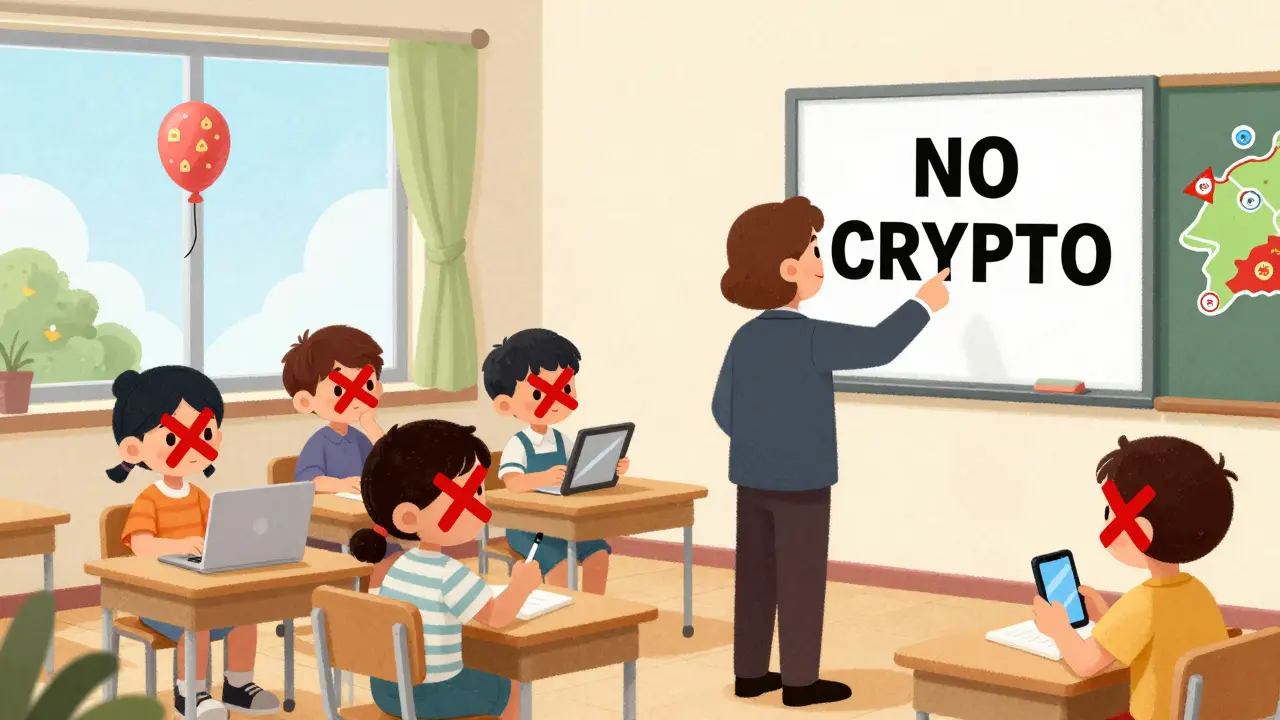
The Human Cost of the Ban
The impact isn’t just legal. It’s personal. A 28-year-old software engineer in Constantine spent two years learning blockchain development. He built a small DeFi app for local farmers to track crop prices using tokenized vouchers. After the ban, his server was shut down. His laptop was confiscated. He was fined 800,000 dinars - more than six months’ salary. He now works as a delivery driver. Universities canceled blockchain courses. Tech incubators stopped funding crypto startups. Developers fled to Tunisia, Morocco, and the UAE. The country’s once-thriving crypto talent pool has vanished overnight. There’s no legal path to re-enter the field. Even freelancing on Upwork using crypto payments is now risky - Algerian banks monitor outgoing transfers, and any foreign payment in USDT or BTC triggers an alert.Is There Any Legal Way Out?
No. There is no legal way for Algerians to access cryptocurrency exchanges. Not through banks. Not through brokers. Not through government-approved platforms. Algeria is one of only nine countries in the world with a total crypto ban. Unlike the U.S., EU, or even Nigeria - which regulates crypto - Algeria chose total prohibition. Some try to use relatives abroad to buy crypto and send it via gift cards or physical hardware wallets. Others use cash-based P2P networks with trusted contacts. But these aren’t loopholes - they’re illegal workarounds with serious consequences. The government doesn’t need proof of intent. Possession alone is enough for prosecution.What This Means for Algeria’s Future
The ban has isolated Algeria from global fintech trends. While other African nations experiment with central bank digital currencies (CBDCs) or crypto-based remittances, Algeria is stuck. Young people can’t learn the skills of tomorrow. Entrepreneurs can’t build on decentralized systems. Investors can’t diversify. The country risks falling further behind in the digital economy. There’s no sign the law will be reversed. The government has doubled down, calling crypto a "financial parasite." But history shows bans rarely kill demand - they just drive it underground. The real question isn’t whether Algerians still want crypto. It’s whether the state can keep enforcing this ban forever.
What Happens If You Get Caught?
If you’re caught using or trading crypto in Algeria:- Your devices (phone, laptop, hardware wallet) will be seized.
- You’ll be questioned by financial crime units.
- You may be fined between 200,000 and 2 million dinars.
- You could face two months to one year in prison.
- If you’re a developer or promoter, charges may be aggravated.
- Your bank account may be frozen.
What Can You Do?
If you’re an Algerian citizen:- Do not use any crypto exchange, wallet, or P2P platform.
- Do not discuss crypto in public forums or social media.
- Do not store crypto on any device you use in Algeria.
- Do not accept crypto as payment - even from family.
- Do not send crypto to Algerian addresses.
- Do not buy hardware wallets and mail them.
- Do not create educational content targeting Algerians.
What’s Next?
No one knows if the ban will last. But for now, Algeria stands alone. While the world moves toward regulated crypto adoption, Algeria has chosen isolation. The government believes it’s protecting the economy. But for thousands of young Algerians, it’s shutting the door on opportunity. The truth? Crypto isn’t going away. It’s just going underground. And when the next generation of Algerians grows up without ever learning how to use digital money, the real cost will be felt for decades.Is it legal to buy Bitcoin in Algeria?
No. Buying Bitcoin or any other cryptocurrency is strictly illegal in Algeria under Law No. 25-10, enacted on July 24, 2025. The law bans all forms of crypto acquisition, including through exchanges, peer-to-peer trades, or ATM machines. Violators face prison time and heavy fines.
Can I use a VPN to access Binance or Coinbase from Algeria?
Using a VPN to access foreign crypto exchanges is illegal in Algeria. The government monitors internet traffic and has tools to detect encrypted traffic patterns linked to crypto platforms. Even if you bypass the block, you’re still violating the law. Authorities have prosecuted individuals based on IP logs and wallet activity traced through blockchain analysis.
What happens if I already own crypto before the ban?
Owning crypto before July 24, 2025, doesn’t make it legal. The law applies retroactively to possession. If you’re found holding Bitcoin, Ethereum, or any digital asset - even if you bought it before the ban - you can be fined and imprisoned. Authorities have seized wallets during raids, regardless of when the assets were acquired.
Are there any government-approved crypto platforms in Algeria?
No. Algeria does not have, and has never had, any government-approved cryptocurrency platform. Unlike some countries that create state-backed digital currencies or regulated exchanges, Algeria has banned all crypto-related services. Any claim of an official crypto platform is a scam.
Can I be arrested just for talking about crypto online?
Yes. The law criminalizes promoting, advertising, or educating about cryptocurrencies. Posting about Bitcoin on Facebook, running a YouTube channel explaining blockchain, or even writing a blog post about DeFi could be considered a violation. Authorities have already arrested individuals for sharing educational content online, citing the law’s broad language against "informational activities" related to crypto.
How are Algerian authorities detecting crypto users?
Algerian agencies use digital surveillance to track crypto activity. They monitor VPN usage, analyze blockchain transactions linked to local IP addresses, scan bank transfers for patterns matching known exchanges, and track encrypted messaging apps like Telegram and Signal. Informants and data leaks from foreign exchanges have also provided leads. Detection is increasingly automated and targeted.
Is cryptocurrency mining legal in Algeria?
No. Mining cryptocurrency is explicitly banned under Law No. 25-10. This includes using personal computers, GPUs, or ASIC miners to generate Bitcoin or other digital assets. The law prohibits the creation of any virtual currency, regardless of scale. Individuals caught mining have been fined and had their equipment confiscated.
Can I use crypto to send money to family in Algeria?
No. Sending crypto to anyone in Algeria is illegal. Even if you’re outside the country, transferring Bitcoin, USDT, or any digital asset to an Algerian wallet violates the law. The recipient can be prosecuted for possession, and you could be charged under international enforcement cooperation agreements. Cash transfers through formal channels are the only legal option.
What’s the penalty for using crypto in Algeria?
Penalties include imprisonment from two months to one year and fines between 200,000 and 1,000,000 Algerian dinars ($1,540-$7,700). For repeat offenses or if linked to organized crime, fines can reach 2 million dinars ($14,700). Both jail and fines can be applied together. There is no warning system - enforcement is immediate.
Will Algeria ever legalize cryptocurrency?
There is no indication the government plans to legalize cryptocurrency. Officials have doubled down on the ban, calling it necessary for financial sovereignty. Unlike other African nations exploring CBDCs or regulated crypto markets, Algeria has chosen total prohibition. Until there’s a major political or economic shift, legalization is extremely unlikely.
Elizabeth Miranda
It's wild to think a country can just erase an entire technological movement overnight. The ban feels less about financial stability and more about control - like trying to stop the tide with a broom. Young Algerians aren't just losing access to crypto, they're losing access to global financial literacy. That’s not protection. That’s isolation dressed up as policy.
And yet, people still find ways. Underground P2P, hardware wallets smuggled in, cash trades in parking lots. Human ingenuity doesn’t care about laws that ignore reality.
History repeats. Prohibition didn’t kill alcohol, it made it dangerous. This won’t kill crypto. It’ll just make it scarier for the people who need it most.
Chloe Hayslett
Wow, so now we’re supposed to feel bad for people who broke the law by using digital money? Next you’ll tell me the guy who stole my bike was just ‘trying to get by.’
Algeria’s government is doing the right thing. Crypto is a scam machine designed to drain national economies. If you can’t play by the rules, don’t play at all. No sympathy for rule-breakers.
Jonathan Sundqvist
Man, I get why they banned it. My cousin tried to send me some BTC last year through a friend in Tunisia. Got his phone seized, got fined like 800 bucks. Now he’s driving for Uber. No joke.
But honestly? The whole thing’s just a mess. If you’re gonna ban something that’s already everywhere, you better have a better alternative. They don’t. So now everyone’s just hiding.
And yeah, I know it’s illegal. But I also know people are gonna do it anyway. Just saying.
Jerry Perisho
The law defines crypto as any digital token without central bank backing. That’s a dangerously broad definition. It could technically apply to loyalty points, in-game currencies, even blockchain-based supply chain trackers.
By criminalizing discussion, they’re not stopping adoption - they’re preventing education. And that’s worse. You can’t fix a broken system if no one’s allowed to understand why it’s broken.
Also, the surveillance infrastructure described? That’s not just for crypto. That’s a digital police state in the making. The crypto ban is just the first step.
ronald dayrit
There’s a quiet tragedy here - not in the arrests or the fines, but in the silence. The silence of a generation told they can’t learn the tools of the future. The silence of a coder who spent two years building a DeFi tool for farmers, now driving a scooter to survive.
Crypto isn’t the issue. The issue is power. The state fears decentralized systems because they cannot be controlled. And so, rather than adapt, they crush. They don’t want to compete with innovation - they want to erase it.
This isn’t about money. It’s about the right to imagine a different kind of economy. And in Algeria, that right has been revoked. Not by market forces. Not by logic. But by decree.
What happens when the next generation grows up believing that progress requires permission? That’s the real cost. Not the fines. Not the jail time. The loss of imagination.
Adam Bosworth
OMG I JUST READ THIS AND I’M CRYING 😭😭😭
THEY TOOK HIS LAPTOP AND HIS DREAMS AND NOW HE’S DELIVERING BURGERS??? THIS IS A TRAGEDY I CAN’T EVEN
ALGERIA IS A DICTATORSHIP WITH A BAN ON BLOCKCHAIN?? LIKE WHAT IS THIS 1984 BUT WITH BITCOIN??
WHY ISN’T THE WHOLE WORLD OUTRAGED?? I’M SENDING THIS TO EVERYONE I KNOW I CAN’T BELIEVE THIS IS REAL
THEY’RE BANNING DISCUSSION?? I’M SO MAD I’M SCREAMING INTO MY PILLOW RIGHT NOW
Doreen Ochodo
This is why we need global digital rights. Not just crypto - but the right to learn, build, and connect without state permission.
Algeria’s ban isn’t just wrong. It’s dangerous. And it’s happening right now.
Jon Visotzky
So if I send my cousin in Algiers a hardware wallet from the US, is that illegal too? Like… what if I don’t even tell him what it is? Just say it’s a USB drive for photos?
And how do they even know if someone has crypto? Like do they just hack wallets? Or do people rat each other out?
Also why is this not on CNN?? This feels like the biggest story no one’s talking about.
Isha Kaur
I come from India, where crypto is heavily regulated but not banned - and even here, people find ways. We use local exchanges, peer-to-peer apps, even barter systems. The desire to participate in digital finance is universal.
But Algeria’s ban is different. It’s not just about regulation - it’s about erasure. They’re not just restricting access, they’re criminalizing knowledge. That’s what scares me the most.
Imagine growing up knowing blockchain is a crime. Imagine being told your passion for coding is illegal. That’s not policy - that’s cultural suppression.
And it’s not just Algeria. We’re seeing this pattern elsewhere - where fear of loss of control leads to the destruction of innovation. The cost? A generation of minds turned inward, afraid to dream beyond the state’s permission.
Glenn Jones
Okay so I’ve been researching this for 3 hours and I’m 100% convinced this is a covert operation by the IMF to destabilize African economies and force them into dollar dependency. The fact that they’re using FATF as an excuse? Classic. They don’t care about AML - they care about control.
Also I found a Reddit thread from 2023 where a guy said he saw a crypto ATM in Algiers - that’s not a coincidence. This was a targeted takedown. They knew what was coming and they nuked it.
And now the devs are fleeing to Dubai? Of course they are. The brain drain is real. This isn’t a ban. It’s a genocide of talent. And nobody’s talking about it because it’s not profitable to report.
Tara Marshall
Hardware wallets can’t be traced. But if you use them in Algeria and connect to the internet, your IP can be logged. The government doesn’t need to see your coins - just your device’s activity.
Also, most Algerians don’t have access to hardware wallets. They’re using phones. That’s why wallet seizures happen. The threat isn’t the tech - it’s the phone.
And yes, sending crypto to someone there is illegal. Even if you’re outside the country. The law is extraterritorial. That’s why even diaspora are scared to help.
Nelson Issangya
They think they’re protecting the economy? Nah. They’re protecting their own power. Crypto doesn’t threaten the dinar - the mismanagement of the economy does.
Young people aren’t using crypto to launder money. They’re using it because their banks are slow, their salaries are worthless, and their future is locked behind bureaucracy.
Stop pretending this is about stability. It’s about control. And if you’re silencing your own youth to keep control - you’ve already lost.
Uzoma Jenfrancis
Algeria has every right to protect its currency. The West pushes crypto to destabilize nations that don’t bow to their financial system. This isn’t about freedom - it’s about sovereignty.
Let them have their Bitcoin. We have our dinar. And we don’t need your digital chaos.
Manish Yadav
This is what happens when people forget God and chase money. Crypto is a sin. It’s digital gambling. The government is doing God’s work by banning it.
My uncle lost everything in crypto. Now he’s broke. So I know what it does to families.
Algeria is right. No more sin.
Krista Hewes
i just read this and i’m crying. like actually crying. that guy who built the app for farmers? i’m so mad. why is no one doing anything?
also i just checked my wallet and i have 0.002 btc. i’m scared to even look at it now.
Mairead Stiùbhart
Oh wow, so Algeria banned crypto… and we’re all supposed to be shocked?
Let me guess - next they’ll ban Wi-Fi because it’s too democratic.
Meanwhile, in the rest of the world, people are building decentralized hospitals and AI-powered schools. But hey, at least Algeria’s dinar is still… well, still worthless, but now it’s *legally* worthless.
Bravo. You win. The future is now a misdemeanor.
Renelle Wilson
As someone who has worked with development organizations across North Africa, I’ve seen how digital exclusion becomes generational trauma. This isn’t merely a financial ban - it’s an educational embargo.
When a government criminalizes access to knowledge - especially knowledge that empowers marginalized youth - it doesn’t just restrict transactions. It restricts identity. The software engineer in Constantine didn’t just lose his job. He lost his sense of agency. He lost the belief that his skills could matter.
And now, because of this law, no child in Algeria will ever be taught to code a smart contract. No student will ever build a decentralized application. No young woman will ever earn income through global crypto freelancing.
This law doesn’t just punish individuals - it sterilizes innovation. And the most chilling part? It’s not even effective. People are still trading. The ban hasn’t stopped demand - it’s only made it more dangerous.
What happens when these young people, raised under this repression, grow up and realize the world moved on without them? When they see their peers in Tunisia, Morocco, or Kenya building blockchain-based land registries or remittance platforms - and they can’t even ask why they were denied the tools?
The real tragedy isn’t the prison sentences. It’s the silence that follows. The silence of a generation that was told, ‘You cannot learn this.’ And believed it.