

You’ve probably seen the ads. They pop up on Twitter, maybe in your Discord server, promising high yields and seamless swaps. The name is BlasterSwap. It sounds flashy. It sounds fast. But before you connect your wallet and send over your Ethereum, you need to stop and look at the numbers. Not the marketing hype, but the raw data.
In the world of decentralized finance (DeFi), trust isn't given; it's earned through transparency, liquidity, and security audits. When we peel back the layers of BlasterSwap, what do we find? A platform with less than $13,000 locked in its vaults, zero user reviews, and trading volumes that don’t add up. If you are looking for a safe place to trade, this review might save you from losing your savings.
The Reality Behind the Numbers
Let’s talk about the hard facts first. BlasterSwap launched in 2024 as a decentralized exchange (DEX). On paper, it claims to support six cryptocurrencies across seven trading pairs. That’s tiny. For context, Uniswap supports thousands of tokens and processes billions in daily volume.
Here is where things get weird. Recent data shows a 24-hour trading volume of roughly $347,000. That sounds decent, right? Except, the percentage increase was listed at over 6,700%. In the crypto world, massive percentage jumps usually mean one thing: the baseline was near zero. You can’t have a 6,000% increase if you were already moving millions. This suggests BlasterSwap has extremely low organic activity.
Even more concerning is the Total Value Locked (TVL). TVL represents the amount of money users have actually deposited into the protocol’s smart contracts. For BlasterSwap, that number is approximately $12,880. Twelve thousand dollars. Compare that to major competitors like SushiSwap which often holds hundreds of millions in TVL, and you’ll see that BlasterSwap is operating on a micro-scale. There is virtually no institutional backing or serious retail adoption here.
| Feature | BlasterSwap | Uniswap V3 | SushiSwap |
|---|---|---|---|
| Total Value Locked (TVL) | ~$12,880 | $Billions | $Hundreds of Millions |
| Daily Volume | ~$347,000 (volatile) | $Billions | $Millions |
| User Reviews | 0 / 5 stars | Mixed/Positive | Mixed/Positive |
| Liquidity Depth | 7th Percentile (Low) | Top Tier | High |
| Security Audits | Not Publicly Verified | Multiple Major Firms | Multiple Major Firms |
Red Flags: Liquidity and Slippage
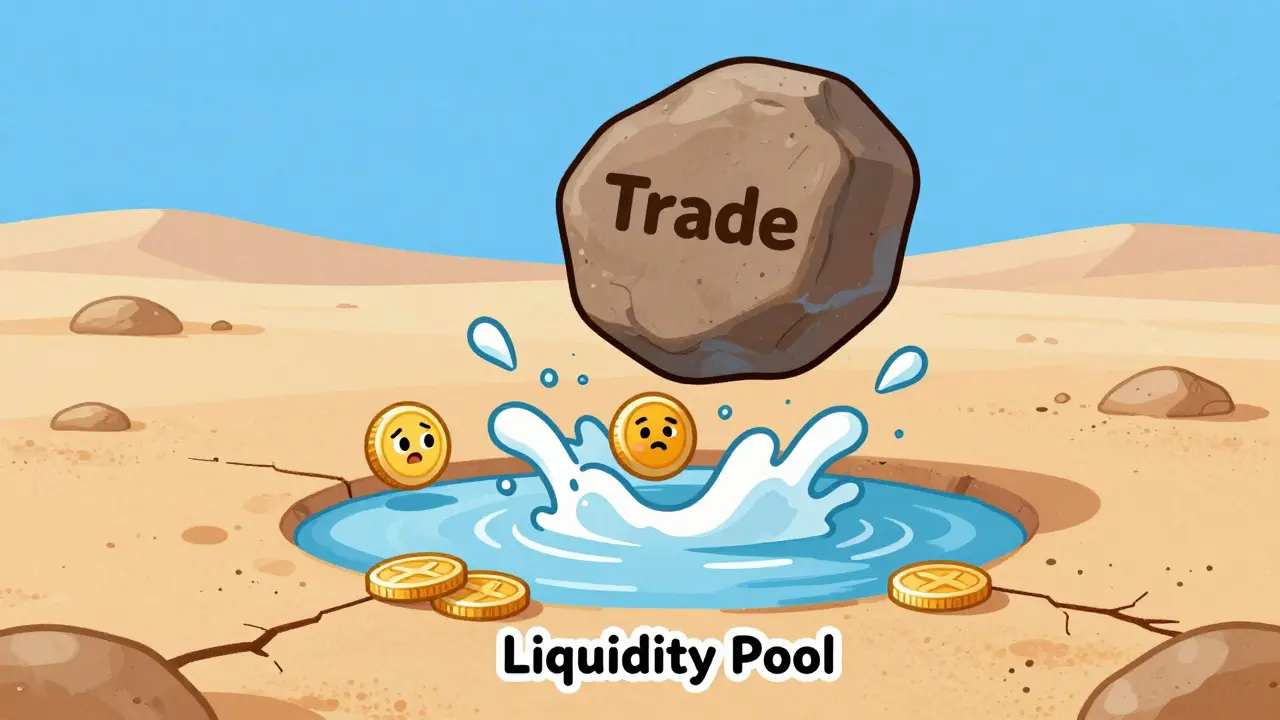
Why does liquidity matter? Because it determines whether you can actually sell your assets when you want to. BlasterSwap ranks in the 7th percentile for orderbook depth. In plain English, this means there is very little money sitting in the pools waiting to buy from you.
If you try to swap a significant amount of ETH for USDB on BlasterSwap, you will likely face high slippage. Slippage is the difference between the price you expect and the price you actually get. With such low liquidity, your trade could eat up the entire pool, resulting in a terrible exchange rate. Meanwhile, the average bid-ask spread is reported at 0.651%. While that number looks competitive on its own, without deep liquidity behind it, it’s misleading. You might see a good price, but you won’t be able to execute a large trade without crashing the value.
Furthermore, the normalized trading volume ratio is 0.048. This metric helps detect wash trading-where bots fake volume to make an exchange look busy. A low ratio like this indicates that the claimed volume doesn’t match verified on-chain activity. Essentially, the platform might be reporting trades that aren’t real or aren’t being executed by actual humans.
The Silence of the Experts
In the crypto industry, reputation is everything. Legitimate projects are reviewed by CoinDesk, The Block, and specialized DeFi analysts. They undergo security audits by firms like CertiK or Trail of Bits. These audits check the code for vulnerabilities that hackers could exploit.
BlasterSwap has none of this. There are no public security audits from recognized blockchain security firms. There are no editorial assessments from major crypto publications. The absence of expert attention is not just an oversight; it’s a warning sign. Why would a legitimate project skip the step that proves their code is safe?
Additionally, BlasterSwap appears in databases alongside companies flagged for fraudulent activities. While explicit confirmation of it being a scam requires legal verification, its association with known bad actors is a massive red flag. When a platform refuses to provide transparent documentation or third-party validation, you have to ask yourself: what are they hiding?
User Experience and Community Sentiment
Have you ever checked Reddit or Discord for a new crypto tool? You usually find tutorials, bug reports, and community managers helping users. For BlasterSwap, the silence is deafening. There are negligible discussions in DeFi communities. No user-generated content. No tutorials.
On review platforms like FxVerify, BlasterSwap holds a 0 out of 5-star rating based on zero reviews. This isn’t just a lack of feedback; it’s a lack of genuine users. The platform claims to have over 335,000 Twitter followers, but engagement quality is questionable. Bot accounts are cheap to buy. Real traders don’t follow exchanges that don’t exist in their daily workflow.
Getting started on BlasterSwap is also problematic. Documentation is scarce. Wallet integration details are vague. There is no visible customer service channel or help desk. If something goes wrong-and in DeFi, things often do-who do you call? In a centralized exchange, you have support tickets. In a decentralized one, you rely on community governance and clear docs. BlasterSwap offers neither.
Is BlasterSwap Safe to Use?
Based on the available data, the answer is a resounding no. Here is why you should avoid connecting your wallet:
- Minimal Security Verification: No public audits mean unknown vulnerabilities in the smart contracts. Hackers love un-audited protocols because they are low-hanging fruit.
- Extremely Low Liquidity: Your funds could be stuck, or you could suffer massive losses due to slippage when trying to withdraw.
- Suspicious Volume Data: High percentage increases from near-zero baselines suggest artificial inflation of metrics.
- No Community Trust: Zero reviews and no expert endorsements indicate a lack of organic adoption.
- Association with Fraud Databases: Being linked to known scams raises serious legitimacy concerns.
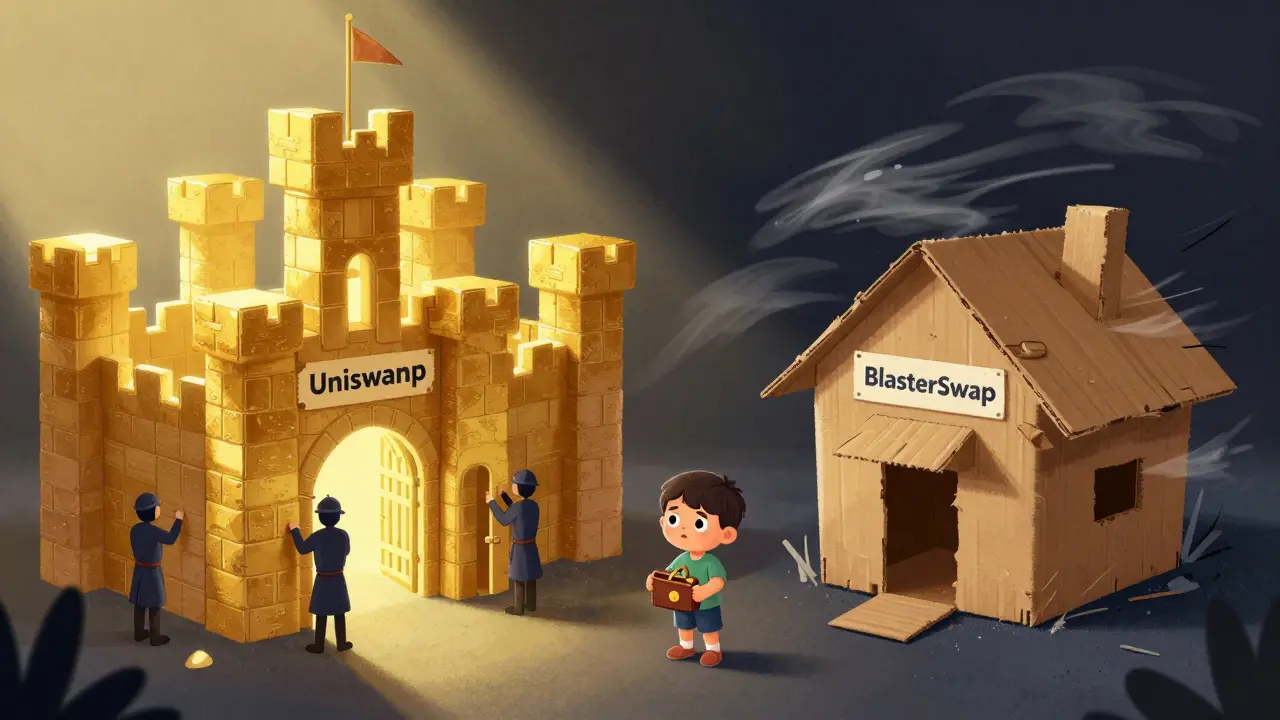
The DeFi space is crowded with innovative projects, but it is also rife with scams. BlasterSwap fits the profile of a “rug pull” risk-a project that attracts initial interest, collects fees or deposits, and then disappears or becomes unusable. With only $12,880 in TVL, the developers have very little skin in the game compared to the potential loss for users.
Better Alternatives for Traders
If you are looking for a decentralized exchange, stick to the giants. Uniswap, SushiSwap, Curve Finance, and PancakeSwap have proven track records. They have undergone multiple audits, have deep liquidity, and active communities. Yes, their interfaces might be slightly more complex, but your funds are safer.
For beginners, consider using a centralized exchange like Coinbase or Kraken for basic trading, then move to established DEXs only when you understand the risks. Never rush into a platform just because it has a catchy name or a huge follower count on social media. Always verify the TVL, check for audits, and read independent reviews.
Final Thoughts
BlasterSwap may promise ease of use and high returns, but the data tells a different story. It is a small, unverified platform with suspicious metrics and no community backing. In the high-stakes world of cryptocurrency, caution is your best friend. Don’t let FOMO (Fear Of Missing Out) drive your decisions. Stick to platforms that have earned your trust through transparency and security.
Is BlasterSwap a scam?
While there is no legal verdict labeling BlasterSwap as a scam, it exhibits many characteristics of fraudulent platforms. These include zero user reviews, lack of security audits, extremely low Total Value Locked (TVL), and association with databases tracking known scams. Exercising extreme caution is advised.
What is the minimum deposit on BlasterSwap?
As a decentralized exchange, BlasterSwap does not have a traditional "deposit" process. You interact directly with smart contracts. However, due to low liquidity, even small trades can result in high slippage, effectively making the cost of entry higher than expected.
Has BlasterSwap been audited?
There is no publicly available information indicating that BlasterSwap has undergone security audits by reputable firms like CertiK or Trail of Bits. This lack of verification poses significant security risks for users.
Why is BlasterSwap's trading volume so volatile?
The reported 6,790% increase in volume is likely due to a very low baseline. When starting from near-zero, even minor transactions can create massive percentage spikes. This often indicates wash trading or bot activity rather than genuine user interest.
What are safer alternatives to BlasterSwap?
Safer alternatives include established decentralized exchanges like Uniswap, SushiSwap, and Curve Finance. These platforms have high liquidity, regular security audits, and large, active user communities.