

Putting a stock or bond on a blockchain doesn't magically strip away the rules that govern it. If anything, it adds layers of complexity. As we move through 2026, the hype around Security Tokens is digital representations of regulated financial assets on blockchain networks that combine traditional securities with blockchain efficiency has settled into a reality check. Regulators aren't just watching; they are enforcing. The days of launching a token and hoping no one notices are over. Today, compliance isn't an afterthought-it is the product.
If you are looking to issue or trade security tokens, you need to understand that the technology serves the law, not the other way around. This guide breaks down exactly what you need to know about the legal, technical, and operational requirements for security tokens in the current landscape.
The Core Principle: Tokenization Is Not Exemption
The most critical thing to grasp right now is that putting an asset on a chain does not change its legal nature. In early 2026, the Securities and Exchange Commission (SEC) issued clarifying statements establishing that tokenization does not exempt securities from federal securities laws made this unequivocally clear. Whether your asset is a share in a startup, a piece of real estate, or a corporate bond, if it meets the definition of a security under existing laws like the Howey Test, it remains a security when tokenized.
This means the old rules still apply. You cannot bypass registration requirements simply by using code. Instead, you must fit your token offering into existing regulatory frameworks. For most issuers, this means relying on exemptions such as Regulation D or Regulation CF in the United States. These exemptions allow you to raise capital without full public registration, but they come with strict limits on who can invest and how much they can contribute. Ignoring these boundaries invites severe penalties, including fines and forced buybacks.
Jurisdictional Due Diligence: Where Matters More Than What
Before writing a single line of code, you must navigate the web of jurisdictional compliance. A security token often involves multiple parties located in different countries: the issuer, the investors, and the trading platform. Each of these entities operates under local laws that may conflict with one another.
In the United States, you deal with the SEC and state-level "blue sky" laws. In Singapore, the Monetary Authority of Singapore (MAS) enforces strict regulations requiring proper accreditation verification and adherence to Digital Token Guidelines sets a high bar. Under MAS guidelines, you must clearly classify your token, ensure it trades only on licensed platforms if secondary liquidity is offered, and handle investor data according to the Personal Data Protection Act (PDPA). Other jurisdictions like Switzerland and the European Union have their own evolving frameworks, such as MiCA (Markets in Crypto-Assets), which provide clearer paths for certain types of digital assets.
Your legal structure must account for all these variables. This usually involves creating a Special Purpose Vehicle (SPV) to hold the underlying assets, ensuring bankruptcy remoteness so that if the issuer goes under, the token holders' rights remain protected. You also need explicit choice-of-law clauses in your smart contracts and offering documents to determine which court system resolves disputes. Without this foundation, your token is legally fragile.
Technical Compliance: Enter ERC-1400
While legal teams draft memorandums, engineers face a different challenge: how to enforce these complex rules automatically. Standard token protocols like ERC-20 is a general utility token standard designed for simple transfers without built-in compliance checks are insufficient for securities. They allow anyone with the private key to send tokens to anyone else, regardless of whether the recipient is eligible to hold them. This creates massive liability for issuers.
By 2026, ERC-1400 has emerged as the leading security token standard specifically designed to address regulatory requirements with modular on-chain legal frameworks has become the industry standard. Unlike ERC-20, ERC-1400 includes built-in mechanisms for managing compliance. It allows issuers to define specific conditions for transfers, block unauthorized wallets, and manage corporate actions like dividends directly on-chain.
A crucial component of this ecosystem is ERC-1594, a sub-standard within defines the requirement of validating every transfer in a security token before it can take place, ensuring non-compliant transfers do not occur. Before any token moves from Wallet A to Wallet B, ERC-1594 forces the smart contract to check several things: Is the sender allowed to sell? Is the receiver accredited? Does this transaction violate any jurisdictional restrictions? If the answer to any of these is "no," the transaction fails immediately. This prevents illegal trades from ever settling, making regulatory reporting significantly easier and reducing risk for everyone involved.
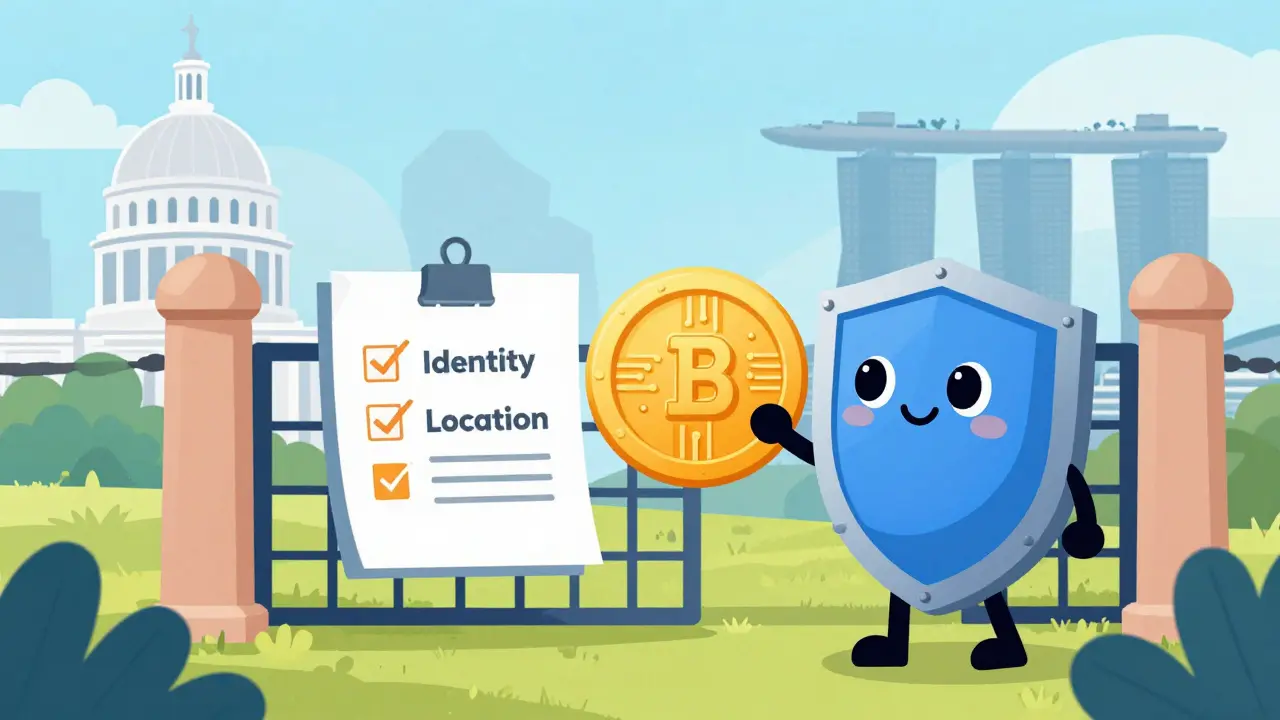
Identity Verification: AML and KYC Integration
Blockchain is pseudonymous, but securities regulation demands identity. You cannot comply with Anti-Money Laundering (AML) and Know Your Customer (KYC) laws if you don't know who owns the tokens. Therefore, integrating robust identity verification systems is non-negotiable.
Best practices involve using reputable third-party providers to verify investor identities. These services scan government IDs, perform biometric checks, and screen against global sanctions lists. Once verified, this identity information is linked to the user's wallet address. However, privacy remains a concern. You must balance transparency with data protection laws like GDPR in Europe or PDPA in Singapore. Storing personal data off-chain while keeping a hash or reference on-chain is a common approach. This ensures that while the blockchain records the ownership, the sensitive personal details remain secure and accessible only to authorized parties.
Smart Contract Security and Audits
Even if your legal framework is perfect, a bug in your code can destroy everything. Smart contracts are immutable by design, meaning once deployed, they are hard to fix. For security tokens, the stakes are higher because real money and legal rights are at stake.
You must undergo rigorous third-party audits by established blockchain security firms. These audits should cover not just the core logic but also the compliance modules, minting/burning functions, and oracle integrations where real-world data feeds into the contract. Look for auditors who specialize in financial applications, not just DeFi protocols. Additionally, consider implementing upgrade mechanisms with multi-signature governance controls. This allows you to patch critical vulnerabilities without compromising decentralization or trust. Insurance coverage for smart contract failures is also becoming a standard expectation among institutional investors.
Custody and Asset Protection
Who holds the keys? For retail investors, self-custody is risky. For institutions, it's often prohibited. Institutional-grade custody solutions are essential. These typically involve multi-signature wallets where multiple parties must approve a transaction, combined with enterprise-level key management practices. Cold storage-keeping keys offline-is the norm for long-term holdings. Furthermore, disaster recovery procedures must be tested regularly. If the custodian goes bankrupt or suffers a cyberattack, there must be a clear plan to recover assets and protect investor interests.
Minimum Viable Documentation Checklist
To launch a compliant security token offering, you need more than just code. Here is the minimum documentation package you should prepare:
- Private Placement Memorandum (PPM): Details the investment opportunity, risks, and terms.
- Legal Opinion: From qualified counsel confirming the token's status as a security and the validity of exemptions used.
- Smart Contract Audit Report: Published findings from independent security firms.
- Asset Valuation: Independent assessment of the underlying asset's worth.
- Service Provider Agreements: Contracts with custodians, KYC providers, and legal advisors.
- Liquidity Strategy: Clear explanation of how investors can exit their positions, including any lock-up periods.
| Feature | ERC-20 | ERC-1400 / ERC-1594 |
|---|---|---|
| Transfer Restrictions | None (Anyone can send to anyone) | Built-in validation before transfer |
| KYC/AML Integration | Off-chain only (Manual) | On-chain enforcement possible |
| Corporate Actions | Not supported natively | Supported (Dividends, Voting) |
| Regulatory Blocking | No | Yes (Blacklisting/Whitelisting) |
| Suitability for Securities | Low | High |
Risk Mitigation for Investors
For those buying security tokens, due diligence is equally important. Never allocate more than 5% of your portfolio to any single security token, given their illiquid nature. Ensure the issuer has mandatory insurance coverage for both custody and smart contract risks. Ask for regular re-diligence reports-at least annually-to confirm the project is still viable and compliant. Finally, demand integrated reporting that shows how your digital assets fit into your broader traditional investment portfolio.
Are security tokens legal in the US?
Yes, security tokens are legal in the US, provided they comply with federal securities laws. The SEC has clarified that tokenization does not exempt assets from regulation. Issuers must register the offering or qualify for an exemption like Regulation D or S.
What is the difference between ERC-20 and ERC-1400?
ERC-20 is a basic standard for utility tokens that allows unrestricted transfers. ERC-1400 is designed specifically for securities, featuring built-in compliance checks, transfer restrictions, and support for corporate actions, making it suitable for regulated financial assets.
Do I need KYC to buy security tokens?
Absolutely. Because security tokens represent regulated investments, issuers and platforms must verify investor identities to comply with Anti-Money Laundering (AML) and Know Your Customer (KYC) laws. Unverified wallets will typically be blocked from receiving tokens.
How does ERC-1594 prevent illegal transfers?
ERC-1594 requires the smart contract to validate every transfer before it settles. It checks the compliance status of both sender and receiver, the asset class, and jurisdictional rules. If any check fails, the transaction is rejected automatically, preventing non-compliant trades.
What happens if a security token issuer goes bankrupt?
If the issuer uses a proper legal structure like a Special Purpose Vehicle (SPV) with bankruptcy remoteness, the underlying assets are separated from the issuer's liabilities. This protects token holders, ensuring their rights to the asset remain intact even if the operating company fails.