
Most people searching for a "crypto exchange" expect to find a platform like Coinbase or Binance. But if you landed here looking for Wagmi (zkSync Era), you might be in for a slight surprise. Wagmi isn't a traditional centralized exchange where you deposit funds and trade against an order book. Instead, it’s a decentralized finance (DeFi) protocol built on the zkSync Era network. It aims to give you the ease of a central exchange while keeping your assets under your own control. The catch? It’s currently very quiet.
So, is it worth adding to your portfolio tools? Let’s break down what Wagmi actually does, how it works on the zkSync Era chain, and whether its current activity levels make sense for everyday traders or just early-stage explorers.
What Exactly Is Wagmi?
Wagmi is a comprehensive DeFi protocol designed to offer trading, liquidity provision, swapping, and strategy generation in one place. Think of it as a toolkit rather than a single product. The team positions it as a "one-stop-shop" for DeFi enthusiasts who want CEX-like functionality without giving up self-custody.
The name "Wagmi" comes from internet slang meaning "We’re All Gonna Make It," which sets a community-driven tone. However, beneath the friendly branding lies serious technical infrastructure. Unlike standalone DEXs that operate on Ethereum mainnet, Wagmi runs natively on zkSync Era, a Layer 2 scaling solution. This choice significantly impacts transaction costs and speed, which we’ll cover shortly.
The Foundation: zkSync Era Technology
To understand Wagmi, you have to look at the ground it stands on: zkSync Era is a ZK-rollup based Layer 2 scaling solution for Ethereum that provides full EVM compatibility. In simple terms, it batches transactions off-chain and proves their validity back to Ethereum using zero-knowledge proofs. This allows for high throughput and low fees compared to transacting directly on Ethereum L1.
Why does this matter for a trading protocol? Speed and cost are everything in DeFi. If every swap costs $50 in gas fees, nobody trades frequently. On zkSync Era, fees are typically a fraction of a cent to a few cents, depending on network congestion. This makes micro-trading and frequent strategy execution viable, something that is often painful on Ethereum mainnet.
The ecosystem itself is growing. As of recent data, zkSync Era has attracted over $795 million in bridged total value locked (TVL). Institutional interest is also rising, with banks like Sygnum Bank and Deutsche Bank holding funds on the chain. This suggests that the underlying infrastructure is stable and backed by serious players, even if individual protocols like Wagmi are still finding their footing.
Trading Volume and Current Activity Levels
Here is where the review gets honest. When you check live data for Wagmi, the numbers can be startling. Recent snapshots show a 24-hour trading volume of approximately $119.49. Yes, less than two hundred dollars. For context, major decentralized exchanges like Uniswap or SushiSwap process millions or even billions in daily volume.
Does this mean Wagmi is broken? Not necessarily. A few factors explain this:
- Early Stage Adoption: Many new DeFi protocols start with low liquidity until incentives kick in. Wagmi appears to be in this phase.
- Niche Positioning: It may be targeting specific strategies or user bases that haven’t fully migrated yet.
- Liquidity Fragmentation: On Layer 2 networks, liquidity is often split across multiple chains. Users might not know where to find the best prices yet.
If you are a high-volume trader, Wagmi is likely not your primary venue right now. Slippage could be significant due to thin order books or limited liquidity pools. However, for small swaps or testing out new strategies, the low risk and low fees might be acceptable.

Features and User Experience
Wagmi promises more than just swapping. Its feature set includes:
- Swapping: Standard token-to-token exchanges using automated market maker (AMM) logic.
- Liquidity Provision: Users can add tokens to pools to earn trading fees.
- Strategy Generation: This is the differentiator. The protocol aims to help users create automated trading strategies, potentially reducing the need for complex coding knowledge.
- CEX-Like Interface: The goal is to simplify the UX so it feels familiar to those coming from centralized platforms.
The "strategy generation" aspect is intriguing. In DeFi, building automated bots usually requires Python scripts or interacting with complex smart contracts. If Wagmi offers a no-code interface for this, it could lower the barrier to entry for retail investors. However, until more users test these features, it remains a promise rather than a proven utility.
Security and Trust Considerations
In DeFi, security is paramount. Since Wagmi operates on zkSync Era, it inherits the security model of the ZK-rollup. Transactions are verified mathematically, making them highly secure against fraud. However, smart contract risks always exist. Any bug in Wagmi’s own contracts could lead to lost funds, regardless of how secure the underlying blockchain is.
Currently, there is limited public information about independent security audits for the Wagmi protocol specifically. Before committing significant capital, you should check for audit reports from reputable firms like OpenZeppelin, Trail of Bits, or CertiK. Also, consider the team behind the project. Are they doxxed? Do they have a track record in DeFi development? Transparency builds trust, and right now, Wagmi leans heavily on the reputation of zkSync Era rather than its own brand history.
How Wagmi Compares to Other Options
To put Wagmi in perspective, let’s compare it to established alternatives on similar networks.
| Feature | Wagmi | Mute.io | Synapse |
|---|---|---|---|
| Type | Multi-feature DeFi Protocol | Cross-chain Bridge & DEX | Cross-chain Liquidity Protocol |
| Primary Function | Trading, Strategies, LP | Asset Bridging | Native Token Swaps Across Chains |
| 24h Volume (Approx.) | < $200 | $1M - $5M+ | $500k - $2M |
| Unique Feature | Strategy Generation | Low-cost Cross-chain Transfers | Universal Liquidity Pools |
| Best For | Experimenters, Strategy Builders | Users Moving Assets Between Chains | Traders Seeking Deep Cross-chain Liquidity |
As you can see, Mute.io and Synapse have established themselves as go-to solutions for specific needs on zkSync Era. Wagmi is trying to be a broader suite of tools, but it lacks the liquidity depth of these specialized competitors. If your goal is simply to move ETH or USDC to zkSync Era, Mute.io is likely the safer, more liquid choice. If you want to experiment with automated trading strategies on a low-risk basis, Wagmi might be worth a look.
Roadmap and Future Potential
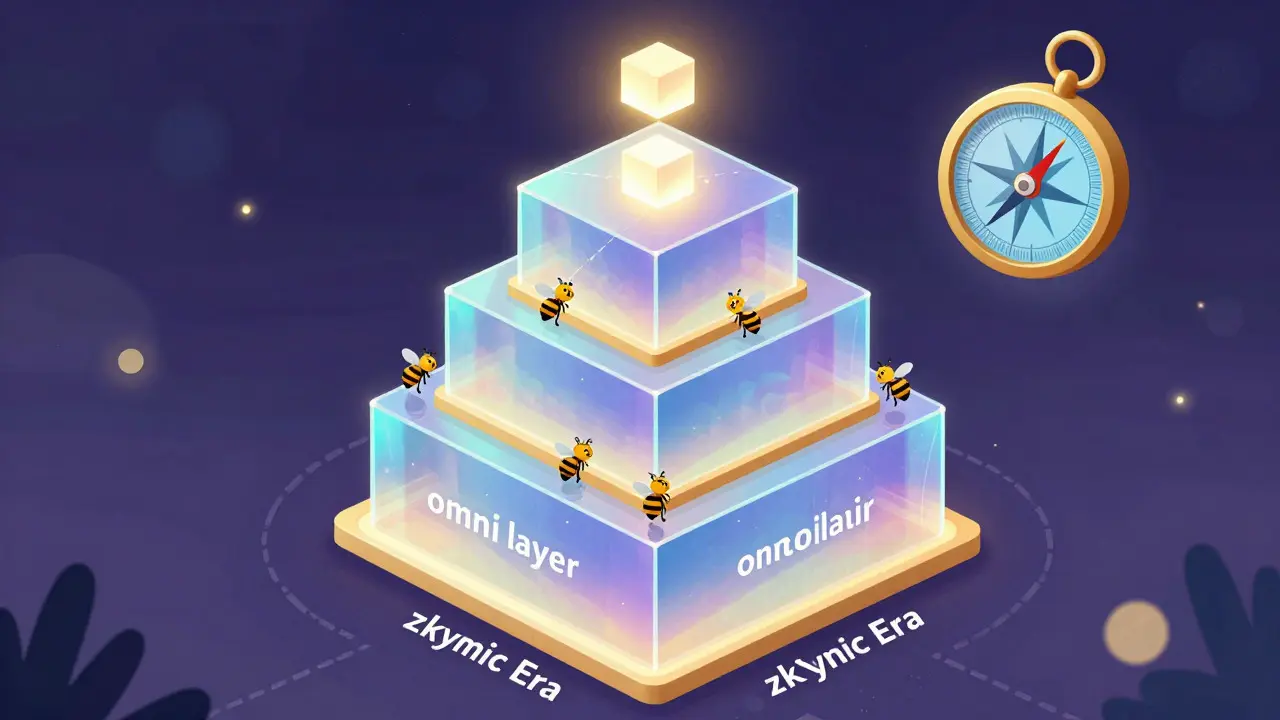
The Wagmi team has outlined plans to expand beyond zkSync Era. Once the protocol is "thoroughly tested and refined" on the current network, they intend to deploy it on other blockchains via an "omni layer." This multi-chain ambition could unlock new user bases and liquidity sources.
However, timelines are vague. No specific dates or additional chain targets have been publicly confirmed. In the fast-moving world of crypto, delays are common, but they can also signal development challenges. Keep an eye on their official social channels and documentation for updates. If they successfully launch on Ethereum Mainnet or Arbitrum, the volume metrics could change dramatically.
Who Should Use Wagmi?
Based on the current state of the protocol, here is a quick guide on who might benefit:
- DeFi Experimenters: If you enjoy testing new protocols with small amounts of capital, Wagmi offers a low-stakes environment to try out strategy tools.
- zkSync Era Natives: If you already hold assets on zkSync Era and want to explore local DeFi options beyond bridges, Wagmi is part of the local ecosystem.
- Not for High-Volume Traders: With sub-$200 daily volume, slippage will eat into your profits. Stick to Uniswap or larger DEXs for serious trading.
- Not for Beginners Seeking Simplicity: While the UI aims for simplicity, understanding DeFi risks (impermanent loss, smart contract bugs) requires some baseline knowledge.
Frequently Asked Questions
Is Wagmi a centralized exchange?
No, Wagmi is a decentralized finance (DeFi) protocol. You maintain custody of your assets through your own wallet, and trades are executed via smart contracts on the zkSync Era network.
What is the minimum amount I need to trade on Wagmi?
There is no strict minimum set by the protocol, but practically, you need enough funds to cover transaction fees on zkSync Era (usually less than $0.10) plus the amount you wish to swap. Due to low liquidity, smaller trades are more efficient than large ones.
How do I get tokens onto Wagmi?
You must first bridge your assets from Ethereum or another supported chain to zkSync Era. You can use the official zkSync Bridge or third-party bridges like Mute.io. Once your tokens are on zkSync Era, you can connect your wallet to the Wagmi interface to start trading.
Are there any fees for using Wagmi?
Yes. You will pay standard zkSync Era network gas fees for each transaction. Additionally, Wagmi may charge a small protocol fee for swaps or liquidity rewards, similar to other AMMs. Check the interface before confirming a trade to see the exact breakdown.
Is Wagmi safe to use?
It operates on the secure zkSync Era infrastructure, but all DeFi protocols carry smart contract risk. Since Wagmi is relatively new with low usage, it hasn’t been stress-tested by heavy volume. Start with small amounts and verify any available security audits before committing significant funds.
Will Wagmi support other blockchains?
Yes, the roadmap includes deployment on other networks via an "omni layer" after thorough testing on zkSync Era. Specific chains and dates have not been announced yet, so keep an eye on official announcements for updates.