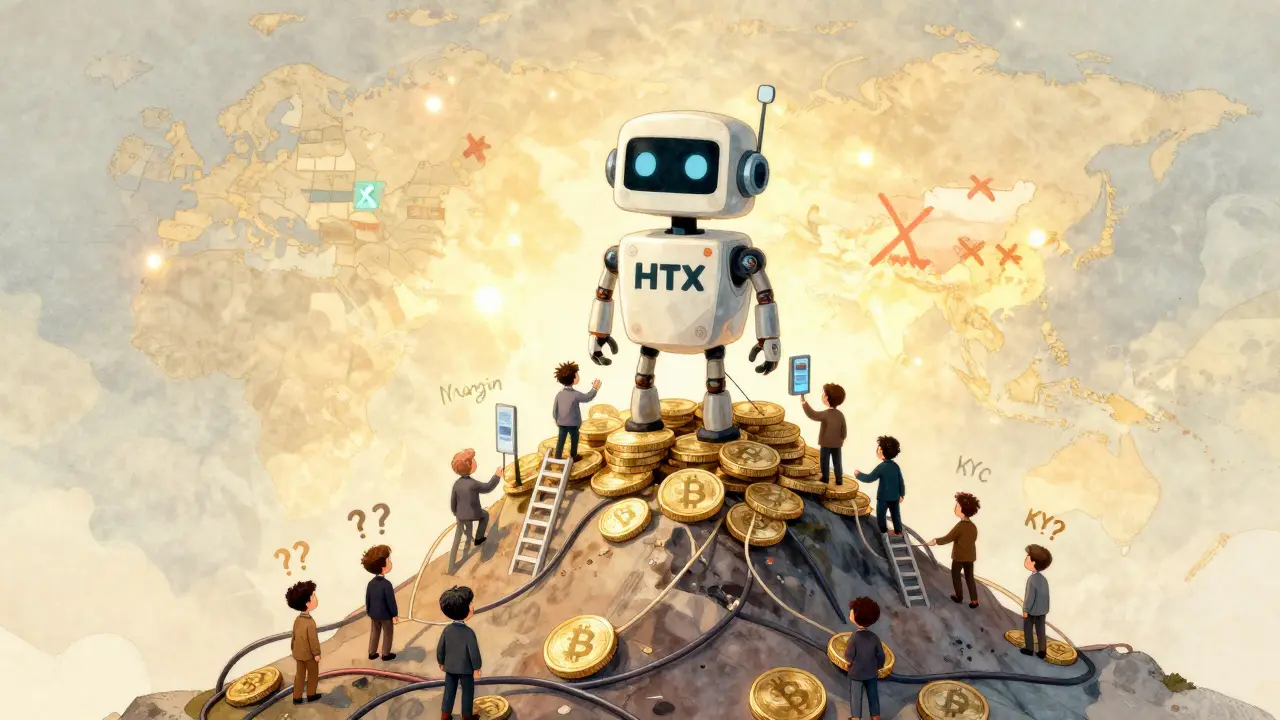
HTX Fees: What You Really Pay to Trade on HTX Exchange
When you trade on HTX, a global cryptocurrency exchange offering spot, futures, and margin trading with low fees and high liquidity. Also known as HTX Global, it's one of the top platforms for active traders who want fast execution and deep order books. But here’s the thing: HTX fees aren’t just about the number on the screen. They’re about how much of your profit disappears before you even cash out.
HTX charges different fees depending on whether you’re making a market (maker) or taking liquidity (taker). Maker fees start at 0.08%, and taker fees are 0.1%. That’s lower than Binance and Kraken, but only if you’re trading high volumes. If you’re trading $500 a week, you’re paying the same as someone trading $50,000 — and that’s where things get messy. HTX also charges withdrawal fees for Bitcoin, Ethereum, and stablecoins, and those vary by network. A Bitcoin withdrawal can cost $10 or more during peak times. And don’t forget: if you use HTX’s leverage trading, funding rates kick in every 8 hours. Those can add up fast, especially if you hold positions overnight.
What most people miss is how HTX fees interact with other costs. If you’re using HTX to trade altcoins with low liquidity, you’re paying wider spreads — that’s the hidden fee. A 0.1% trading fee means nothing if the price jumps 0.5% just because there’s no buyer. And if you’re depositing fiat through a third-party provider, you’re paying bank fees on top of HTX’s fees. This isn’t just about trading — it’s about the whole cost chain.
HTX also runs fee discounts through its loyalty program. The more HTX tokens you hold, the lower your fees. But that’s only useful if you’re already holding HTX. If you’re buying HTX just to save on fees, you’re adding another layer of risk. Is the 10% discount worth the volatility of the HTX token itself? For some traders, yes. For others, it’s a trap.
There’s no one-size-fits-all answer. HTX fees are competitive on paper, but real-world trading reveals the hidden costs: slow withdrawals during market spikes, high funding rates on perpetuals, and illiquid pairs that eat your profits before the fee even shows up. The posts below break down exactly what traders are paying — and what they’re losing — on HTX. You’ll see real fee breakdowns from actual trades, comparisons to other exchanges, and what to watch out for before you hit confirm.