
It feels like a glitch in the matrix. You connect your wallet to dYdX, a leading decentralized perpetual futures exchange built on StarkEx and Ethereum, ready to trade Bitcoin or Solana derivatives. Suddenly, a red banner pops up. Your account is flagged. You can’t deposit. You can’t open new positions. If you live in the United States, the UK, or even places like Iran or North Korea, the platform effectively locks you out.
This raises a burning question that keeps many crypto natives up at night: If dYdX is truly decentralized, who is pulling the strings? How can a protocol run by code block specific countries? The answer lies in the messy reality of modern DeFi, where the dream of borderless finance crashes hard against the wall of global financial regulation.
The Myth of Pure Decentralization
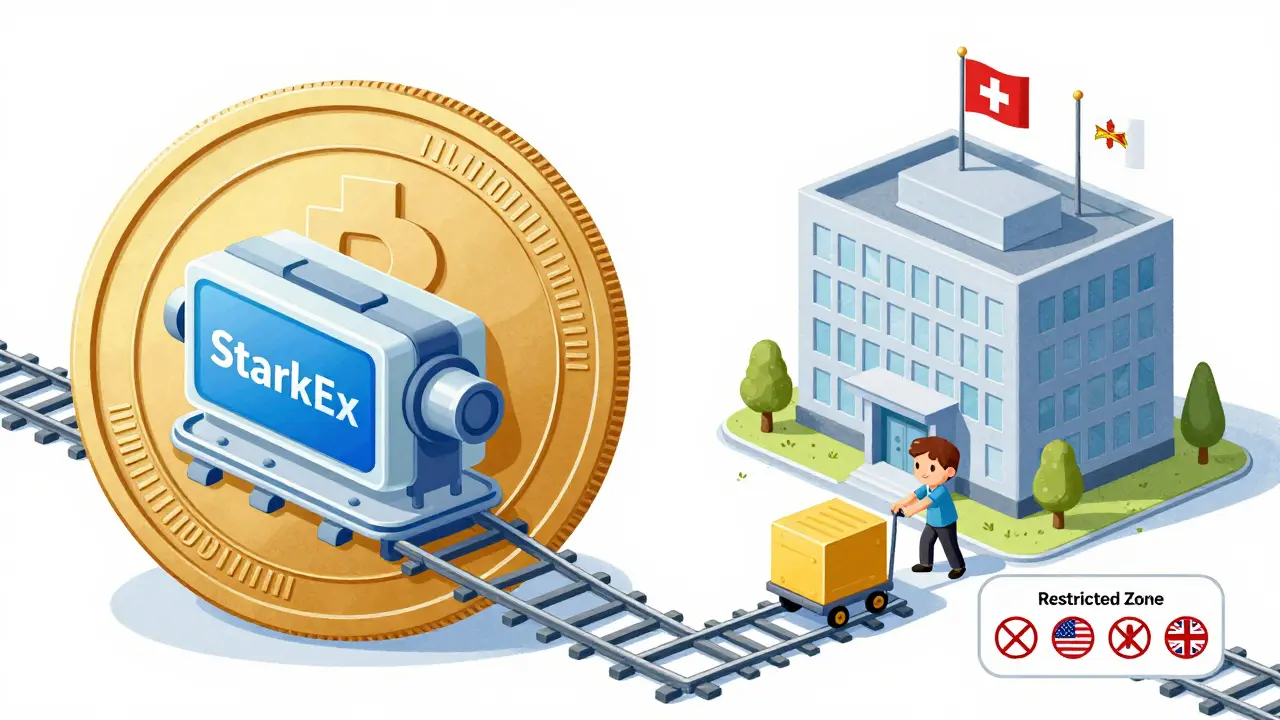
To understand why dYdX restricts users, we first have to dismantle the idea that it is a purely decentralized entity. While dYdX uses blockchain technology for its core trading engine-specifically leveraging StarkEx, a zero-knowledge rollup technology developed by StarkWare for scalable smart contracts-the user experience is mediated through centralized gateways.
Founded by Antonio Juliano in 2017, dYdX operates with a hybrid structure. There is the protocol itself, which lives on-chain. But there are also corporate entities behind the curtain. dYdX Operations Services Ltd. (DOS), the company responsible for operating the dYdX frontend interfaces and customer support services manages the websites like dydx.trade. Then there is dYdX Trading Inc., a New York-based corporate entity involved in the platform's business operations and the dYdX Foundation, a Swiss-based organization established to oversee the development and governance of the dYdX ecosystem in Zug, Switzerland.
These entities hold the keys to the frontends. When you visit the site, you aren't interacting directly with the raw blockchain code; you are using an interface controlled by these companies. This is the weak link-or rather, the compliance hook-that allows regulators to exert pressure. Because DOS controls the website, they can implement geographic blocking technologies just like any traditional bank or centralized exchange (CEX) such as Binance or Coinbase.
The List of Prohibited Jurisdictions
If you are wondering whether your country is on the blacklist, you need to look at two categories of restrictions: sanctions-based bans and regulatory compliance bans.
First, there are the obvious ones driven by international law. dYdX strictly prohibits access from countries under heavy U.S. or international sanctions. This includes:
- Iran, Cuba, North Korea, Syria: These nations are heavily sanctioned by the U.S. Department of Treasury’s Office of Foreign Asset Control (OFAC).
- Myanmar (Burma), Crimea, Donetsk, Luhansk: Specific regions or nations facing targeted geopolitical sanctions.
- Somalia, Sudan, Yemen, Zimbabwe: Other jurisdictions often flagged due to counter-terrorism financing (CTF) concerns or lack of AML frameworks.
However, the surprise for many comes from the second category: major Western democracies. Despite being fully legal to use cryptocurrency in these places, dYdX blocks residents of:
- The United States
- The United Kingdom
- Canada
Why block the US? It’s about risk management. The U.S. Securities and Exchange Commission (SEC) has been aggressive in classifying many crypto assets as securities. By blocking U.S. IP addresses entirely, dYdX avoids the headache of registering as a security exchange or facing massive fines. It’s a defensive move. They’d rather lose American customers than fight a billion-dollar legal battle with Washington.
Interestingly, some countries that are banned on other platforms remain open on dYdX. Residents of China, Russia, South Korea, Japan, and Vietnam can still access the platform. This suggests dYdX isn’t trying to be universally compliant; it’s selectively complying where the regulatory threat is highest or most immediate.
How Enforcement Actually Works
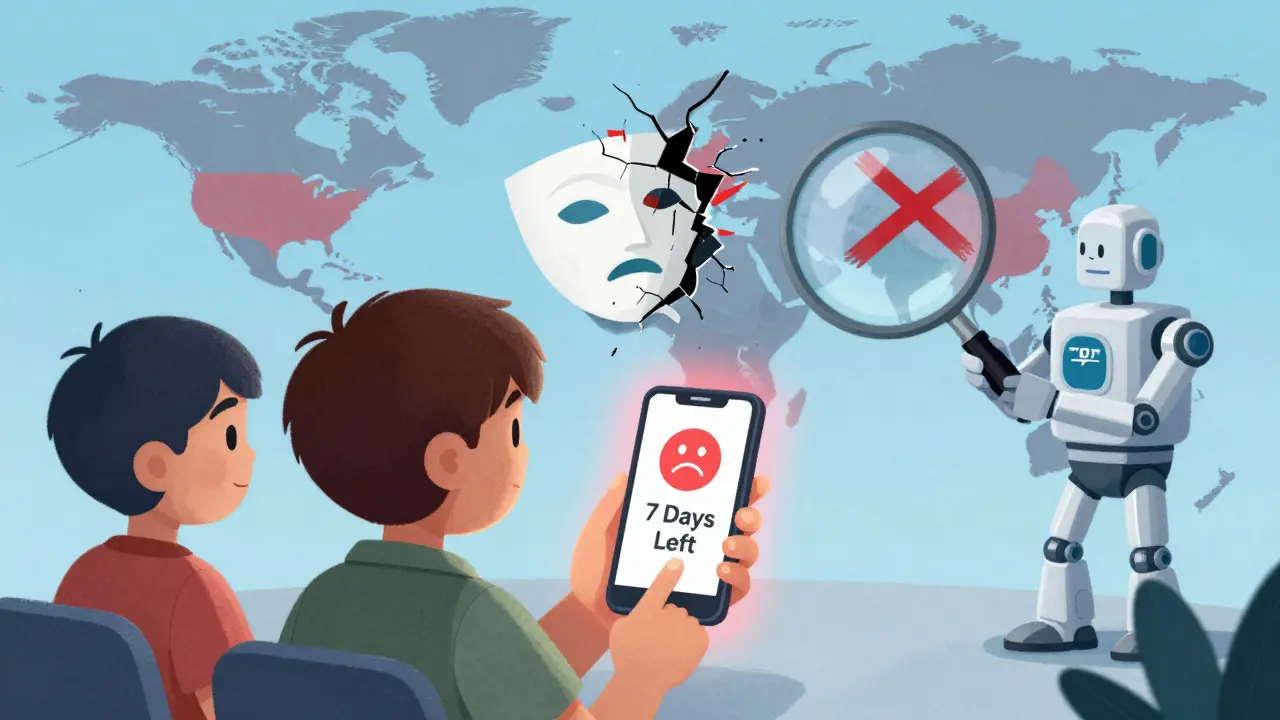
You might think, "I’ll just use a VPN." It’s tempting, but it’s dangerous. dYdX doesn’t just check your IP address; they analyze wallet behavior. If their compliance algorithms detect that a wallet previously accessed the platform from a restricted region, or if they suspect you are masking your location, they will flag your wallet.
Here is what happens when you get caught, step-by-step:
- The Flag: You log in, and a red warning banner appears. Your wallet is identified as belonging to a prohibited person or located in a restricted jurisdiction.
- Close-Only Mode: This is the critical phase. You cannot deposit funds. You cannot transfer assets. You cannot open new trades. However, you are allowed to manage existing risk. All new orders default to "reduce-only" status. This means if you try to buy more Bitcoin, the system rejects it. If you try to sell, it executes only enough to close your position.
- The Seven-Day Countdown: If your wallet remains in this state for seven consecutive days without resolving the issue (which usually means nothing, since you can’t resolve a residency ban), the status changes.
- Blocked Status: After seven days, the frontend access is cut off completely. You cannot view trading history. You cannot access subaccounts. The only thing left to you is the ability to export your Secret Recovery Phrase. Essentially, the interface disappears, leaving you to interact with the blockchain directly via tools like Etherscan or a raw wallet interface, which is difficult for most users.
This mechanism reveals the centralization trap. In a truly decentralized app (dApp) with no frontend control, this would be impossible. The protocol would simply execute whatever transaction was signed by the wallet. But because dYdX relies on DOS to serve the UI, they can stop you from signing those transactions in the first place.
The Regulatory Pressure Cooker
The driving force behind these restrictions is not malice; it’s survival. The global financial system runs on Anti-Money Laundering (AML) and Counter-Terrorism Financing (CTF) protocols. Even though dYdX is non-custodial (you hold your own keys), the platform handles order matching and liquidity provision in ways that regulators view as financial services.
The U.S. Bank Secrecy Act requires financial institutions to monitor for suspicious activity. While dYdX argues it is a software provider, regulators increasingly disagree. By implementing KYC (Know Your Customer) checks indirectly through frontend restrictions, dYdX attempts to align with the expectations of the Financial Action Task Force (FATF), an intergovernmental organization that sets standards for combating money laundering and terrorist financing.
Furthermore, the involvement of the dYdX Foundation in Zug, Switzerland, adds another layer. Switzerland has strict financial regulations. To maintain legitimacy and partnerships with traditional financial infrastructure, the foundation must ensure its associated platforms do not facilitate illegal flows. Blocking sanctioned countries is non-negotiable for any entity wanting to stay in business legally.
What This Means for Traders
If you are a trader, you need to adjust your strategy. Don’t assume that "decentralized" means "unrestricted." Here is how to protect yourself:
- Check Your Eligibility First: Before funding your account, read the current Terms of Service. The list of restricted countries can change overnight based on new sanctions or regulatory guidance.
- Avoid VPNs for Compliance: Using a VPN to hide your location violates dYdX’s terms. If detected, you risk losing access to your frontend permanently. The seven-day close-only window is your only grace period to withdraw funds safely.
- Understand the Hybrid Model: Recognize that dYdX offers convenience and speed (thanks to StarkEx) but sacrifices absolute censorship resistance. If you need a platform that cannot be shut down or blocked, you might need to look at peer-to-peer protocols or darker horse DEXs that have no frontend entity at all, though these come with higher technical barriers and lower liquidity.
- Monitor Wallet Health: Keep an eye on your wallet status. If you see a warning, act immediately. Use the reduce-only feature to flatten your positions before the seven-day clock runs out.
The tension between decentralization and compliance is the defining challenge of crypto in 2026. dYdX represents the middle ground: a powerful, efficient trading engine that bows to the demands of nation-states. For many, this is a fair trade-off for safety and liquidity. For purists, it’s a betrayal of the ethos. Either way, knowing the rules of the game is the only way to keep your capital safe.
Is dYdX available in the United States?
No, dYdX is not available to residents, citizens, or entities incorporated in the United States. The platform blocks U.S. IP addresses and flags wallets associated with U.S. users to comply with local securities regulations and avoid enforcement actions from agencies like the SEC.
What happens if I use a VPN to access dYdX from a banned country?
Using a VPN to bypass geographic restrictions violates dYdX's terms of service. If the platform detects this activity through wallet analysis or IP inconsistencies, your account may be flagged. This leads to "close-only mode," preventing new deposits or trades, and eventually results in a permanent block of frontend access after seven days.
Why does a decentralized exchange like dYdX have country restrictions?
Although dYdX uses decentralized technology for trading execution, it relies on centralized frontend services operated by dYdX Operations Services Ltd. These corporate entities are subject to laws in their jurisdictions (such as New York and Switzerland). To remain legal and avoid sanctions violations, they enforce geographic blocks on their websites and interfaces.
Can I still withdraw my funds if my dYdX account is blocked?
Yes, but with limitations. During the initial "close-only mode" (first seven days), you can withdraw funds and close existing positions. However, once the account transitions to "Blocked" status after seven days, frontend access is revoked. You may still be able to retrieve funds directly from the blockchain using your private keys and external wallet tools, but the dYdX interface will no longer assist you.
Which countries are typically restricted on dYdX?
Restricted countries include the United States, United Kingdom, Canada, and various nations under U.S. or international sanctions such as Iran, North Korea, Syria, Cuba, Myanmar, Crimea, Donetsk, Luhansk, Somalia, Sudan, Yemen, and Zimbabwe. The list can change, so users should always verify the latest Terms of Service.